Tag: beer and music matching

| Beer, Beer and Music, Tasting Notes

My New Book: Tasting Notes – The Art and Science of Pairing

Fifteen years in the making, despite a few hiccups, I’ve finally managed to do the book of my beer and music pairing event!

It’s finally here!

In 2010 I started pairing beer with music as a joke. My wife, Liz, had a spare slot at the Stoke Newington Literary Festival, which she founded and runs. At the time, everyone was talking about beer and food pairing. Predictably, wine snobs laughed at the idea. But even many ardent beer drinkers dismissed it, saying beer couldn’t possibly work as a pairing for food. 

I thought this resistance had something to do with snobbery: both direct, and inverted. Wine snobs will always perceive beer as inferior. But also, perhaps for longtime beer lovers, pairing beer with food just seemed too pretentious? Maybe it smacked of taking beer too seriously? I thought: You think pairing beer and food is pretentious? Hold my beer – I’ll show you pretentious. And so, I stood in front of about thirty people with my iPhone plugged into a speaker, and made them listen to New Order and the Pixies while they drank beer.

Two years later, I met Charles Spence, Professor of Experimental Psychology and Head of the Crossmodal Research Laboratory in the Department of Experimental Psychology at Oxford University, who informed me that what I was doing was similar to real, serious experiments he and others were conducting around the world. Our senses mingle and overlap, helping each other out in ways we’re not always aware of. What you see influences what you (think you) taste. And so does what you hear.

I started running some experiments during my event and collecting data. I learned that I could change the flavour of beer by changing the music that was playing. I evolved my talk into a full-on multimedia show, incorporating neuroscience, video, tutored tasting, and over three jokes. Since 2014, I’ve done the show at the Green Man Festival in South Wales. This is, by some distance, the biggest live event I do, regularly playing to around 1200 people.

Every year, people ask me when the book is coming out. Now, CAMRA Books have done what no one else would do and allowed me to write it!

“Side One” takes an in-depth look at how we perceive flavour, how we perceive music, and how “confounding factors” such as context, environment, memory and other sensory stimulus affect our perceptions.

“Side Two” consists of 45 pairings that represent a considerable expansion from my 80s white boy indie roots, taking in pop, rock, country, hip hop, classical, opera, even jazz.

Here’s a sample pairing – one of the first I ever did:

You can get the full playlist for the book here.

If you want a copy, the best place to buy it is CAMRA Books, but it’s also available from Waterstones, Amazon and some bookshops. (If you’re a bookshop and you want to stock it, there has been a delay in getting it to wholesalers, but it’s now in stock at MDL and Gardners, even though the latter still says it’s not available – that should be sorted any time now.)

Please check out my events page for the live show – there are more to be added here. Let me know if you want to host one! Green Man 2025 is just weeks away, and this year will be the official launch party of the book, with an audience abut half of whom come to the show every year. With several of the bands playing over the weekend actually featuring in the book, we’re going to blow the roof off the spoken word tent!

Please buy my book. You’ll love it.

|

Why do Guitars Taste of Hops? at Nottingham Craft Beer Week

Beer and Music Matching comes to Norwich!
As heard on last week’s BBC Radio 4 Food Programme…
Your brain is lying to you. You have more than five senses. And you can hear the difference between IPA and stout. Pete Brown has been running experimental beer tastings pairing top tunes and beers for six years. This talk is a mixture of fandom, humour, and genuine neuro-scientific research. Think it sounds like nonsense? Come along and have your sense challenged. If you’re right, you’ll at least taste some great beers. If you’re wrong, you just might taste them like you never have before.
The cost of this event includes six beers.

| Uncategorised

Beer and cider and music and books and food in North London

I don’t often do sponsor-heavy sales blurby posts, but this is is a special exception each year. Apologies if you can’t make it to North London next weekend…

It’s nearly here – the fifth Stoke Newington Literary Festival takes place all around N16 from 6th to 8th June – that’s in just over a week!

The festival is the creation of my wife Liz, and is organised by her, me, and a bunch of die-hard volunteers. It’s a charitable venture that aims to improve literacy in the Borough of Hackney. More than that, it’s about everyone enjoying ideas, debate, comedy, and brilliant words of all kinds. Last year Irvine Welsh – one of our headliners – described it as “The real London LitFest,”and Time Out said it’s “Like Hay-on-Wye, but in Hackney.”

With me involved, there’s always a strong boozy element – so here are the bits that might be of interest to readers of this blog.

Drinks Sponsors
We receive no formal funding for the festival, and we keep ticket prices lower than anywhere else we know to encourage the widest possible access. The support I blag from friends in the drinks industry to run bars at events is therefore what makes the festival viable. If you come, every beer or cider you buy helps a small child to read! Budweiser Budvar are our main sponsor, and last year they introduced the Budvar Marquee – a fantastic, informal bar space where we have a rolling, loose programme of authors, poets, comedians DJs and musicians chatting away while you enjoy a quality pint.

Local favourites the Bikini Beach Band are back to do another set:

and Phill Jupitus will be back with his mate poet Tim Wells to spin some platters that matter and do a bit of dad dancing for your edification. 
The marquee is outside Stoke Newington Town Hall and you don’t need a ticket for any of the festival events to soak up the buzz and free events. (You do have to pay for the booze though.)
Our other key drinks sponsors are Aspall, who very kindly provide us with top quality cider, and local brewer Redemption who have been with us from the start, supplying a specially brewed festival cask ale that’s light, hoppy, and perfect for what will hopefully be a lovely summer weekend. Talking of which… 

Name the Festival Beer!
Andy from Redemption is routinely declared the nicest man in brewing. And not just by us.

Each year he brews a special festival cask ale and donates it to us, and since year two of the festival we’ve run a competition to name the festival beer. It’s usually a dreadful pun on one of the acts or strands in the festival. Edgar Allen Poe lived in Stoke Newington, and the year we commemorated this we went for ‘Cask of the Red Death’. When Alexei Sayle headlined, ‘Alexei’s Ale’ was an obvious winner.

Get the idea?

OK, this year’s programme is more diverse and eclectic than ever before, but it does have a strong music strand running through it. Our closing headliner is Ray Davies. Yes, the real Ray Davies out of the Kinks! If you can think of a beery pun based around Waterloo Sunset, You Really Got Me, All Day And All The Night or any other of the songs this man wrote that changed the face of British music, let us know. We’ve also got Thurston Moore out of Sonic Youth, because he now lives locally (and drinks Guinness or locally brewed hoppy pale ales). We’ve got Viv Albertine out of The Slits. We’ve got Ben Watt out of Everything But The Girl. All talking about books about music. Or check out the rest of the programme and see if anyone else inspires. It doesn’t have to be a pun. It just usually turns out that way.

The winner gets free beers and entry to an event of their choice at the festival. Or just the satisfaction of knowing hundreds of people will be saying your pun as a bar call if you can’t make it along. Send entries to info@stokenewingtonliteraryfestival.com, marked ‘beer names’.

Beer and Music Matching – Sunday 8th, 7pm

I’ve been doing a lot about this recently, and my first event was at this festival two years ago. Now it’s back, bigger and better, with added neuroscience and real time experiments. Discover how your senses overlap and often deceive you. Learn how memory ‘primes’ your appreciation of flavour. And experience the Pavlovian brilliance of Duvel vs. the Pixies. Tickets available here, and the price includes a flight of outstanding beers. The event is on just before Ray Davies starts, in the venue just around the corner from his. Trust me, we will be finishing on time so I can get to see Ray too.

The Craft Cider Revolution – Saturday 7th, 4pm
As part of our food and drink strand, last year I hosted a panel discussion with local brewers. This year I thought I’d do the same with cider – but are there any local cider makers? Well, yes – London Glider make cider with apples foraged inside London – there are more of those than you thought, and the resulting cider is excellent. They’ll be joining me on stage along with the somewhat less local Andy Hallett of Hallet’s Cider, who will be bringing some of his brilliant ciders up from South Wales to try. (If you live locally but can’t make this event, don’t miss Andy’s Meet The Cider Maker this Saturday, May 31st at the Jolly Butchers). I’ll have some special stuff from our sponsors Aspall too. Tickets available here, and the price includes enough cider samples to give you a nice afternoon buzz.

The food and drink venue also has the legendary Claudia Roden being interviewed by Valentine Warner, Julian Baggini talking about the philosophy of food and drink, and the brilliant Gastrosalon – food confessions chaired by Radio 4’s Rachel McCormack.

It’s going to be our best festival yet. Please join us if you can.

| Uncategorised

Why do trumpets taste like hops?

Five years ago I read an article about a study at Heriot Watt university that had found different styles of music could ‘improve’ the flavour of wine. In a controlled experiment, wines paired with the ‘right’ style of music tasted 40-60% better than those paired with the ‘wrong’ style.

Obviously I stole the idea and applied it to beer. There’s a broader range of styles and flavours to play with, and music and beer as I know them go together much better than music does with wine – both have a communality and approachability to them, with the option of going for more obscure, difficult stuff if you prefer.

I started having fun matching things by theme, season and mood, but also terroir, attitude and a slight smidgeon of taking the piss.

Eventually though, I was put in touch with neuroscientists who showed me there’s much more to it than that. Neuroscience in its current form has been around for less than twenty years, because contemporary brain imaging technology, which shows us what bits of the brain light up in response to different stimuli, is very new. Incredibly, in the 21st century we are only just starting to figure our how the brain really works. And we’re learning that there’s much more to our so-called ‘five senses’ than previously thought. They overlap, support each other, and sometimes become confused or blurred. Unwittingly, I’m conducting experiments that are not too dissimilar to what’s happening in the new field of neurogastronomy, or would be if I conducted them more carefully and with less mucking about.

This has set me off on an exploration of the senses and how the brain works. I never did any science subjects at school or college after the age of fourteen, and now I’m learning to love the laboratory all over again, reading up on everything from soundwaves and molecular gastronomy to the philosophy of aesthetics and the ‘Proustian effect’ of sense memory.

My talk on beer and music is sprouting all sorts of new tentacles. I rewrite it after every single show, taking on board what I’ve learned, bolting on new experiments, refining the pairings, polishing up the presentation, ditching the bits that don’t work. Having gone from ditching most of the show each time and starting from scratch, it’s now starting to feel pretty solid.

I’ve no idea where this will end up – as a book, radio show or event at the Edinburgh Fringe (all have been suggested to me) – but right now it’s becoming one of my core obsessions. At the heart of it are six pairings of great beers with music tracks that I love. They go together in different ways had tell us different things about how we perceive the world around us.

Some audience members think the whole thing is rubbish. Others find it seismic in changing their perceptions. Some cynics are won over; some enthusiasts go away confused and unsure. Whatever happens, and however much you buy the central conceit, it’s an enjoyable hour of great beer and great tunes, with added science, anecdote and trivia.

I’m doing my next event at Bristol Food Connections on Friday 2nd May, in front of a very special audience which you can be part of. Tickets are still available and are only £5 including beers.

The following week I’m repeating the event in London, at the Ivy House. This pub hit the headlines a couple of years ago when it was seemingly doomed to closure, but was saved when the community bought it. It’s now a thriving craft beer-focused pub with a legendary musical heritage. I’m honoured to be be matching beer and music there on 8th May. Tickets have just gone on sale here.

Please come along and help me create a beer tasting event quite unlike any you’ve witnessed before.

| Uncategorised

Flavour: there’s a lot more to it than meets the eye. (Or tongue, or nose, or ears…)

A couple of weeks ago, I received a press release from the Tring Brewery, which announced that their beers have been relaunched with a new look that uses ‘applied colour psychology’ to improve their appeal to drinkers.

Palettes of colours were carefully examined and one specific palette was selected to to convey the right messages about the brewery. According to research, these ‘autumnal’ tones are warm and comforting, suggesting natural ingredients and care for the environment.

It’s a clever move. And if it sounds to you like so much marketing psychobabble, prepare to have your perceptions of reality challenged.

The story reminded me of a dinner I attended as part of this year’s Edinburgh Science Festival. That the dinner just happened to fall on April Fool’s Day had no bearing on what followed, but provides a nice backdrop of incredulity – which itself could potentially play a role.

It all started when I began doing beer and music matching events.  I wrote a few years ago about experiments at Heriot Watt university which suggested that the flavour of wine – or the perception of it – could be altered by different styles of music. I took this as an inspiration to mess about pairing great beers with classic albums, the basis of an event I’ve done at literary festivals and corporate gigs a few times now. With a sound basis in science, it was an excuse to have a bit of fun and find a different way to present beers to people.

Word of my doing this eventually reached Professor Charles Spence, who spends his life looking into something called ‘crossmodal research’, or ‘multi-sensory perception’. He invited me to bring my party piece to Edinburgh’s Sensory Dining dinner. Here, 150 people had their senses challenged, and flavour was revealed to be far more complex and mysterious than anyone outside the fields of neuroscience or molecular gastronomy would have thought.

I learned far too much for one blog post, but here are a few highlights that show influencing our perceptions via colour palettes is merely the tip of a humming, red-hot iceberg. That smells of bacon.

Taste and Aroma

Most people who write about beer (and many who enjoy it) will already know that ‘flavour’ is not synonymous with ‘taste’, as we often use it to be, but is in fact a combination of taste and aroma – of which aroma makes up about 80%. 
So here’s a question: if four-fifths of flavour sensing is happening in the nose, why do we experience it – or think we do – in out mouths? It’s only by isolating nose and mouth that we can show ourselves what’s really going on, for example by holding your nose while eating. Psychologists, neuroscientists and even philosophers are currently exploring the question.
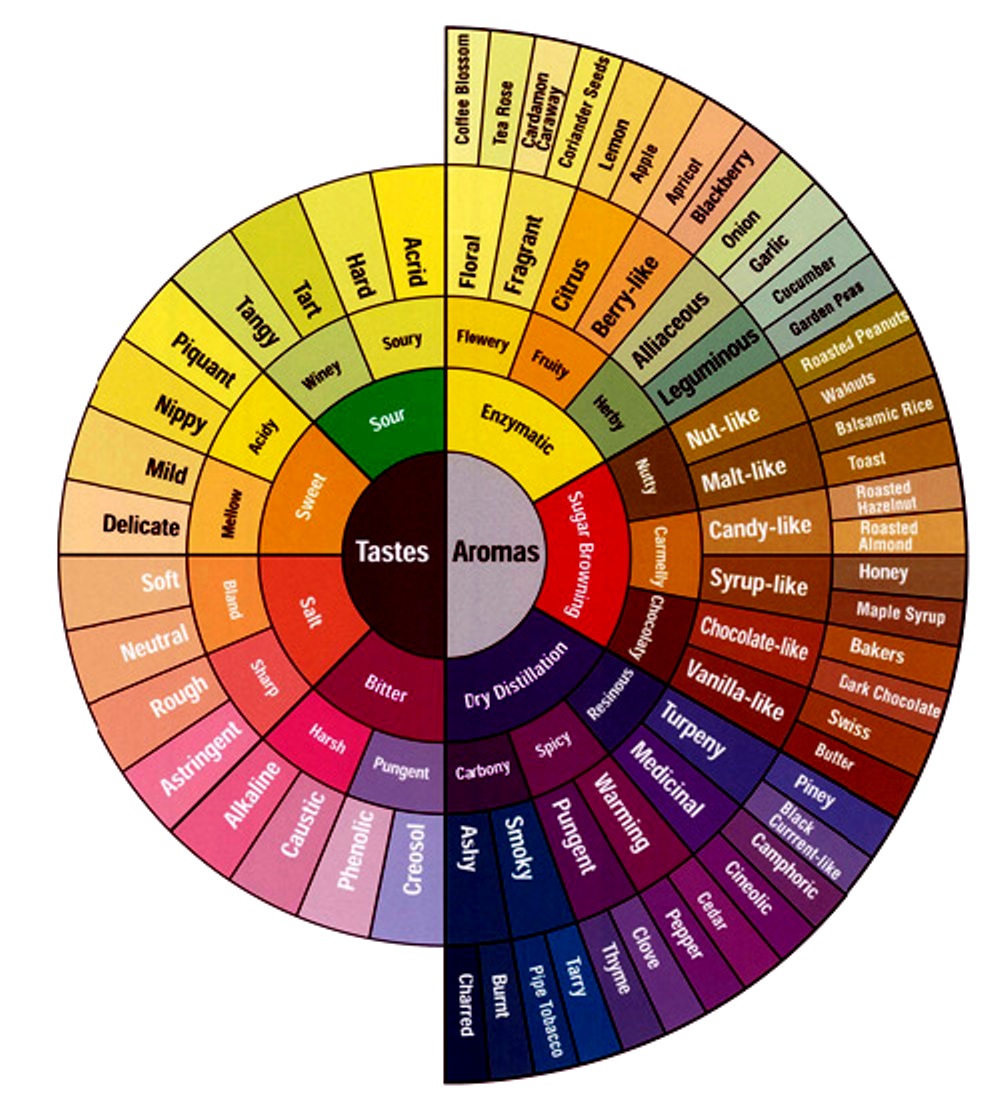
The coffee flavour wheel – but it’s not as simple as that.
I’ve always told people that if you hold your nose – or drink beer from a bottle, which is the same thing – you’re cutting out that 80% of flavour. But our first experiment gave an interesting development on this. We were given bags of Skittles, tiny sweets with intense fruit flavours. We held our noses and placed them in our mouths, and could taste nothing but sugary sweetness.  But then, with out mouths closed, we let go of our noses and the flavours flooded in, instantly recognisable as lime, lemon, strawberry etc. This is ‘retronasal’ activity – when the nasal passages are clear, air breathed in through the nose brings alive flavour which you think is in your mouth, but isn’t. You’re not ‘smelling’ it, but experiencing it in your nasal cavity via the passages linking the nose and the back of the mouth.  
Taste and Sight
It’s often been said that the first bite is with the eye. But that goes way beyond something simply ‘looking appetising’. For this experiment, we were served black ravioli, green mushrooms and purple pesto. It has to be said, it didn’t look great:
Black pasta is at least familiar, and I ‘tasted’ squid ink even if it was only food colouring. The green mushrooms were a real struggle, and the pesto didn’t ‘taste’ of pesto at all, but to me, of something quite fruity. 
This was a toned down version of a previous experiment that had been thought apocryphal, but which Charles Spence has managed to track down. In the early 1970s a bunch of people were fed a meal of steak, chips and peas under very low lighting. Halfway through, the lights were turned up and everything was the wrong colour. The steak was bright blue, and the sight of it caused half the diners to vomit, even though the steak was fine. 
Colour perception in food and drink is hardwired into our evolution. In evolutionary terms, fruit turns into beautiful, attractive colours when it is fully ripe and ready to eat. It wants to be eaten, because its seeds are then spread in the spoor of animals who move around and spread it over a wider area. 
Adding red food colouring to certain foods makes it ‘taste’ 10% sweeter.
But meat and fish are not meant to be blue. 
This reminded me of another press release I received back in March. An American company called DD Williamson gave teenagers three different drinks: one clear, one brown, one pink. They were, of course, identical apart from the colour. The respondents (81% of them) correctly identified the clear drink as having a lemon-lime flavour. The best they could do with the brown one was describe it as ‘sweet’ or ‘fruity’ (34%) with 15% saying it tasted of cola. The red one was considered ‘fruity’, ‘berry’ or ‘sweet’ by 38%, with others suggesting cola or ginger ale.    
A couple of years ago, Brew Dog and Stone collaborated to produce a ‘pale imperial oatmeal stout’. I tasted it with a blindfold at the launch of Brew Dog Camden, and was suitably amazed when the colour was revealed. 
Taste and Sound
Back to Edinburgh, and next up it was my gig. After what I’d experienced so far I was worried I might be bringing the tone down by pairing the Pixies’ Debaser with Duvel and simply saying, ‘Good, innit?’ (It is though – it really works!) 
So I decided to go a bit further. With Chimay Red, I chose Debussy’s Clair de Lune (specifically, from about 1.46 on this clip) because I thought it paired well with elegance, structure and swirling, mysterious depths (though Chimay Blue might have been better for this). I faded it out halfway through, and brought up Hendrix’s All Along The Watchtower instead, for its darkness and heaviness. Just about everyone thought the flavour of the beer changed. And 70-80% of those who did felt it tasted better with Hendrix.
But Charles Spence went one better – because he does this shit for real. He has briefed a composer to take one simple, tonal piece of music and arrange it in the style of ‘sweet’, ‘bitter’, ‘salty’ and ‘acidic’. He played each piece, and asked us to choose which flavour it aligned with. Obviously we could be back in pretentious territory here. But every time Charles does this, he gives the audience buttons to press which record their responses, so over time he’s building up a database of the choices people make. In our session, between 70-80% of respondents agreed on which piece of music went with which taste, and these findings were consistent with Charles’ norms. We may not be able to explain why, but we make consistent connections between certain sounds and certain flavours. 
Taste and touch/texture
For this course/experiment we had a nice shepherd’s pie with a leek and potato mash, and a range of utensils to eat it with. It tasted completely different when eaten with wooden, plastic and stainless steel spoons. It’s all about how the texture of the spoon influences the food. Interestingly, stainless steel, even when scratched, will react with the air and ‘repair’ the coating that prevents food tasting of metal. It’s therefore actually better than silver.  According to Mark Miodownik, the materials scientist who presented this course, we’re the first generations to be able to taste our food without its flavour being compromised.
As a tip – this is why you shouldn’t taste something from a wooden spoon while cooking – unless your guests are also going to be eating with wooden utensils, it’s going to taste different when served.
Mixing it all up – synaesthesia
This next bit is where the headfuck really kicked in for me. 
Synaesthesia, where the senses get mixed up, affects around one in 23 people. (It’s difficult to say for sure because there are so many different varieties of it and many people aren’t aware they have it.) Like many who consider themselves creative, I’d like to think I have a form of it but have never been sure, suspecting I was probably making it up. 
How synaesthetes might see letters and numbers – for some, each has its own colour
Julia Simner, a neuropsychologist and leading expert in synaesthesia, gave us each two lumps of sugar, one a cube, the other round. She told us one of them had been impregnated with a lemon flavouring and the other had not. Which one was flavoured? 
Jumping ahead, I guessed that shape would be influencing our perceptions, and that the two lumps were probably the same. I stared at them. “OK, if I have synaesthesia, the square will taste of lemon,” I thought to myself. Then I tasted them. “Oh no, it’s the round one – that really does have lemon flavouring, she wasn’t messing about. It’s really very clear.”
She then told us that neither shape had flavouring added – they were both just sugar.
So I have a crap palate then, I thought, or I’m just susceptible to suggestion. 
But here’s the thing – I went back for another taste, and even after being told there was no added flavouring to either, that they were identical, the round one still tasted of lemon – even though I knew objectively and rationally that it didn’t. 
Was she lying? Was this a double bluff? 
I put the two shapes behind my back, broke off a piece from each, swapped them around, tasted when I could not possibly know which shape each had come from – and they both just tasted of sugar, and nothing more. I looked at them again, tasted again, and the round one tasted of lemon. This carried on until I’d broken off so many bits the shapes were eroded. Eventually they were both just similar-looking blobs of sugar. The lemon flavour disappeared. 
I have no idea what practical use this newly discovered link between shape and flavour could possibly be, but it’s there, for me at least.

And totally screwing it around – the miracle berry
Finally, we were each given a miracle berry pill. This small fruit is sometimes used as a sweetener, not because it is sweet itself, but because it contains a compound which affects the tastebuds and blocks out sour flavours. 
After eating the berry, we ate a dessert of lemon and lime wedges, which tasted like fresh, sweet oranges.
*
The truth about what we ‘taste’ is that most of it happens not in the mouth, but in the brain. “Taste is, ultimately, just the firing of neurons,” said one of the speakers. “You don’t have to actually eat or drink to experience it.”
You can make someone ‘taste’ a roast beef dinner by opening their skull and stimulating the parts of the brain where taste is experienced (though you should not try this at home).  LSD makes people experience synaesthetic sensations. And due to advances in neuroscience and our increasing ability to map brain activity, we can now both manipulate it and understand it without sawing into people’s craniums.
All of which has amde me very nervous indeed about writing beer tasting notes.
After dinner, a few of the flavour academics and I sauntered to the bar. We were in a student union building and there was just one decent beer – Stewart’s IPA on cask. We carried on talking about synaesthesia and flavour perception for half an hour or so, and then Charles Spence noticed me frowning and grimacing and asked, “Is there something wrong, Pete?”
Yes there was. I was not enjoying my beer at all. It was dreadfully sweet. There was no hop character whatsoever, and it tasted like someone has stirred three sugars into it to compensate. I should have known better than to trust a student union bar with only one cask handle. 
Julia Simner smiled. “How long ago did you eat the miracle berry pill, Pete?”
“About 45 minutes ago, why?”
“The effect lasts for about an hour.”
Let’s hope this research never falls into the wrong hands.
Charles Spence has now thrown down the gauntlet to me to up my game in how apply some of this learning to beer and music matching. I will be attempting to do so at my next beer and music matching event, which is happening lunchtime on Sunday 18th August at the Green Man Festival. Given the amount of drugs the audience will have consumed by that time, I’m feeling pretty confident.

| Uncategorised

Bruce Dickinson: lead singer of Iron Maiden, pilot, and now brewer – guess which bit I interviewed him about?

I’ve just been on tour with Iron Maiden.

When I say ‘tour’ I mean ‘brewery tour’, and when I say ‘Iron Maiden’ I mean the lead singer, Bruce Dickinson.

But still.

When I was at school in South Yorkshire in the early eighties, music was tribal. As my generation reached musical awareness at roughly the same time as puberty it was simple: you were either a mod or a rocker. A fishtail parker with targets and badges or a denim jacket with sewn on patches.

I was a Mod – or at least, I imagined I was. I graffitied my desk in ‘O’ Level German with the logos of The Jam and The Specials. The following week my slogans had been defaced and shouted down by Motörhead and Black Sabbath logos. This graffiti war escalated until it covered the entire desk. At one stage I lost the moral high ground by defacing the inscription “Stairway to Heaven” with the words “are shit” underneath. It was years before I learned it was the title of a somewhat famous song and not the name of a band.

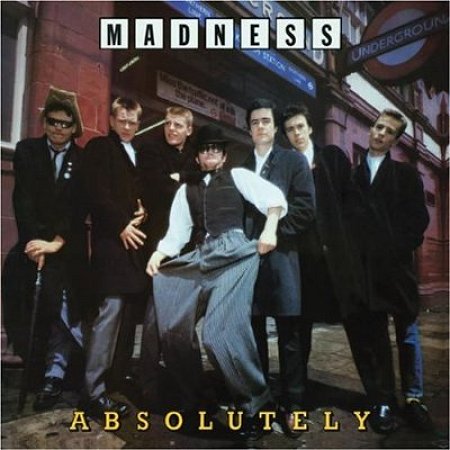
To this day I have never willingly listened to anything ‘heavy’, even though metal legends Saxon were from Barnsley and lead singer Biff Byford’s daughter was in the year below me at school. The first album I ever bought was this one:

Madness were associated with the Mod movement because of their early involvement with the 2-Tone label. And weirdly, and rather wonderfully, I’m going to be helping them launch their own beer next week.

But weeks before that, Stockport brewer Robinson’s gave me the exclusive beer trade interview with their latest collaborator, on the project that has turned very quickly into the most successful beer launch they’ve ever had:

A few weeks before the official launch of Trooper, I’m invited to Maiden’s press office. It’s a Friday afternoon and Dickinson, an affable and absurdly fit and healthy-looking bloke in his early fifties, is fussing about getting some bottles of Trooper cold enough for us to try. Every ten minutes he interrupts his flow to ask his friend and publicist, Iain Macauley, to check the fridge.

Like Madness, Maiden today are no eighties nostalgia circuit band: they’re selling more records than ever, and writing new material for every tour. It surprises me in my pre-interview research to discover an ethic of discipline and professionalism that would be impressive in any industry, let alone the supposedly sex and drugs-fuelled world of hard rock. And the polymath Dickinson takes this perfectionist approach with everything he turns his hand to.

“That’s something that was drummed into me by my Dad,” he says, after deciding his beer is not yet the perfect temperature and must be returned to the fridge. “He taught me that it doesn’t matter what you do – if you’re a road sweeper, be a good road sweeper. Take pride in who you are and what you are, whatever you are. That’s a good starting point. If you’re just in it to make a fast buck, you demean yourself at the same time as being fairly scornful of the rest of the human race.”

When Dickinson took up sword fencing, he ended up representing Great Britain in the sport. After qualifying as a pilot, he not only flies the band’s jet while on tour; he pilots commercial flights in his down time. And when he decided to brew a beer, he was very particular about the type of beer it had to be.

“I live in Chiswick, 600 yards from the Fuller’s brewery, and I’m an ESB drinker,” he says. “It’s a lovely beer, but you can only have a couple of pints. On the other hand, 3.5% beers don’t cut the mustard for me. I wanted a beer that’s full-flavoured and punches above its alcoholic weight.”

To test how serious Dickinson was, Robinsons put him through his paces with a blind taste test – “The first time I’ve had to audition in twenty years!” as Dickson puts it.

“We wanted to work with someone who was genuinely passionate about beer,” says Robinson’s head brewer Martyn Weeks. “So we set up this tasting, including some of his favourites. Out of ten beers he was actually able to name six of them, including the ones he said were his favourites, and he got them all right! He really took his time to work out a recipe he liked. He spent ages in the hop room picking out his favourite hops. The result is a genuine collaboration. Bruce likes his southern English, full-flavoured beers, and Trooper has turned out unlike any other beer we brew.”

Dickinson is also delighted with the result. “It punches above its weight in terms of flavour but sits just the right side of brain damage,” he says, “Everyone can have a good session and we can all go away friends.”

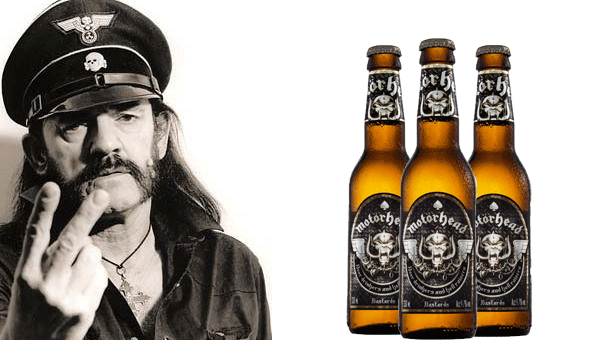
This easygoing sessionability has proved surprisingly subtle for commentators who were expecting more of a punch after being by charged by a demented zombie on the pump clip. It may lead to accusations of blandness from some. But the whole point of this beer is that it is a genuine passion rather than a gimmick constructed by marketers aimed at a specific group of fans. I mean, if it were that, wouldn’t you expect a metal band to maybe brew a lager instead, like Lemmy did?

“I don’t drink mainstream standard lager,” says Dickinson. “If I was thirsty in a pub with no real ale I’d rather have a lime and soda. But anyway, we haven’t positioned Trooper as a beer from a metal band – it’s a brand of beer brewed by Robinsons that we’ve developed with them. They’ve had six generations of brewers there, they’ve got some highly respected beers, and what they don’t want is a bunch of rock stars coming up and duffing up their reputation, because they’re still going to be there in another two or three generations.”

So we get it – Dickinson is a real ale fan. As well as Fuller’s ESB, he namechecks Doom Bar and Wadworth 6X as two of his favourite beers (and picked them out successfully in the blind taste test). It would be easy to infer from this choice that Dickinson knows only safe, familiar, established real ale brands – easy, but completely wrong.

“I’m a big Belgian beer fan as well,” he says, “I love the Trappist beers – they have such a great tradition over there. Their beers are unique as well, like our real ales. I just hate bland beers. I can’t stand Budweiser. They’re the Great Satan, and they’re trying to shut down one of my favourite Czech breweries. There’s something I instinctively dislike about Budweiser. I won’t have it in the dressing room when we’re touring.”

Has he had a chance to try American microbrews then?

He hesitates, before replying, “They get it almost right. It’s not bad beer necessarily, but it’s trying too hard. The hops are a bit too much. You have half a pint and you’re not sure about having another one – they don’t seem to have got the thing about sitting down and enjoying a beer. I want to be able have a beer at lunchtime and feel OK in the afternoon.”

So Dickinson’s firm preference for trad English real ale is an informed choice. And it’s a liking that goes hand-in-hand with that symbiotic partner to beer, the Great British Pub.

“I’m quite traditional in terms of pubs – always have been. Even as a kid, I always liked the idea of a country pub in the city, a haven from racket and noise and jukeboxes and people being loud and boorish. A sanctuary where you can just sit and talk.”

Can he still find such sanctuary now he’s a world-famous rock god?

“Absolutely! I mean, it varies geographically. Brazil? Forget it. But I’ve got my local pub in Chiswick and I go there all the time. Sometimes metal fans ask for my autograph but they’re always so polite!”

Like so many bands, Iron Maiden started playing together in pubs. Is the pub still important to bands on the way up?

“My son is in a band now and the scene is exactly the same as it always has been – people want to get together to do some gigs with their mates somewhere. The number of places they can do that has been decimated by endless pressure from the government. It’s fine if you want to have three hundred football hooligans watching telly, but if you have even a folk group in corner, suddenly it’s a massive health and safety issue, you need a special licence and all that nonsense. It’s done a massive amount of damage to the idea of live music in pubs, which is taking ages to recover. And the world is full of NIMBies now. As soon as you open a pub door and there’s a bit of noise coming out – especially if it’s live music – people complain. There needs to be a concerted effort to get live music back in pubs.”

He becomes increasingly passionate as he warms to his subject.

“And then there’s the bouncers and doormen who look like the anti-terrorist squad standing outside pubs. It’s a pub! We should all be friends here. I find it intimidating and loathsome to be honest. Beer and pubs are the centres of out communities and those communities are being decimated. We need to do more to protect this great British institution.”

A few weeks later we meet again at the official launch of Trooper in Robinsons’ brand new brewery visitors’ centre.

Bruce pulls the first pint of Trooper on cask, and I’m surprised to find it much better than the bottle, because the bottle wasn’t bad. The cask is hoppier, with a building dryness that makes it naggingly drinkable, a pint that seems to evaporate from the glass.

Bruce insists on conducting the collected journalists, trade people and liggers around the new brewery himself. He talks confidently and knowledgeably about the history of the brewery and the intricacies of brewing process, without notes.

“He’s done this tour once, with me,” whispers John Robinson, the brewery’s brand manager, as we stand by the copper. “We rushed him round in twenty minutes and look at him – he knows it off by heart.”

Dickinson repeatedly says “we” when referring to Robinsons. By the end of the tour, I’m convinced he’s angling for a permanent job. Forget the adulation of fans across South America: I think he’d rather be mashing in every morning in Stockport.

Would he like to do another brew?

“One of the most enjoyable things about beer is that you can never know it all,” he replies. “There’s always more to learn, always the unknowable to throw a spanner in the works. It’s like flying – it’s not an exact process. I’m fascinated by it. But I want to spend several months with this one before embarking on another. It’s like writing songs – you build up a creative head of steam, and all of a sudden there’s a big splurge. You’ve got to feel inspired by something to do it. My inspiration for Trooper was just to have a beer that gave me the same feeling as when I discovered the beers I love. The moment when you taste it for the first time and it’s, ‘Oh. Oh wow. That’s nice’. I’d like Trooper to be like that, to become an old faithful.”

Back at the end of our interview weeks before, as I pack up my tape recorder and notebook, Dickinson mentions offhand that for his next trick, he’d like to get some decent beer onto planes. I mention one or two practical difficulties with this and he fixes me with a cold stare. And there we are for another twenty minutes, trying to solve the problem.

I’d sort of half-expected a chat about beer with someone going through the motions on the latest example of an increasingly vogueish marketing stunt between brewers and musicians. Instead, despite the protests of my inner Mod, I’ve enjoyed spending time with one of the most passionate beer enthusiasts I’ve ever met.


A much briefer version of this piece appeared originally in this week’s edition of the Publican’s Morning Advertiser.

| Uncategorised

Elbow: From “Build a Rocket Boys” to “Brew a Beer, Boys”!

I love the band, Elbow, for a great many reasons.  And even though it’s the greatest cliche in popular music history, I’ve loved them since their early stuff.

As a wordsmith, even one of the everyday hack variety, I love Elbow for lyrics such as:

“I’m proud to be the one to hold you when the shakes begin”

“You little sod I love your eyes/be everything to me tonight”

“Grow a fucking heart, love”

“Throw these curtains wide/one day like this a year would see me right”

“We still believe in love, so fuck you”

“Dear friends/you are angels and drunks/you are Magi”

“You were freshly painted angels/walking on walls/stealing booze/and hour long, hungry kisses”

“The violins explode inside me when I meet your eyes/and I’m spinning and I’m falling like a cloud of Starlings………….darling is this love?”

I love them because of their cleverness, their instrumentation, their openness.

I love them because they are five crumpled northern blokes who look like they could be my mates.  (And I secretly love the fact that people keep telling me I look a little bit like lead singer Guy Garvey, especially around the saggy, weary eyes).

I love them because Guy Garvey genuinely seems like one of the nicest men in the world (I’d love to see him and Andy Moffat from the Redemption brewery each trying to buy the other a pint – I really wouldn’t bet on who would crack first and accept the other’s hospitality rather than give it).

I love them because they absolutely reek of the pub.  I know they spend their time in pubs, and their music feels like it was born in pubs, it feels like that’s where it should be performed, even though it works in vast arenas and on Glastonbury’s main stage.

And now I love them because they’ve brewed their own beer:

The beer itself is not news: it was announced a good few weeks ago now, and is just about to be launched.  It’ll be officially launching at the Manchester Food and Drink Festival, where I’m attempting to arrange an interview with them about the beer.

What’s new is that the beer is now going to be available in bottle, so fans outside the north west can enjoy it.  And that a percentage of profits will be donated to Oxfam. Because they’re really nice lads.

If I can anticipate the inevitable “Why did they choose such a dull brewer to work with?” comments – Elbow specifically selected Robinsons because they wanted to work with a brewer local to them in the north west.  And if I was to imagine what an Elbow beer is like, it’s not some flashy, hop-heavy imbalanced beer: an Elbow beer is an accessible, traditional beer, one of those pints you’d have with your dad when you go back home, one of those beers that you can drink a few pints of, is balanced, fruity with a dry finish.  And that’s exactly the kind of beer Elbow went for.  So long as it’s done well, there’s always a place for it, and Robinsons brew it perfectly well.

There will soon be a website for the beer, telling you where you can get it and stuff.

In the meantime, if you can’t get the Build a Rocket Boys! beer, you can still get the Build a Rocket Boys album, and if you haven’t done that yet, I suggest you do.