Category: Uncategorised

| Uncategorised

Eat Your Words on Saturday

The first of my two events at Stokey Lit Fest sees me face my biggest insecurity as a beer writer: tasting notes.

Writing tasting notes – describing the flavour of a beer – requires two separate skills: identifying flavours on your palate, and translating those flavours into text that conveys a sensory experience reasonably accurately in a way that will be meaningful to your reader.

Let’s take the first part first.  We’re all born with a certain number of flavour receptors in our mouths, and that number varies widely from person to person.  And like most people who prefer a hop bomb or Imperial stout over a perfectly balanced session beer, the simple truth is I’m a poor taster – I have fewer taste buds than average.  That’s why I also prefer hot curries and strong cheeses.  At the other end of the scale, ‘super tasters’ have loads of taste buds, and can find the hop bomb I love almost physically painful.  As I tell people in all my tastings, it doesn’t mean they’re a wuss – it means they have a far more delicate and effective palate than I do.

I’ve compensated for this by doing a lot of flavour training, and if I work hard I can usually nail subtleties of flavour.  But in every session I do, there’s always someone who just gets it, with what seems to me to be an almost supernatural gift.

Then there’s the second part – conveying meaningfully what’s going on in your mouth.  At a tasting session, this is where a good dose of auto-suggestion helps.  The novice will often sit there struggling, saying “I like it, but it just tastes like beer.” It’s only when you say, “Anyone getting a hint of citrus sweetness there, a taste of grapefruit perhaps?” that the lights start to go on.

I’m better at the language part of the tasting equation than the flavour identification part.  Once I have my building blocks laid out I can relax, because I know I can put them together in a readable and original way.  But my facility with language makes me think often about how we do this.

Many readers of this blog will already know this, but while we use the words ‘flavour’ and ‘taste’ interchangeably – I still do in everyday speech – they’re quite different.  Taste is a subset of flavour.  Taste is detected by the tongue, which can identify four or five basic tastes: sweet, bitter, sour/acidic, salty and, if you believe in it, umame (savoury – think soy sauce).  But our noses and nasal cavities are full of flavour receptors.  Aroma is a huge part of the total flavour equation.

So how do we describe flavour?  Bitter, sweet, salty, sour and savoury are pretty much the only words that truly describe taste.  Period.  But we write such florid flavour descriptions – so how do we do it?

Brewers or beer judges have a technical language that’s useful for scientifically pinpointing flavours that should or shouldn’t be there, but is useless to the average reader – estery, phenolic, diacetyl.

The unimaginative or lazy writer will default to describing the ingredients: it’s malty, it’s hoppy, it’s got a hint of Bret (Brettanomyces, or wild yeast).

How do we make it more interesting and evocative?  We enter the field of comparison, and board the raft of tasting knowledge.

Let’s say you want to expand on ‘hoppy’ for someone who has no idea what that means. (I was working around beer for about three years before I knew what ‘hoppy’ meant.  “This beer is really hoppy.” “Is it? How?  Why?  What is it in this glass that you’re referring to when you say that?”)

You might start with, “Hops give beer it’s aroma.  What you’re smelling when you smell beer is mainly hops.”

“Oh yeah?” comes the reply, “Well it JUST. SMELLS. LIKE. BEER. Help me out here!”

So we’ll start using words like citrusy, or grassy, or spicy.  That’s fine if someone knows what those things are, and tasting notes work because the vast majority of us do, and have a reasonable level of agreement on what those things taste or smell like.  But what if we didn’t?

“What do you mean, citrusy?”

“Well, can you detect that hint of grapefruit?”

“Dunno, what’s grapefruit taste/smell like?”

“Well, a bit like a lemon, only less sour, kind of like a cross between a lemon and an orange.”

“What’s an orange taste like?”

Can you answer that last question?  What does an orange taste like?  Orangey? Sweet? Citrussy?  In language terms, you’re back where we started.

My belief is that the actual words don’t exist, and you have to rely on constructions of language, a level of artistry rather than simple description, to accurately convey a ‘mood’ of the flavour.  But then you run the risk of becoming pretentious and alienating the very novice you’re seeking to attract.

It’s not easy.

These are questions that face anyone who writes about any food or drink.  And at my Eat Your Words session, I’m joined by three other writers for a unique event to discuss the issue.

Niki Segnit is a great friend of mine and regular reader of this blog (Hello Niki!)  This month she releases a book she’s been working on, in one form or another (it wasn’t always going to be this book) for the best part of a decade.

The Flavour Thesaurus is a stunning work – both to look at and to read.  Heston Blumenthal has already declared it “original and inspiring”.  Niki has taken 99 ingredients, and has for each one analysed what the flavour is, and worked out which other ingredients it best pairs with.  The result is a book that can help anyone who follows recipes and knows what they’re doing in the kitchen start to think in terms of flavour combinations, and ultimately cook without recipes.  Chocolate and tomato? Pork and rhubarb?  Beef and lemon?  This shows you why, and how.  Niki’s going to be kicking things off with what she learned about the whole taste and flavour thing.

Then we’ve got Ian Kelly, who among many other things (including being Hermione’s dad in the Harry Potter films) is an historical biographer.  He’s written about Careme, the first ‘celebrity chef’, who cooked for people like Napoleon and George III, and also about Casanova – who, it turns out, had a day job as a food writer, and – being him – was very into the whole sensuousness of food and drink.

Ian will look at how people used to write about taste and flavour, and we’ll be discussing how first Victorian prudishness and then years of war and austerity stopped us from appreciating flavour, and how we’re now just starting to learn how to write about it with gusto again.

Our final speaker is a perfect example of this – Elisa Beynon was an unpublished writer when she entered a Waitrose Food Illustrated competition in 2007, and won it with “enthusiasm, warmth and gentle humour” and “a truly original voice” according to judge Nigel Slater.

She’s now published The Vicar’s Wife’s Cookbook, and after giving a cookery demo in Stoke Newington Farmers’ Market with organic ingredients from the market, she’ll be joining our panel to talk about how she has tackled writing about flavour in a way that’s seen her cut in to a very overcrowded market and establish a niche for herself amid endless celebrity chefs.

Our session is at the White Hart, Stoke Newington High Street, this Saturday 5th June, at 2pm.  Tickets are £4, £3 concessions.  We’ll have samples of beer and chocolate to help the discussion along.  Hope to see you there!

| Uncategorised

Big week in Pete Brown Beer World

* Long self-indulgent post alert – I beg your forgiveness, but this one’s been years in the making… *

It’s the week of ‘The Beer Trilogy’.  Pan Macmillan have released rejacketed, shiny new editions of my three books.  And it’s also Stoke Newington Literary Festival Week – the event organised by the Beer Widow which, perhaps inevitably, I’m speaking at, and perhaps more inevitably, the event I’ve spent the last month or so working full time co-organising.  I’ve got a bit of a taste for it to tell the truth, though with only four days to go my organisational skills are starting to unravel.

So this week I’m going to do a shameless sales plug for each of the three books – shameless but honest, so you can decide if you need to buy them (again) or not.  And I’m also going to reveal more about my events at the festival.  Somewhat astonishingly, although the session with Tony Benn being interviewed by Suzanne Moore sold out last week, and Stewart Lee reading from Arthur Machen is about to sell out any second now, there are still tickets left for both my events.
So what to talk about first?
Let’s start with this one:

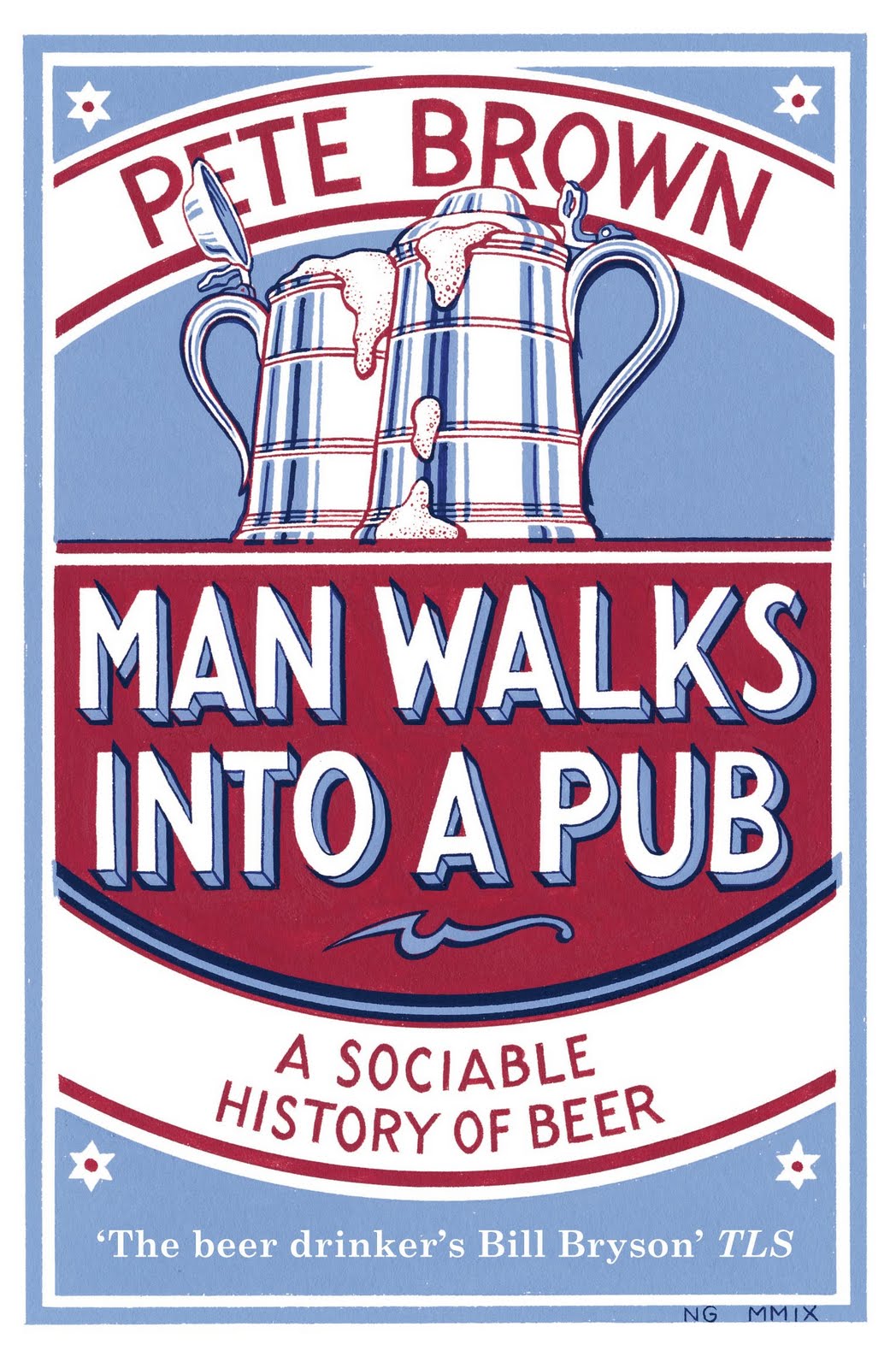
Man Walks into a Pub was my first book.  I’d wanted to write books since I was nine years old.  When I was 25 I won a short story competition run by Time Out.  I thought this would be the first step on the road to literary stardom, that the phone would ring off the hook with agents asking if I had a novel, and I’d reply “Why yes, here’s my coming of age novel about a bloke who went to university in St Andrews and now works in London in an ad agency and fucking hates it.  Totally fictitious obviously.”

The phone didn’t ring.  Worse than that, Time Out cancelled the short story competition and have never run it since.  But I used the laptop I won – my first ever – to finish the novel, flog it until one agent was kind enough to tell me how bad it was instead of giving me polite refusals like all the others, wrote a few short stories that got better and better but remained stubbornly unoriginal, and finally bought a bigger computer, discovered real time strategy games and stopped writing for a couple of years.

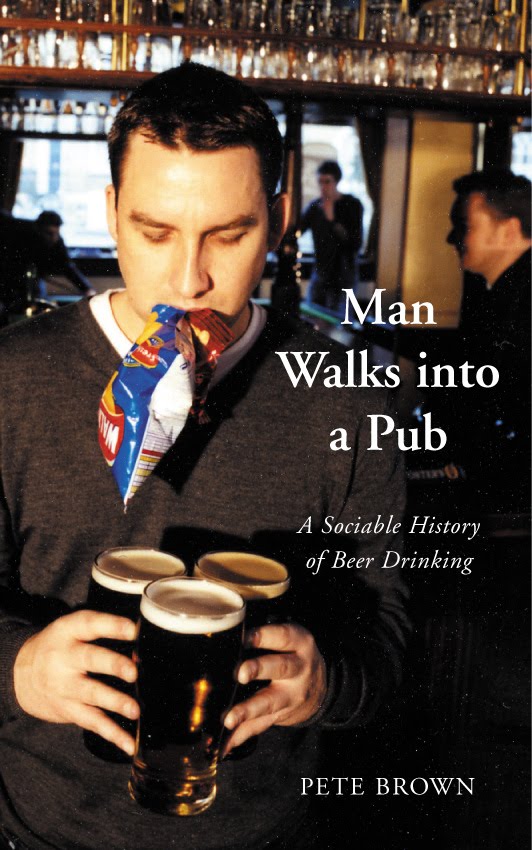
Nine years after the Time Out short story, Man Walks into a Pub was published.  Lots of people bought it, and continued to buy it over the years.  At first it had this cover, the idea for which me and Chris came up with in the pub:

That’s me at the bar in the background – that’s how long ago this was.  When I did readings and events and interviews, any women present struggled unsuccessfully to hide their disappointment that I wasn’t the bloke in the foreground.  CAMRA felt this cover was ‘yobbish’ for some reason, when they slated the book, and WHSmith didn’t like it either.  But I did.

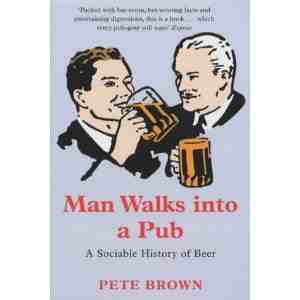
Then, when we moved from the posh ‘trade paperback’ edition to the ‘mass market’ paperback, it had this cover, which I hate beyond reason, and snarl at whenever I see it:

The first time I saw it I said, “Hmm, not sure about the rough; when do we see the finished design?”

“This is the finished design,” replied my editor.

“It can’t be.  I could do better myself on PowerPoint.  The image looks like a piece of clip art, for God’s sake,” I said.

“Well WHSmith say they love it and with this cover they’ll order seven thousand copies,” said my editor.

“I love it,” I said, “It’s a fantastic cover.”

And so we went with it, and then Smith’s changed their minds and didn’t take a single copy, and we were stuck with it for six long years.

Not many authors get the chance to do a revised second edition of their books, but you lot kept buying it, and it continues to make a bit of money for Macmillan and a much smaller bit of money – about the price of a cheap holiday – for me each year.  But as time went on, it wasn’t just the shit cover I felt guilty about.

MWIAP narrowly beat Martyn Cornell’s Beer: The Story of the Pint onto the bookshelves (something for which I think Martyn may just about have forgiven me).  They’re two very different books on exactly the same subject and I’d urge you to buy both if you haven’t already done so.  Mine is definitely the easier read.  But one of the reasons for that is that I simply repeated all the tall stories that have been handed down through beer books over the last century or so – everyone says it, they were saying it in that book in 1912, it must be true.  But we live in an age when that’s no longer good enough.  The blogosphere, especially writers like Martyn and Ron Pattinson, pinpoint myths and bullshit and destroy them with forensic analysis.  The start of that – for me at least – was reading Martyn’s book and realising that key parts of mine were inaccurate.

On top of that, the world moved on.  Man Walks into a Pub was finished before Progressive Beer Duty caused an explosion in microbrewing, before most beer fans in Britain were aware of the stunning beers coming out of the States, before the rise of neo-prohibitionism, before beer duty hikes and the smoking ban, before the Licensing Act and the liberalisation of pub opening hours.  It was badly out of date.

Finally, it was my first book – and it was trying too hard to please.  The tone and overall voice of the book was still right, but occasionally the footnotes grated and some of the ‘jokes’ made me wince on rereading them.

So: new cover that pisses all over the previous two and provides an essential addition to any beer fan’s book shelf aside, if you’ve bought/read MWIP before, do you need to buy it again?  Here’s a list of changes.  Depending on your level of interest and sanity, you can decide for yourself:

  • Overall, a general read-through correcting bits that were factually inaccurate, removing the jokes and footnotes that didn’t work, changing bits that were just too gauche or naive.  
  • A new preface to the second edition which expands on the story of how I went from Stella ad man to beer writer, and the thinking behind the new edition.
  • Some newer, more clearly thought-out stuff on the origins of beer and what early beer was like.
  • A completely new section on the origins and history of Porter, which owes a debt of thanks to Messrs Cornell and Pattinson.  And the admission that the most often quoted bit of the first edition – the Meux Brewery disaster – was a load of bollocks.  I’ve tried to atone for this by offering the most detailed, factual account so far of what really happened on that fateful day in 1814.
  • A new section on IPA – a very brief precis of the story in Hops and Glory.
  • A more accurate and expanded version of the origins of Pilsner.
  • A fully updated and revised version of the chapter on CAMRA.  I first gained notoriety with this book by being the first beer writer (that I knew of) to slag off CAMRA in print.  Since then I think I’ve changed and I think CAMRA have changed – for the better in both respects (my recent spats notwithstanding).  I set out to cut down the slagging bit and write a new section on how the organisation has progressed over the last decade.  That part is present and correct.  But I wasn’t quite as successful in cutting down the criticism as I’d hoped.  OK, I admit it, the critical bit is even longer than it was.  But it is balanced by fulsome praise where it is due.  I hope it also comes across that I no longer slag CAMRA as one homogenous organisation: some bits and people do great stuff, other bits and other people do silly stuff.
  • A fully revised and updated version of the chapter about big lager brands.  Gone are the pages of praise for Stella.  I’m not recanting my admiration for the brand of ten years ago, merely documenting its rapid fall from grace, as part of the account of the decade when big lager brewers simply ran out of ideas, and the craft beer revolution took off.
  • A fully revised and updated version of the chapter on the recent history of pubs, taking in the PubCos etc, and all the shit that pubs now face, the impact of licensing reform and so on.
  • Finally, a new last chapter on the rise of neo-prohibitionism.  This is not a rant.  Nor is it a forensic analysis of the bullshit claims of the neopros like I did in January on this blog.  It’s a history of binge drinking as a media and political phenomenon, which demonstrates that the current case against drink is built on a tissue of bad science, political expediency and media bollocks.

Apart from that, large sections of the book – the core story – have not changed.  But only one chapter out of fourteen has had no revisions at all.  I’d say 15-20% of the total text is different.  

The official release date is Friday (4th June), and Amazon is still showing the horrible old cover.  But the new editions are already in my local bookshop and if you look closely, the version on Amazon is the revised edition.  We just need to get the visual changed.

If you haven’t read it before, I really think you should order it right now.

| Uncategorised

Pete’s Pub Etiquette: no.4 in a depressingly rare series

Changing the format of this series from a rip-off of Viz Top Tips to a rip-off of You Are the Ref, with apologies to Boak and Bailey who had that particular idea first.

This time, you are the beer drinker.

You’re in a pub – one of your local haunts.  You know the landlord pretty well and he knows you write about beer so he’s always keen to get your thoughts on his offering and he buys you the occasional pint.  But he’s away – he’s got to go and sort out another pub in the small group to which this one belongs.

You buy a pint of cask ale and it isn’t right.  It’s clear, but the flavour is all wrong.  You suspect the reason for this is that the beer has been put on sale before it has had time to condition fully.  You take the pint back, and the staff change it, asking you what you think is wrong.  You tell them you think it’s been put on sale before being fully conditioned, and the duty bar manager says, “You’re probably right.  We had such a busy weekend the beer’s being flying out, and I wouldn’t be surprised if we’re putting the cask beers on too early.”

With this information, you decide to order a pint of Pilsner Urquell instead.

Back at your table, you find the Pilsner is also undrinkable.  It’s full of acetaldehyde, the green apple flavour indicative of oxidisation.

So here’s the first question: you’ve already taken one beer back.  You’ve got another that’s undrinkable.  Do you:
a) Take the second beer back, tell the the lager’s shit as well as the ale, and make yourself a complete pain in the arse, inevitably looking like a bit of a twat even though you’re in the right?
or
b) Just leave it untouched on the table and go somewhere else as soon as the Beer Widow has finished her Leffe?
or
c) Something else I haven’t thought of?

Because I dunno.  I do know that if I didn’t know the circumstances, with the landlord being away and everything, I’d never set foot in the place again.

But there’s a part two as well.

As you’re leaving, you walk past the bar and you see the bar manager serving a customer with the same cask ale you took back, the cask ale he has admitted should not be on sale.  Now, what do you do?  He’s either calling you a pain in the arse behind your back, or he’s assuming other customers who aren’t the same sticklers as you will simply not notice.  But what if other customers do notice, and without your level of knowledge, they just assume that the beer is shit, or the pub is shit, or both, and go somewhere else next time?

You like this pub.  Again, what do you do?

| Uncategorised

The Jewels in Greene King’s Crown

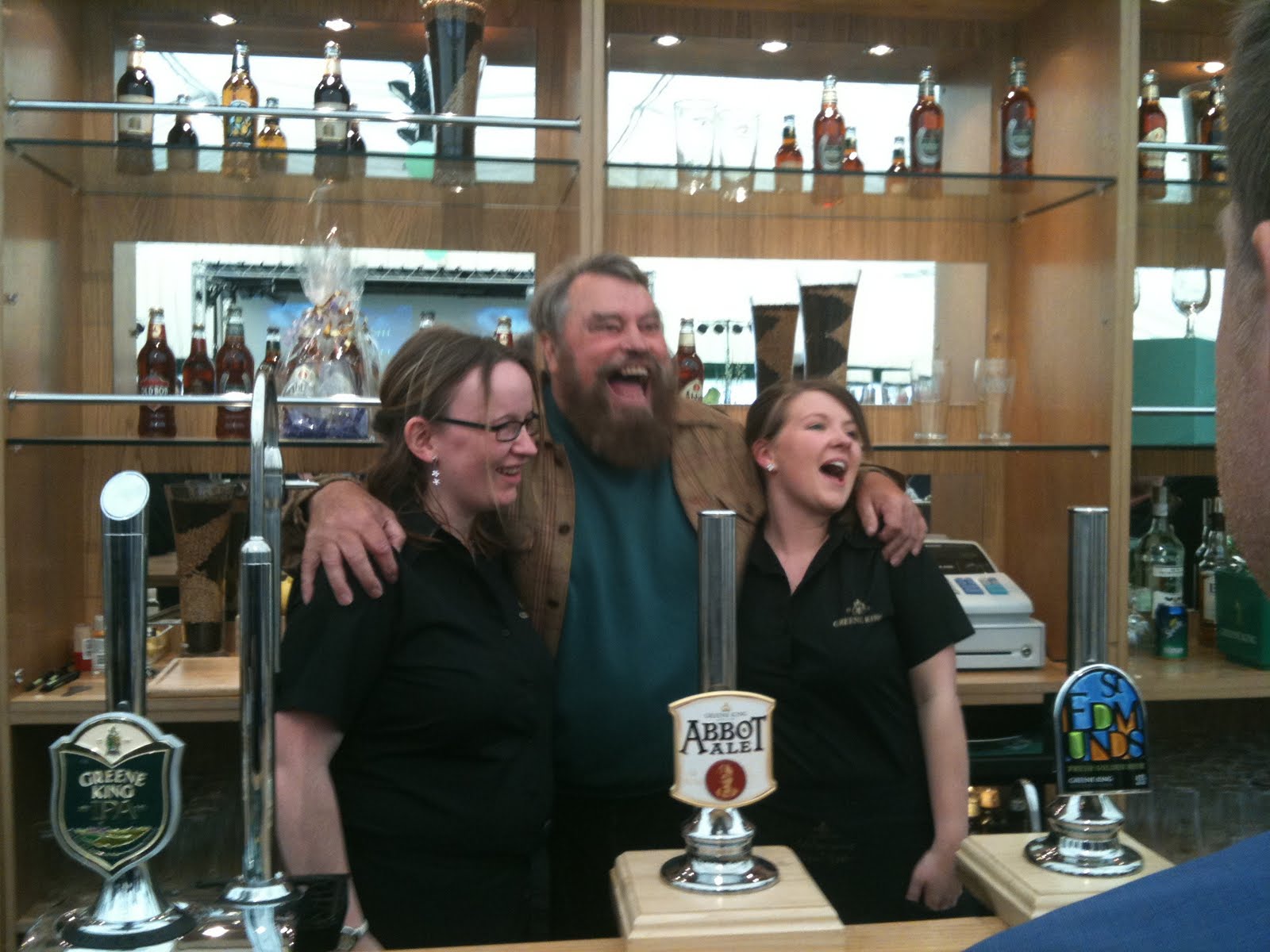
He’s the Guv’nor, Brian Blessed.  If Labour had used him during their election campaign, they’d still be in office with a healthy majority:

And now he has a marketing relationship with Greene King, telling Man Walks into a Pub jokes on Dave in the sponsorship idents during Friday night comedy.  The more I think about it, the more perfect that seems.  Here he is doing my favourite ever MWIAP joke:
And best of all, he’s from Barnsley – Mexbrough to be precise, a small mining village on t’other side of town from the mining village I grew up in.  I met him last week.  He’s 72 now, and he was telling me how when the war ended and he was just a lad, he ran down to the prisoner of war camp at the bottom of the village and bellowed – even at the tender age of 7 or 8 – “HITLER’S DEAD!” through the fence, and all the Italian POWs were really pissed off because it meant they would have to leave the paradise of an open prison in Barnsley and return to shitholes like Tuscany and Milan.  
From “Hitler’s dead” to “Gordon’s alive” – the symmetry of genius.
I met Brian because I was invited to a couple of events being hosted by Greene King, one of which he was doing a speech at – but more of that later.
I spent two days in Bury St Edmunds, having a brewery tour and tasting, a meeting about the forthcoming Cask Report, a charity black tie dinner and a head brewer’s lunch for publicans.  I came away with a changed impression of Britain’s biggest  (depending on how you look at it – Marston’s would probably disagree) cask ale brewer.
I’m not going to sit here and pretend I love Greene King IPA, or tell you they’re my new favourite brewer, or defend corporate howlers like the debacle they had in Lewes over trying to make people drink their beers instead of Harvey’s, but I saw a different side to them, and detected a change of attitude.  Greene King is perceived in many places as the cask ale brewer we love to hate, what with them being booed when IPA was runner-up Champion Beer of Great Britain a few years ago.  I’ve never written a single favourable word about them on this blog before now and I’m not sure many other beer bloggers have either, so in the interests of fairness and balance, I merely offer the following observations:
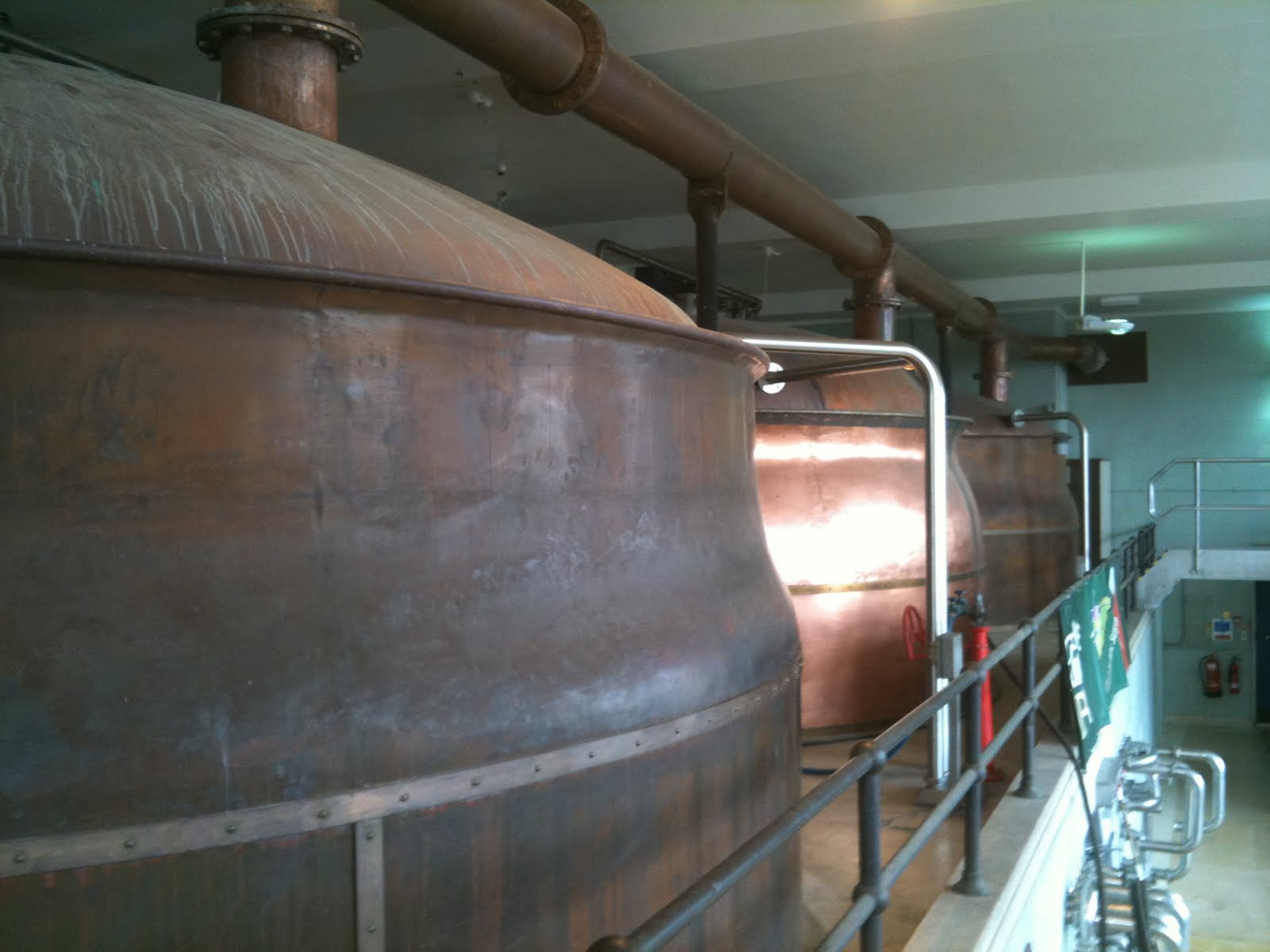
1. The brewery tour starts on the roof.  From up there, you can see the whole of Bury St Edmunds, incredibly green and pretty.  You can see where the locally sourced malt comes from, less than two miles away.  You can see that while the brewery is big for such a small town, it’s nowhere near the size of the big corporate behemoths the multinational lager companies own.  And inside it still looks like this:
2. I have never met a brewer who is more obsessed by quality and rigour throughout the brewing process than head brewer John Bexon. I’ve started having nightmares about being caught in a crossfire conversation between him and Stef Cossi from Thornbridge, staring down an eternal abyss of enzymes, sugars and Kieselguhr.  GK does product tastings every morning in a tasting room deep in the bowels of the brewery, where there are no atmospheric effects or odours to interfere with the palate.  Tasting is done from black glasses, under red light, so all stimulus apart from the aroma and taste of the beer is stripped away.
3.  I’ll never really get on with Greene King IPA, but tasting it in the brewery tasting room, fresh and perfectly kept, almost made me utter the words, “There are some amazing beers from around the world, but none of them can match a cask ale at its peak” (a sentiment I’ve seen on other blogs this week, but not in relation to Greene King IPA).  There’s a light in the tasting room that they use for checking the condition of the beer.  This is what it looks GKIPA looks like in front of it:
4. The water for GK’s beers comes from artesian wells beneath the brewery.  This water has to be purified because fertilisers and chemicals from the surrounding farmland have got into the aquifiers.  Once it has been purified, Bexon adds back in the salts for Suffolk water for Greene King beers, the salts for Nottinghamshire waters for Hardy & Hanson’s beers, the salts for Essex water for Ridley’s beers, and so on.
5. Greene King have a reputation for going around swallowing up smaller brewers.  But in two high profile cases over the last few years – Ridley’s and Hardy & Hanson – it was the other brewer that first approached Greene King asking to be bought.
6.  St Edmund’s Ale is nothing special but a perfectly pleasant drink on a balmy spring evening on the lawn.  Strong Suffolk Ale is a really good beer.  Abbott Reserve is one of the best beers I’ve tasted this year. And they’re just launching a 7.5% ‘Special IPA’ based on an authentic Victorian recipe.  They’ve compromised on the hop levels (the simple fact is Bexon is not a hop-head) so it’s not a hop bomb, but it’s strong, complex, nicely balanced and fantastically and dangerously drinkable for 7.5%.  So yes, Greene King IPA and Abbott Ale are fairly unchallenging if you’re really into your beer.  I choose not to drink them if I have a choice.  But this brewery can and does produce some pretty special beers.  
7.  I get the distinct impression there’s been some soul searching going on.  It felt like GK has realised they’re seen as the big corporate baddies of the ale world and taken some of that on board.  I found them more reflective, more open, more friendly, than ever before, with a renewed emphasis on being proud of being a Suffolk brewer, proud of Bury St Edmunds.
8.  Brian Blessed’s dad drinks Greene King IPA. ‘Nuff said.
So back to Brian’s speech.  It was mad, hilarious and inspiring.  He holds world records for going up in planes to the edge of space, and going up Everest without oxygen.  He tells us this is because his brain doesn’t need oxygen to function.  
He warns us of the dangers of going out from a tent just below the summit of Everest for a shit, of how the howling wind can catch your turds, throw them back into the air so they land on your shoulder as you climb back into the tent.  
He tells us of the time he told this story to the Queen.
He tells us he’s almost finished his astronaut training, and that next Spring he will become the oldest person ever to fly into space, when he will enjoy a stint on the international space station.  He’ll be 73 years old.
And he treated us to “GORDON’S ALIVE!”
Anyone who is alright by the guv’nor is alright by me.

| Uncategorised

The war against beer

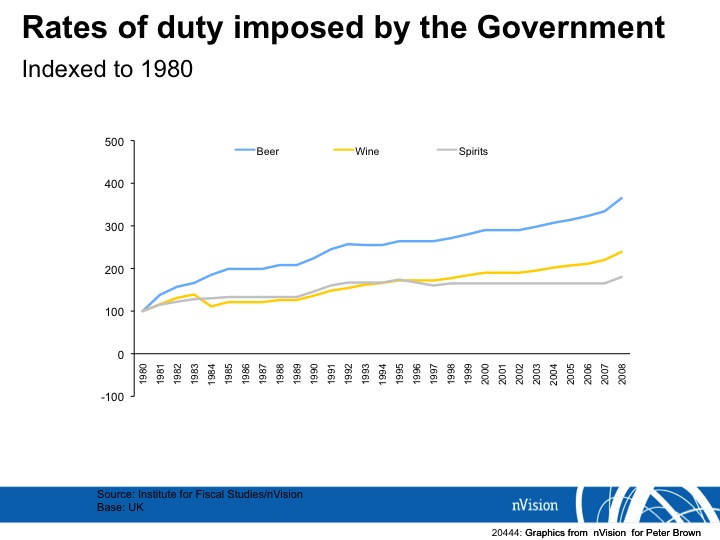
The one good thing about the bit of freelance advertising work I did recently was the opportunity to get my hands dirty in some interesting data.  Research company NVision always pull together numbers in a really interesting way and make some powerful observations – such as this one:

Over the last thirty years, beer duty has increased almost fourfold.  It has increased far, far more than duty on wine or spirits.

Perversely, the less alcoholic a drink is, the more it gets taxed.

Proof that successive governments of any party are biased against beer.

They see duty purely as source of revenue.  Taxation policy has nothing to do whatsoever with trying to curb binge drinking.

And alcohol taxes are regressive – this is an oversimplification, but what’s undeniable here is that poorer people over time pay a constantly increasing proportion of total alcohol taxation.

| Uncategorised

Books and that

It was a proud day for me yesterday when I found out these had arrived in the warehouse:

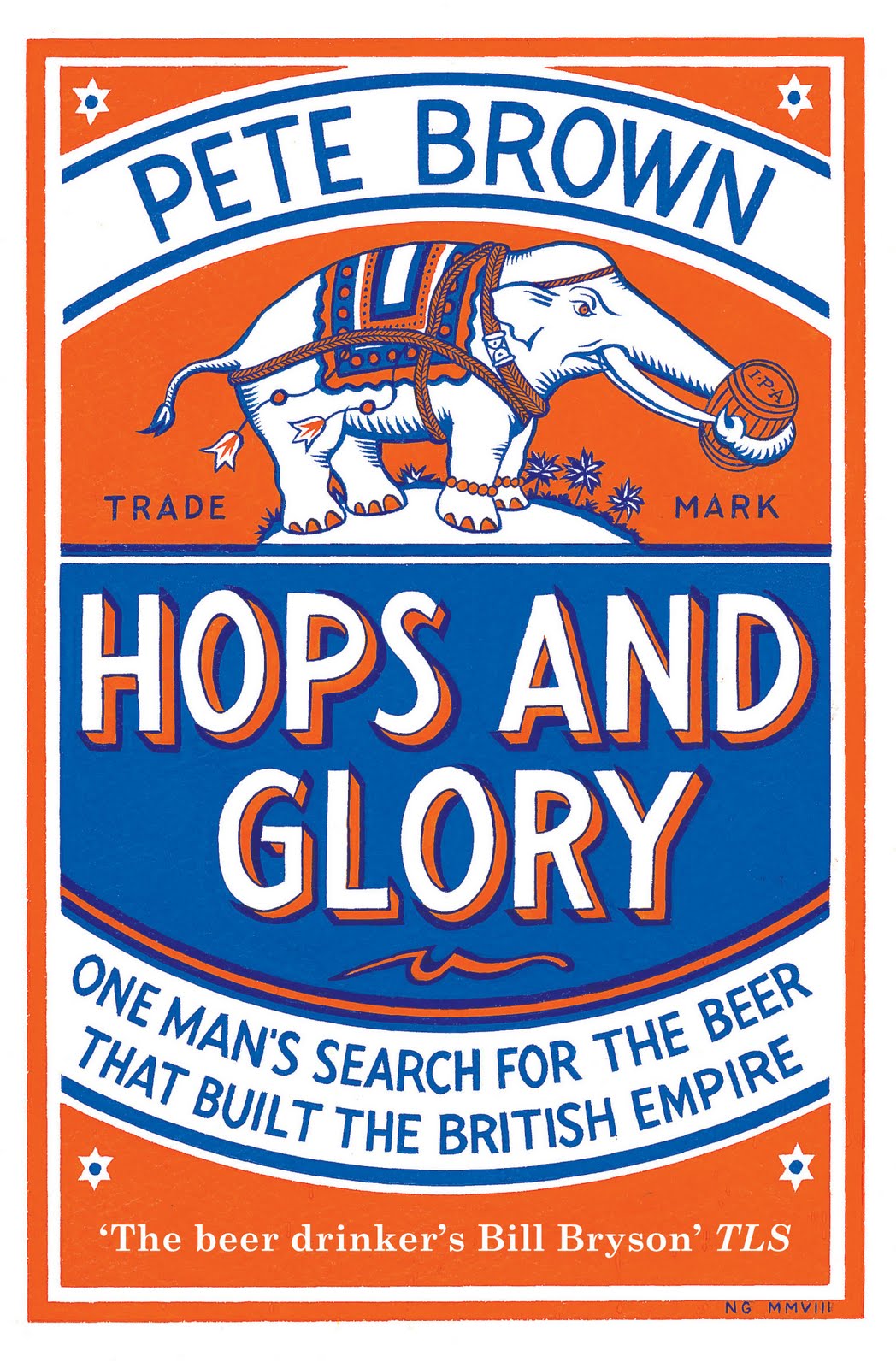
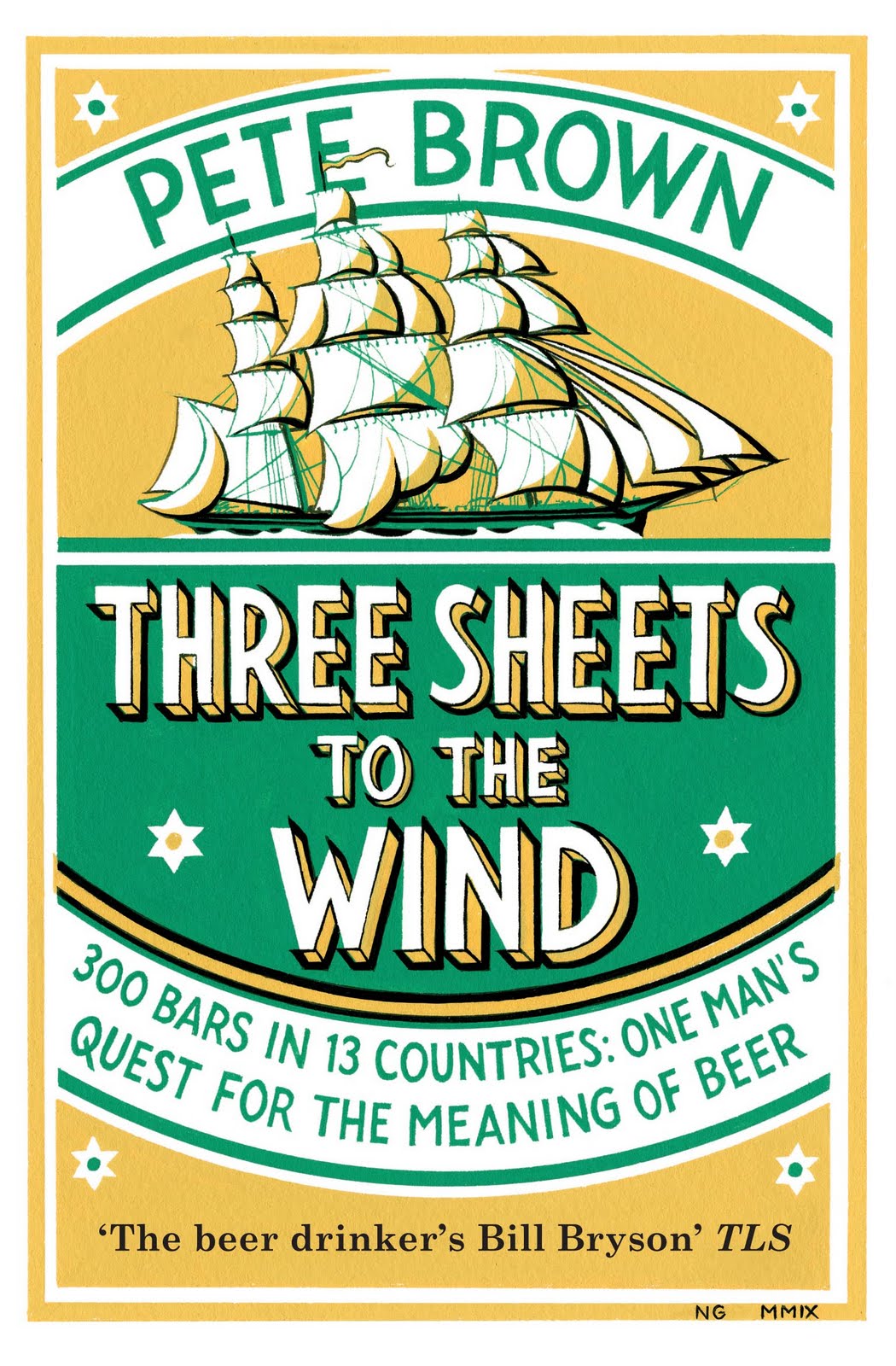
The paperback release of Hops and Glory is joined by re-releases of the other too, both with new covers from Neil Gower, the wonderful artist who broke the mould with the Hops and Glory design last year.
As far as text goes, H&G and Three Sheets are unaltered, but Man Walks into a Pub has been extensively rewritten and updated.  I’ll talk more about that in a few weeks – they’re officially released on June 4th.
But anyone living in the North West who wants a copy can be the very first people to get their hands on one!  I’m doing an event at the Southport Food and Drink Festival this Saturday.  Scarisbrick Hotel, Southport, 2pm, I’ll be doing a group tasting of some of the beers from the festival, and trying out a new talk about beer and my adventures through it, drawing from all three books.  I’ll be announcing more festival dates throughout the summer once I’ve got this talk right, but I will have the new books to sell as a special sneak preview.
In other literary news, fans of The Beer Widow may have noticed that she’s been a bit quiet of late.  That’s because she’s organising the first ever Stoke Newington Literary Festival, June 4th-6th, bringing the stars of the literary firmament to our corner of North East London (actually, a lot of them already live here, hence the idea for the event.  
I’m doing two events, each of which will be a little different for me:

Saturday, 2pm: “Eat Your Words”: Niki Segnit, Pete Brown, Alex Rushmer and Ian Kelly
The White Hart
£4

There are only a handful of words that really describe taste and flavour, but collectively we have a seemingly limitless appetite for reading and writing about food and drink.  The author of The Flavour Thesaurus, Britain’s leading beer writer, a Masterchef finalist and the biographer of Anton Careme, the world’s first celebrity chef, discuss their struggle to pin flavour to the page.
Sunday, 3pm: “What’s so great about the Great British Pub?” Pete Brown, Paul Ewen and Tim Bradford
The White Hart
£4 (with free beer)

Beer Writer of the Year Pete Brown hosts an event in his local, The White Hart, getting the beers in and talking to one-man ‘Campaign for Surreal Ale’ Paul Ewen, and local writer and chronicler of small town England Tim Bradford, about what makes the pub such a unique and enduring cornerstone of British culture.  
Very excited about these – My mate Niki has written something that will be essential for anyone who enjoys cooking and wants to move beyond just following recipes, it’ll be cool to meet ‘Food Blogger Alex‘ from this year’s Masterchef, and Ian’s biographies look interesting.  The following day I’m fascinated to see what Paul Ewen is really like after enjoying his book a while back (I reviewed it here) and you’ve got to fall in love with Tim Bradford when you read the Amazon review he got from his mum!  Tickets should be available any second now from here, but in the meantime can be booked by phone (details on the festival website) or bought from the Stoke Newington Bookshop.  
We all take our place well down the running order behind people like Shappi Khorsandi, Phill Jupitus, Danny Kelly, John Hegley, Jeremy Hardy, AC Grayling, Stewart Lee and the legendary Tony Benn.  Come and make a weekend of it!  It promises to be fantastic.  
Check out the festival website for more details on the bill and how to book tickets, and follow @StokeyLitFest on Twitter and on Facebook for up to date news about the line up etc.  Liz has never organised anything like this before and the literary community is amazed at the quality of the line-up she’s managed to pull together for the first year.  But she’s having sleepless nights about the whole thing, so please buy tickets for stuff!

| Uncategorised

Ice Cold in Alex

“They served it ice-cold in Alex…

For the moment that he shut his eyes, he could see every detail of that little bar in the lane off Mahomet Ali Square; the high stools, the marble-topped counter, the Greek behind it. The sound of the place came back… the purr of the overhead fan, a fly, buzzing drowsily, the muffled noise of the traffic seeping through the closed door…

Then he thought about the beer itself, in tall thin glasses, so cold that there was a dew glistening on the outside of them, even before they were put down on the counter; the pale amber clearness of it; the taste, last of all.”

I like to look at how writers who don’t normally write about beer treat it when it crosses their path – some of the best ‘beer writing’ doesn’t come from beer writers at all.  They’re starting from a different perspective and with a different frame of reference. If they’re good, they can make even the most knowledgeable and experienced beer enthusiast think again about the essence and the role of great beer.

Christopher Landon served as a ‘Desert Rat’ in North Africa in the Second World War. In 1957 he fictionalised his experiences for a novel that went on to become one of the most famous war films of all time: Ice Cold in Alex. It contains possibly the most iconic beer drinking shot in the whole history of cinema – but we’ll come to that later. A few months ago I spotted a reprint of the novel in a bargain bookshop. Tempted by the cover illustration of a tall, full, pilsner glass, I decided to give it a go.

The opening passage above forms the opening of the book. Captain George Anson is a man ‘with too much sun, too much sand, too much of everything to bear.’ Stuck in Tobruk as a circle of Nazi armour closes around it, he’s succumbing to alcoholism, cauterizing his senses with a repetitive, metronomic swigging of the whisky bottle.

As the fall of Tobruk becomes inevitable, all non-essential personnel are shipped out to Alexandria before the noose closes. Anson is charged with getting two nurses in an ambulance to safety. He takes with him his faithful mechanic, Sergeant Major Tom Pugh, and on the way they pick up Zimmerman, a stranded South African officer who is not all he seems.

(Oh alright, he’s a German spy.)

Needless to say, things don’t go according to plan. They’re forced to detour deeper and deeper into the desert to avoid the German armour. At one point a German armoured column fires on them, killing one of the nurses. As the Germans decide whether or not to let them go, Anson’s old self emerges, and he swears off the whisky for the duration of their journey:

“Anson’s voice went on, it was different, held a faraway, dream-like quality. “If he has… I’m going to tell you something right now, Tom. It will be a sort of peace offering. Do you know the next drink I’m going to have? A beer, Tom. A bloody great, tall, ice-cold glass of Rheingold in that little bar off Mahoment Ali Square in Alex… and I’ll buy you one, all of you one, because I’m bloody well going to get you there.”

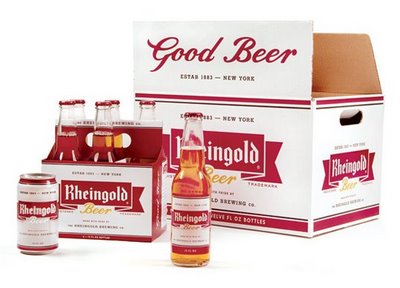
Rheingold was an American lager, from a New York brewery founded in 1883 by a German Jew called Samuel Liebmann.  Anson calls it “The best and coldest Yankee beer in the Delta”. But reading about it in this context, its German name and ancestry says something in and of itself about war’s bitter ironies.

The biggest character in the book though is the desert itself. Landon’s descriptions of the mirage – a solid, shimmering wall throwing all manner of illusions at them – the blazing sun and the unyielding, hostile but ever-changing sand, render North Africa as a different planet. As the book forces you to consider the desert from the point of view of the average Briton in the early 1940s – it strikes you that it might as well have been.

Anson, Tom Pugh and Diana the surviving nurse figure out that Zimmerman’s a kraut spy pretty quickly. But the desert forces them to unite against a common enemy, survival coming before the war against Nazism.

Anson rallies and his inspirational leadership galvanizes the other three. The beer has become totemic to him, not just for the alcoholic hit he’s denying himself until they reach safety, nor for the promise of near-orgasmic refreshment after the parched dessert: he’s promised to buy them a beer. And to buy them a beer, he has to get them to Alexandria.

One night, Anson and Diana are talking on watch, under the stars:

““Let’s talk about something else… Beer.”

“But I thought that was out.”

“It is – until that date in Alex. Do you know – I’ve been thinking about that one particular drink all day. I’ve told you about the bar, haven’t I? But that Rheingold – it’s so bloody cold that there’s a sort of dew on the outside of the glass. I always run my finger up and down – to make a sort of trail – before I have my first sip.””

Beer is hope.

I wrote in Man Walks into a Pub about some ancient myths in which beer is a gift of hope to humanity, a consolation prize for having to cope with knowledge, sin and inevitable mortality. Here it’s a rock that Anson can cling to, to prevent himself from falling apart.

On the outskirts of the city, KATY the ambulance is on her last legs – or last wheels I suppose – rattling and wheezing and leaking and steaming as the city reaches out and pulls them in. The book flits between the perspective of each of the four characters, and as the finale approaches we’re with mechanic Tom Pugh:

“He was not hungry, not thirsty – but once when the captain said, “I hope that beer’s bloody cold,” his mouth started watering uncontrollably.”

Finally, they make it. The bar is just as Anson described it, empty because it’s still early. The barman sees four unwashed, filthy tramps until Anson rouses him with a parade ground bark.

““Get cracking, Joe. FOUR VERY, VERY COLD RHEINGOLDS.”

When they came up, again they were as he said they would be, pale amber in tall thin glasses, and so cold, the dew had frosted on the outside before he put them down. They stood in a row now, but Tom waited, as he knew the others were waiting, for Anson to make the first move. He stared at his for a moment, looking all round as if it were a rare specimen, then ran his finger up and down the side of the glass, leaving a clear trail in the dew. He said, “That’s that,” and lifted the glass and tilted it right back. Tom watched the ripple of the swallow in the lean throat, and there was a tight feeling inside him and his eyes were smarting and he knew that in a moment he would cry. So he lifted up his own glass and swallowed it fast.

When Anson put his glass down it was empty. “I quite forgot to drink your healths,” he said. Then to the barman, “Set ‘em up again.””

It’s ready-written to be the climactic scene of the film adaptation. This is the ultimate thirst, the best beer you’ve ever tasted, a reward for the hardest day’s work imaginable. It works perfectly in the film – so perfectly, in fact, that all it took was one editor’s snip, one line of dialogue and a title to turn it into the second-best beer ad of all time.

Of course, the fact that for some reason the filmmakers switched Rheingold for Carlsberg detracts a level or two from the meaning. But without that bit of corporate chicanery, there’d have been no ad. And if there hadn’t been an ad, I would have forgotten about the film. And if I’d forgotten about the film, I would never have read this powerful, moving little book.

I can’t find the ad itself on YouTube, and blogger won’t let me upload the mpeg I have of it from my laptop, but here is the piece of film Carlsberg later used in the ad, without title and voice over:

So let’s hear it for the ice-cold, dew-dropped glass of lager. Given the choice I tend to go for cask ale these days. But if you were in Anson’s baked, cracked shoes, you’d have to be some kind of pervert to fancy anything other than one of these frosty bad boys.

| Uncategorised

Wikio Mea Culpa

Here are the REVISED Wikio rankings for April.

Tricky situation, because every month they offer a blogger an exclusive, before they go live.  There’s a narrow window to get this exclusive up before the rankings go live.  So even though it looked dodgy, I had to go with it – but it turns out it was wrong.  So here are the right ones:

1 Pete Brown’s Blog (=)
2 Pencil & Spoon (=)
3 Brew Dog Blog (=)
4 The Pub Curmudgeon (+2)
5 The Beer Nut (=)
6 Tandleman’s Beer Blog (-2)
7 Woolpack Dave’s beer and stuff blog (=)
8 Spittoon (+4)
9 `It’s just the beer talking` ? Jeff Pickthall’s Blog (+1)
10 The Bitten Bullet (-1)
11 Beer Reviews (+6)
12 Zythophile (+3)
13 Boak and Bailey’s Beer Blog (-5)
14 Called to the bar (-3)
15 Reluctant Scooper (+4)
16 Real Ale Reviews (=)
17 Brew Wales (-3)
18 The Wine Conversation (-5)
19 Travels With Beer (+1)
20 Taking the beard out of beer! (+9)

Ranking by Wikio

A couple of thoughts and observations:

The fact that I post these rankings more than anyone else doesn’t mean I attach more importance to them than anyone else.  Wikio asked me to co-ordinate this for them and I agreed, not having any reason to refuse.  I view it as a bit of harmless fun.  You’re entitled to disagree.  But every month I ask if anyone else would like to have the exclusive ands trail it on your blog – it’s an extra spike in hits if nothing else.  Hardly anyone ever volunteers.  It would be great if more people would like to share it around.

Secondly, I still stand by my challenge about making beer blogging more interesting.  Some people agree, but it’s upset some other people.

I hate upsetting people.  I hate spats and fights.  I have enough of them so believe me, I do know how much I hate them.  I write something I feel has to be written, and then when it all kicks off my stomach starts churning, I lose my appetite, and it’s hanging like a cloud at the back of my head, infecting everything I do, until it dies down.

My blogging challenge coincided with the decision of Impy Malting to return to the beer blogging world after a long absence (Hurrah!  Impy’s blogging again!).  Reading her return post (I recommend you do)  – which was largely about why we blog – helped me clarify what was behind my ‘blogging’s getting boring post’ better than I expressed it initially, so I want to expand on that here.

It comes down to why we blog.  I started blogging for the same reason I do all my writing – to turn on new people to beer and educate casual drinkers on delights they may not be aware of, and to try and help build a career as a full-time writer.  Both these reasons require a larger, general readership if I’m going to succeed. I also have to accept that I was established as a beer writer before I started blogging.

But different people start blogging for different reasons.  The wonder of blogging is that you can simply write what you like and publish it in seconds.  Some people might do it just to see the satisfaction of “I made this”.  Other people do it as a form of therapy.  Some do it just for themselves, and some do it for a specific group of people – friends or colleagues or family – with absolutely no care at all what anyone else might think.

No one has any right to tell these people what they should or shouldn’t be doing with their blogs.

So then we come on to the beer blogging community.  Impy talks about how she decided to blog about beer for her own reasons, and when she started doing it she found this community of beer bloggers (that’s you guys) and was delighted to be welcomed in by them.  It opened up a whole new dimension of chat, opinion sharing, ideas and friendship.  I’ve found exactly the same – and more.  I do the occasional bit of consultancy with brewers, and the first thing I tell them in marketing is that beer brands can now be built on line, that the blogging community represents a new medium, a new audience, through which beers can be made famous.  Ask Brew Dog.  Ask Crown Brewer Stu.

SO I AM NOT SLAGGING OFF THE BEER BLOGGING COMMUNITY.  OK?

But.

The thing about beer blogging is that, even though we may be read by a wider audience, the people who comment on our blogs tend to be other beer bloggers.  This tends to dictate the directions of the conversations we have, the subjects we cover.  We start to write specifically for other beer bloggers.  And ultimately that means the conversation becomes a closed loop, ultimately excluding someone who isn’t a member, or at least offering them no invitation to join in.

I include myself in this, more than anyone – shit, look how often I post the Wikio rankings – as Beer Nut pointed out, on that evidence I’m worse than anyone.  But I am my own harshest critic.  Well, apart from Roger Protz.  And my agent.  And the Beer Widow.  OK, I’m my fourth harshest critic.

My challenge to beer bloggers is a challenge to myself.  When I rewrote Man Walks into a Pub this winter I realised how far I’ve strayed from the original reasons I began writing about beer, and I want to get back to that place.

But it’s also a challenge to anyone who feels like sharing it.

If you blog about beer and you’re perfectly happy having a closed-loop chat with other beer bloggers, sharing in-jokes and comparing your latest discoveries – and I’m not making a value judgement there, it’s your right to do so – I have no right to tell you to do something differently.  So I unreservedly apologise if I’ve offended or come across as too bossy.

But if you’re blogging because, like me, you want to (a) continually improve as a writer and/or (b) be read by more people, my challenge still stands.

You never know – other beer bloggers might find it refreshing too.