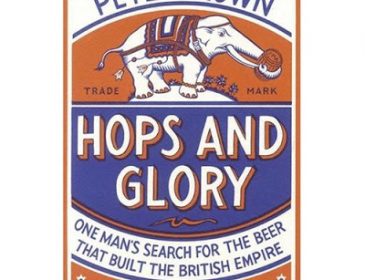
Author: PeteBrown

| Uncategorised

Never mind what beer you drink – how do you drink it?

British men are among the most generous in Europe – three quarters of us would buy a round for up to six people even if we thought we might not have the favour returned that night. But the politics of drinking highlights some confusion between the sexes: eighty per cent of blokes believe they should pay for all the drinks on a first date or even out with their regular partner, while fifty per cent of British women say they’d be perfectly happy to pay their way, and a further 20% say they should be paying for the whole night!

This all comes from new research published yesterday by SABMiller. I have to declare an interest – if you listen to British regional radio stations you may have heard me yesterday commenting on the results alongside Dr Max Farrar, a sociologist.

In a week when the national media COMPLETELY ignored the fact that binge drinking levels are falling across the board, it was great to get exposure for a positive story that shows how beer drinking shapes and illustrates our culture.

The SABMiller research was conducted with a big sample size across 15 European countries. Increasingly these countries are homogenous when it comes to the kind of cars they drive, the kind of fast food or expensive coffee they neck or the trainers they wear, but as is always the case, ask about beer and you still see a rich variation between nations.

If you have the appetite for some lazy stereotyping, it’s impossible to resist noting that compared to the 77% of generous Brits, only 16% of Germans would buy a round if they weren’t sure it would be reciprocated that night.

But it’s when you look behind the figures that you start to appreciate the differences in how we drink beer, even as we all drink it for the same reasons. In a British pub you’re going to the bar for each round – it makes sense for one person to go. And while you may not get your drink back that night, you’d expect it to even out over a period of weeks. If you never bought a round, you’d soon become known as “the bloke who never buys his round”, and that’s a stigma in British society on a par with being known as “the bloke who likes to hang around school playgrounds”.

But in many other countries, you’re getting beer served at the table and you get a bill at the end of the night. It makes much more sense to split it – why would one person insist on paying for all the drinks?

The sexes thing shows that what we say and what we do are not necessarily the same. Only 30% of women think it’s right that their partner should pay for all the drinks. How many men would agree that this is what their partner believes? Turning that round, how many women would agree that their man is happy always to treat them to all their drinks without a murmur of complaint?

The report also shows that beer is considered a perfectly acceptable drink across a wide variety of occasions – at a wedding, at a restaurant meal, at home with the family. We all know that on here, but it’s nice to see that around 80% of people agree.

The report’s available on SABMiller’s website and, if nothing else, provides plenty of fuel for impassioned banter down the pub. Where, I believe, it’s your round.

| Uncategorised

Looking forward to seeing extensive coverage of this story in the Daily Mail over the next few days

UK: Binge drinking on decline in UK – research

23 January 2008 Source: just-drinks.com editorial team

The number of people in the UK that are drinking alcohol irresponsibly has fallen, according to figures from the Office for National Statistics.

The General Household survey said yesterday (22 January) that, between 2000 and 2006, the number of men that drank over 21 units a week has reduced by 6% and the number of women who consumed over 14 units per week has decreased by 5%.

Binge drinking among 16-24 year-old men has also continued to decline in the last year, with levels among young women in the UK stabilising, the statistics revealed.

The survey also demonstrated that awareness of alcohol units has risen from 79% of the population to 85% in the last ten years.

Commenting on the survey, the_Portman_Group‘s chief executive, David Poley, said: “It is pleasing that the long-term trends in the nation’s harmful drinking levels continue to improve. More people are now aware of the risks associated with harmful drinking and have changed their drinking accordingly. There is still a long way to go to eradicate the problems caused by alcohol misuse which remain deeply embedded in our culture. But the evidence suggests that the sensible drinking message is getting through to people.”

Hang on… I thought more liberal licensing laws were going to result in the end of civilisation, like theyhave in every other country around the world that has a relaxed attitude to drinking? I’m confused…

| Uncategorised

We’re all only here for the beer

I was very pleased that the post about beer snobs provoked such a reaction. It shows how important beer is to people. And it got me to thinking about why.

In September this year it’ll be ten years since I first had the idea to write a book on the social history of beer. I figured I’d write that book, then once I was published I could move on to write about other subjects, maybe even get cracking on my novel.

It would take me almost five years to get the book published, and over that time I became obsessed with beer. I’m now writing my third book on the subject, am marketing editor of a beer trade magazine, talk about beer on radio and TV, and spend every spare minute writing and thinking about beer, and most of my money on travelling the world learning about beer and beer drinkers. It pays me less than I need to live on, and I abandoned a lucrative career in advertising to do it. The novel is a distant memory. It would probably have been shit anyway.

Why does beer exert such a powerful hold?

That’s the key question. I suspect my answer may be a little different than it is for many beer bloggers, but I hope anyone who cares about beer will at least respect it, even if they don’t entirely agree. I’m defensive about it, because it automatically brings up the subject of beer snobbery again.

The people we/I call beer snobs love the amazing variety and intensity of flavour and character they get from lovingly-brewed craft beers. They believe small brewers who are doing what they love make the best of these beers. And they belive that these small brewers, lacking the marketing muscle of the macros, need all the support they can get to make their voices heard. I agree strongly on every point. But for me, the beer world is bigger than this. Beer is more important.

When I started writing about beer I loved cask ale, but not exclusively. I was thirsty to find out more about American micros, but my knowledge of Belgian beer stretched as far as Stella Artois and Hoegaarden, and they were my favourite beers. Don’t get me wrong – I preferred the taste of Pete’s Wicked Ale or Sam Adams Boston Lager when I could get them, but beer for me has always been about more than taste.

What first fascinated me about beer was the way that, in my old marketing days, when we did focus groups beer would engage a marketing-weary audience more than any other product was capable of. Young lads determined to look cool in front of their peers would talk about it with a passion and enthusiasm otherwise reserved exclusively for their football team.

When I decided to find out why, I discovered that beer is the most sociable drink in the world, and always has been. The ancients drank beer from communal pots through long straws not because they were poor, but because it was more sociable that way. When we really admire someone, we say “He’s the kind of guy you’d like to have a beer with,” not a cup of tea or glass of wine. The pub remains an environment where you leave the cares of the world at the door and treat each other with respect, as equals, and beer is the soul of the pub. Beer is why pubs are like this and wine bars are not.

The history of beer is the history of ordinary people. Beer brings history alive and makes you realise what it would have been like to be a seventeenth century diarist or thirteenth century pregnant woman, the strong birthing ale on standby for when labour began.

Beer remains the most popular drink in the world. While customs and habits vary, the underlying truth of beer is constant – getting together to relax with friends, in a safe environment, kicking back and being your true self.

If you were reading the fifth paragraph and thought to yourself “Why is he talking about Pete’s Wicked Ale and Boston Lager? There are far more characterful brews out there. Sam Adams is little better than a bland macro”, ask yourself if you’re really getting what beer is all about. One of beer’s strengths versus wine is the fact that it’s not elitist and difficult. Of course there are better beers than Boston Lager. But that doesn’t mean that Boston Lager, or Heineken, or even (God forgive me for saying this) Budweiser are completely without merit. If you cannot agree with that because you only ever see beer in terms of product character, and if you always judge product character in terms of “more is better”, then I’d argue you’re only seeing a small part of the whole picture.

Like most beer fans, given a perfect choice I’d always go for a resiny IPA, spicy Belgian saison or vinous Imperial stout. I’d much rather give my money to a guy running a one barrel plant who’s excited because he’s just got his first bottling line, goes to bed dreaming of new recipes and wakes up itching to brew, than I would to a corporation run by former Coca-Cola marketers who view beer as just another marketable beverage. But that’s me and my drinking, and that’s about as significant as an atom on a football field in the whole world of beer. If promoting the virtues of (please, please have mercy) Bud Light was the only possible way to get someone to even consider allowing beer past their lips, then I’d do it.

Beer’s beauty is its unparalleled scope, its amazing variety, its depth of meaning in the world.

This blog will continue to cover the efforts of the biggest and smallest brewers in the world. It will judge beers and beery initiatives on thier own merits. It will call out rubbish, and celebrate the good stuff. It will be irreverent at times, because beer should never take itself too seriously.

If I write a piece on, say, Heineken and its efforts to introduce a genuine continental serve to the UK, before you post a reply explaining that Heineken are corporate whores and there are far better lagers out there – I KNOW. So does everyone who is likely to read this blog. If someone else comes up with something amazing about the history of Miller in the nineteenth century and you want to tell them that Miller beers are now characterless compared to most micros – guess what? They probably know that too. But there may still be something of value in what they’re writing.

Beer is a broad church, and I’ve realised that’s what I love most about it. I am not saying writers who meticuolously analyse flavour profiles of obscure micros and nothing else should start writing about beer culture or corporate marketing. I’m glad they do what they do and I find it very helpful. I’m simply asking that those guys recognise they’re dealing with just one facet of what makes beer the best drink in the world.

| Uncategorised

Two great words, together at last


Spotted today outside The York, Islington, London. Every now and again, but increasingly rarely, marketing is capable of genius and poetry. Let the man (or woman – but I’d bet particularly heavily that this one was a man) who coined the phrase “Pie Gala” be given a knighthood for services to the pub industry.

If only it wasn’t detox month…

| Uncategorised

For Christ’s sake, cheer up!

I googled ‘Calcutta IPA’ the other day to see if anyone else had written about the beer that was brewed for my trip to India, and it led me to a forum at www.ratebeer.com where the White Shield Brewery was being discussed.

Now, I’ll be the first to admit that one of the world’s biggest corporate multinational brewers is a curious fit with the tiny brewery sitting in the middle of one of its yards, but some of the ignorant, ill-informed vitriol aimed at the site in Burton made me laugh, then made me angry, then very sad.

I’m going to sound like an apologist for Coors simply because they made my trip to India possible (though just to make it clear, they brewed the beer – they in no way sponsored the trip, and they certainly don’t need my help). Anyway, it’s not just this one issue – this is merely an example of an attitude that sometimes makes me think of jacking in beer writing. I just don’t want anyone normal to think that I’m in any any like these sad, fanatical conspiracy theorists.

The subtext of the whingers is that because White Shield is now owned by Coors, it is therefore shit. Hmm. That’ll be why it won Champion Bottled Beer at GBBF in 2006, why sales are up by over 50% year on year, and why brewer Steve Wellington was named Brewer of the Year by the All Party Parliamentary Beer Group last year is it? Or are these just more examples of corporate cronyism?

There are some astonishing claims made on the forum: most astonishing of all is that White Shield is a ‘mediocre’ beer. But it’s also asserted that White Shield is not really brewed here at all, that it is made in a factory, that it has no individual character, and that what was formerly known as the Museum Brewery no longer brews small batches of individual and eclectic one-off beers.

As someone who brewed such just such a small batch beer there last year, I beg to differ. You don’t even have to go that far – just walk into the brewery tap and you’ve a choice of several beers not available anywhere else. If the people writing this garbage had visited the brewery or taken the trouble to find any out any facts about White Shield by any means whatsoever, they would have quickly realised what drivel they were talking.

The White Shield Brewery is owned by Coors but is given near-total autonomy. It still creates boutique beers for individual landlords, and White Shield is still an astonishing beer, all of which is brewed on the premises. Steve Wellington is a universally respected brewer of enormous integrity.

Rant over.

The point is, there’s an attitude in beer appreciation that’s the same as the one I used to have when I was a teenage indie kid: back then, we thought anything on a major label was shit, anyone who actually got into the charts had sold out. It seems lots of beer fans enjoy being just as miserable as I was then. Big brewers churning out bland lager are easy hate targets, but when they start to show some interest in characterful beers, the vitriol only increases. Why?

It was the same when Inbev launched Artois Bock. The beer hasn’t fared brilliantly, it could have been marketed better, but here was the world’s biggest brewer creating a characterful Belgian ale and getting a shitstorm from many sides of the beer community for its efforts. Inbev do some really, really scummy things and often operate against the interests of beer drinkers, but this was not one of those times. It’s basic psychology that if you want to change someone’s behaviour you praise the the good at the same time as you condemn the bad. Otherwise, how can you blame them if they just carry on as they were?

This attitude doesn’t exist in, say, the whisk(e)y world. Michael Jackson used to judge single malts owned by Diageo on their merits alongside those from tiny distilleries. It’s a blight on beer that we can’t do the same, and it should come as no surprise when people dismiss the entire beer community as whining Luddites.

I believe we should be trying to persuade Inbev, SABMiller and Coors to turn their huge drinker bases on to more characterful beers, to use their huge marketing muscle to help develop a more eclectic drinking scene.

But am I wrong?

Is there a case for saying that craft beer should be the exclusive preserve of small craft brewers, that it’s healthier and more attractive overall if great beer was kept entirely separate from huge corporations driven by shareholder value who may somehow taint it?

| Uncategorised

The campaign for real ale is almost two hundred years old!

Where does the term ‘real ale’ originate?

Any CAMRA member or beer historian will tell you that in the early seventies, four discontented beer drinkers founded the Campaign for the Revitalisation of Ale, before amending this to the snappier Campaign for Real Ale, coining a term to differentiate cask conditioned ales from what they saw as worthless, ersatz fizzy brews.

Whatever disagreements I’ve had with CAMRA in the past, I’ve always said that this was a PR masterstroke. So I was astonished to discover this loaded term being used long, long before CAMRA’s hated keg beers were even a twinkle in some demonic corporate brewer’s eye.

On April 13 1809, the Calcutta Gazette carried countless ads for beer. Most of these were for pale ale (not yet referred to as India Pale Ale), the majority promoting “HODGSON’S very best PALE ALE, Brewed for this Climate and warranted of a Superior Quality.”

But one ad was different. I couldn’t make a copy of it, as the paper would have disintegrated, but it read: REAL ALE
To be sold by Public Auction
By Williams and Hohler
At their Auction-room
On MONDAY next, the 17th April 1809,
ONE Hundred and Forty-three Dozen
of excellent REAL ALE, warranted
good, the property of an Up-Country Trader,
leaving of business. For the convenience of Purchasers, it
will be put up in lots of Three Dozen. So what was the ‘false’ ale they were seeking to differentiate from? Well, maybe keg ale, or something similar to it, is older than we thought too. W L Tizard, a Professor of Brewing, wrote the following in his account of how to brew beers for export in his 1843 book Theory and Practice of Brewing: “It is imperatively necessary that all extraneous vegetable matter which forms the yeast, lees &c. be removed; because the agitation during the voyage would otherwise produce extreme fretting, leakages and premature acidity.”
So ‘real ale’ is beer that still has yeast present in the cask, whereas other beers have the yeast removed. If IPA and other nineteenth century beers had all their yeast removed, does that mean they were not technically real ales at all, but the forerunners of the dreaded keg? And could the ad above therefore be evidence that some CAMRA hardliners have perfected time travel and gone back to protest against what might be an uncomfortable bit of trivia for anyone who thinks the only decent beer is one that is carrying on a secondary fermentation in the cask? Or is the fight for cask beer older than we thought?

| Uncategorised

The Great Christmas Ale Hunt

Here’s a mystery – with Christmas and winter ales available from hundreds of British brewers, amply stocked in the larger branches of all major supermarket chains, where are the reviews of them in the press?

The food and drink supps of all major newspapers are, like every year, suggesting treats for the Christmas table. Observer Food Monthly had a page of festive wines and a selection of whiskies, but no mention of beer.

This must be a bit galling if you’re a brewer. You create a recipe specifically for the season, often using seasonal ingredients, and succeed in getting major retail distribution. Here are magazines with pages to fill, with writers and readers who are interested in more seasonal, natural food. And they recommend wines that are no different than those available all year round.

You could say people like me should be the ones writing, but I was away last week, and anyway, when I’ve tried before they don’t even return calls or e-mails.

Why do the press try so hard to pretend beer doesn’t exist? Have we done something to upset them? Maybe I’m wrong.

If you’re in the UK, and you have seen any Christmas or winter brews reviewed anywhere, please let me know!

| Uncategorised

A blog entry and words

Wandering around the Euro-chic shopping mall of St. Pancras I was starting to get worried – there was the champagne bar, but where was the pub? Who ever heard of a huge city centre train station without a pub? Eventually I found it, far off in the corner, on its own, away from the main shopping concourse.

The “Baby Betjeman” is a fenced off area in the corner of the station and provides an interesting snapshot of what’s happening to British pubs. It’s by no means shit, but it’s a curious combination of things to both love and loathe that leaves you unsure of what kind of mood you’re in as you sup your pint.

The first thing you notice is that it’s not a pub. No, you see, mere pubs are naff. Too English, too old-fashioned, too working class for our modern, aspirational, solutions-oriented society. The Baby Betjeman is a “pub and kitchen”.

I’m confused by this trend in naming establishments – you see quite a lot of it in North London now. I’m confused because I always thought a kitchen was an integral part of a pub, so why is it now a separate addendum? Because it sounds posher. I’ve tried to adopt this to see if I can make my own like sound a bit classier and I’m not sure it’s working. It feels strange talking about ‘my body and arms’. When I leave my house and bedrooms to travel somewhere by car and engine, then come home to write this blog entry and words, I can’t help worrying that I sound like I’m talking out of my arse and rectum.

The BB has waiter service at its tables so it really isn’t a pub at all. (Pubs also have walls and ceilings in my experience). There are wine lists pushing champagne heavily on each of the tables.

And yet…

The draught lagers are Budvar and Amstel – an excellent choice of premium and standard strength brands. And even though they don’t mention them anywhere, behind the bar are two casks of real ale on stillage – London Pride and a guest ale – Sharp’s Doom Bar, which was excellent. There are further bottled ales behind the bar and an interesting-looking food menu, if you’re the kind of person who can splash out seven quid on a cheese sandwich. (The Doom Bar had the honour of being the first pint of real ale I’ve ever paid three quid for.)

And here’s a nice thing – as this pub has no walls and ceiling, it was bloody freezing. But over the backs of each of the chairs was a lovely thick blanket to drape over your knees. I’ve seen this before in Denmark, which has a thriving pavement cafe culture throughout the winter, and thought it was a lovely idea that would never catch on in the UK, so I’m delighted it has.

I’d say it’s worth turning up half an hour early for your train – if you can find it.

| Uncategorised

London’s Brightest New Shopping Mall

St. Pancras station reopened a few weeks ago to great fanfare, so after a stimulating afternoon reading tables of import and export figures into Bengal in the nineteenth century at the British Library, I popped in for a look. For those who don’t know London, St. Pancras used to be a train station, and is one of London’s most iconic buildings. For those with a fondness for the solid, utilitarian yet still proud architecture of Victorian industry, it’s more awe-inspiring than any of the capital’s palaces or cathedrals.
It’s now London’s most tasteful shopping mall. There are trains still here somewhere – at least, there are signs pointing to them – but the magnificent central spaces is devoted entirely to accessories and candles and lotions and posh sandwiches. There are two branches of “your” M&S, among tasteful luxuries that are in no way useful for a train journey. These shops aren’t here for travellers to stock up; they’re here as a destination in and of itself.

Maybe we could turn St Paul’s into a huge Starbucks; Buckingham Palace into a Heat Magazine theme park, or County Hall, the magnificent former council facing Parliament on the south bank, into a lowest common denominator tourist trap. (Oh hang on, we already did that last one).

Shopping is the most important contribution any of us can make to our own and the world’s happiness. It doesn’t matter that you already have everything you need; doesn’t matter that your credit cards are up to their limits, get out there and buy. You can now cross London without ever being out of sight of a Starbucks, Pret, M&S or Tesco Metro. The Onion magazine once ran a spoof story with the headline “Starbucks opens new branch of Starbucks in Starbucks rest room.” That’s what it feels like in St. Pancras now.
St. Pancras is of course the new Eurostar Terminal, and if you look hard enough, you can find the trains. When it was at Waterloo I always thought it was a bit mean making the French arrive at a station that reminded them of their greatest ever military defeat. But St. Pancras has gone the other way. I’m not a Europhobe or Little Englander – that’s why I go to France and Belgium as often as I can to soak up the culture, food and drink. I just don’t understand why everything British has to be regarded as shit compared to anything non-British.
St Pancras has the biggest branch of “Le Pain Quotidien” (French baguettes) I’ve ever seen. The world’s longest champagne bar dominates the central concourse. If you look really hard you can find what just about passes for a pub tucked in the corner, far away from the main mall. I feel dispossessed. St Pancras makes me feel like we’ve been robbed.But as shopping malls go, it is a very, very beautiful one.