Author: PeteBrown

| Uncategorised

July Video Blog: Scotland!

I bloody love Scotland, me.  I lived there for five years while at university, getting a degree and booking bands in the students’ union in St Andrews, going to buy records and get drunk in Edinburgh, going to chill out in the stunning beauty of the Trossachs.

This month I got to reminisce about all this as we attempted to cover the brewing scene of an entire country in about twenty minutes.

Why?

Because this particular series of video blogs is all about cask ale, and from an admittedly low base, cask ale is growing in Scotland at about 30% year on year.  When I was at uni there were three types of beer, all from Tennent’s, all a bit tasteless and horrible, apart from the ones that tasted of burnt sugar and were horrible.  So bad was Scottish beer I switched from being a cask ale drinker to a standard lager drinker.  It took me ten years to recover.

It is very, very different now.  Brew Dog, who we don’t visit here (their Edinburgh bar is all keg, and the man who pays the vlog bills wants to focus on cask) is merely the most visible of Scottish brewers who are currently displaying extraordinary levels of invention and enthusiasm.

In the Guildford Arms in the centre of Edinburgh I find one of my old favourites.  Then we go to Caledonian, where Peter looks round one of the most stunning traditional breweries you will ever see.  Many in Scotland are unhappy about the takeover of Caledonian by Scottish & Newcastle, and more recently Heineken. Not without justification, there was a feeling that things would be bastardised and cheapened.  But I visited before Heineken took over, and now going back again, the unique coppers, the hop room full of whole leaf hops, the open fermenters, the range of beers, are all unchanged.  The only real difference is a massive commitment to health and safety, a more corporate head office presence through boards displaying targets for reducing accidents and so on.  The brewing process and the resulting beers are unchanged.

I have a chat with Steve Crawley, MD of Heineken, in which we discuss whether the brewery’s flagship, Deuchar’s IPA, really is ‘not as good as it used to be’.

And then we’re off to Bridge of Allan, just outside Stirling, where Peter gets a bit tipsy talking to a round table of four brilliant Scottish brewers about the state of brewing in the country: Fergus from Inveralmond, Douglas from Traditional Scottish Ales, Amy from Harviestoun, and Tuggy from Fyne Ales (who I’m currently trying to persuade to adopt me).  I review a Scottish Wit Bier, try to sum up the style of stout in under a minute, and by the end we’re struggling to do a decent outro.  It’s hardly surprising.

Next month – next week in fact – we are filming our final video blog of this series at GBBF.  If you’re there on trade day, come and say hello.  If there’s anyone you think we should be going to talk to, please shout!

| Uncategorised

Do women need their own beer?

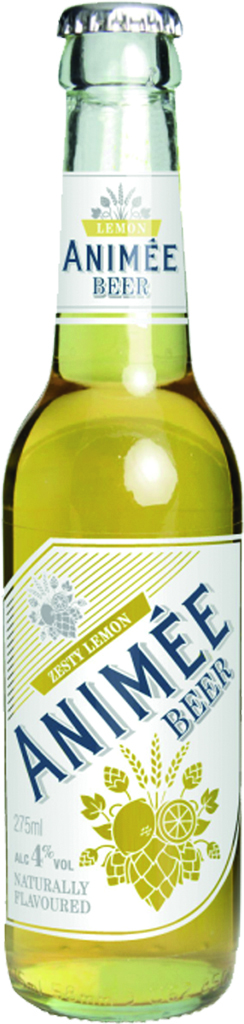
Alongside beer styles, craft beer, cask versus keg and other such burning issues, the notion of ‘beer for women’ reared its head again this week with Molson Coors’ launch of Animee, a new attempt to persuade the 79% of British women who don’t currently drink beer to start doing so.  I was at the launch on Monday night. So was Melissa Cole, who is true to form in her outspoken views on the subject here.  Sophie Atherton also weighed in on the Guardian blog here.

I agree with the gist of what both are saying, but not on every single point.  I also get a sort of itching in my brain when commenters who have not seen, smelled or tasted these products dismiss them as ‘piss’.  How do you know?  Even when I slag off something like Stella Black, I taste the damn stuff first.

I believe the launch of Animee is misguided and flawed, but there are some good points in there if you look hard enough.  I’ll sum this up in a list of positives and negatives, to make it easy.

Negative:
The whole idea of a beer for women in the first place. It’s never worked, because it’s not what’s needed.  I’m not surprised Melissa feels patronised – I’d feel the same if someone tried to flog me a ‘wine for men’. As Melissa points out, women don’t want a product that segregates them – they just want a product that doesn’t actively alienate them.  Wine, cocktails, cider and premium spirits are neither masculine nor feminine, and they all seem to be doing just fine.  The only reason beer is overtly masculine is the long heritage of macho advertising in the UK – beer is far more unisex in other countries.  In Spain, 40% of total beer volume is drunk by women, and it’s mainstream lager, same as here.  (Nice mainstream lager though, it has to be said.)

Positive:
The fact that Molson Coors are trying.  This was presented on Monday as part of a broader programme of ideas and initiatives to really promote beer across the board.  Molson Coors are a big multinational brewer who talk about beer in marketing speak (the subject of another piece). But I get the impression they do actually care about beer.  They show signs of understanding it, and respecting it.  Growing Sharps and Worthington are as much part of their plan as boosting Carling – which, by the way, also got a shout on Monday night.  A new 4.8% ‘premium’ version, Carling Chrome, is bland, pretty tasteless, but not watery and without the nasty aftertaste some of these beers have.  On the beer for women thing, they’ve spoken to tens of thousands of women and really got to the heart of what’s keeping them from beer.

Negative:
Given all that research, I just don’t understand Animee as a response to it.  The main barriers are all about image – not the product.  So why launch a different product?  I find the beers that convert women who ‘don’t like’ beer tend to be very strongly flavoured – American IPAs or Imperial porters and stouts – because these women are currently drinking wine that has comparable characteristics.  I don’t see the need to launch a product that doesn’t actually look or taste like beer at all, and don’t understand how a product that doesn’t look or taste like beer, that has different language around it from beer (‘clear filtered’, ‘lemon’ and ‘rose’ anyone?) is going to attract women to drinking beer more generally.  It’s actually only beer because Molson Coors say it is – it’s not going to change anyone’s attitude to what ‘beer’ is or can be.  Any women who drink this will do so despite it being called beer.

Positive:
It might not be beer, but actually I thought the product wasn’t bad.  It wasn’t remotely like beer, but I did enjoy it, especially the clear filtered one.  Light and refreshing, it would be a pleasant summer drink, an alternative to mainstream cider.  I also think the packaging, if you look at it for what it is, manages to be unisex and quite stylish, a few beers cues here and there, not too girly.  I know, I know, it’s in clear glass.  That is a marketing decision because – and I say this as someone who has done countless focus groups over the last 15 years – every single drinker who is not knowledgable enough about beer to know about light strike says they overwhelmingly prefer clear glass.  It just looks better, and for many drinkers, beer is about style over substance.  Of course I don’t agree with that or like it, but it’s true.

So overall, I suspect Animee will go the same way as all other attempts to market a beer specifically for women.  But I hope Molson Coors don’t give up.  I hope they will try some different strategies.  And I hope other big brewers will follow their example.  I also hope they will read the comments from the many women responding to Melissa’s and Sophie’s pieces saying there are beers for women, in the shape of cask ale.  And I also hope they will look very closely at this:

Project Venus is a collaboration between female brewers. On 28th July, Kathy Britton, of Oldershaw Brewery, Sara Barton of Brewster’s, Michelle Kelsall from Offbeat Brewery, Sophie de Ronde from Brentwood Brewing Company and Sue Hayward from The Waen Brewery will gather at Oldershaw’s to brew their second cask ale. The whole thing will be filmed by Marverine Cole, AKA Beer Beauty.

Of course Project Venus is tiny compared to Animee.  But I’d be fascinated to see a side-by-side tasting of the two, and see which women prefer.

| Uncategorised

China, crap ads, good pubs and Depeche Mode – my recent trade press rants

I’m very chuffed to have secured two regular trade press columns this year: a fortnightly one in the newly merged Publican’s Morning Advertiser, now the only magazine for the UK pub trade, and a monthly one for www.Just-Drinks.com , the website for the global drinks industry.

Both these columns appear online and each time they do, I put a link to them on Twitter.  But not everyone reads Twitter, so here’s a brief summary of what I’ve been writing about recently, which you can read if you like.  They’re quite industry focused, but then, you might be too.  You don’t have to read them if you’re not.  You don’t have to read them at all.

[Update: It seems Just Drinks might require a subscription to read.  PMA definitely doesn’t].

I kicked off in Just Drinks by talking about what’s gone wrong with beer advertising, and why brewers want to make bogus claims for their products.

Next month, I wrote about the beer scene in China, and how Western brewers need to be careful setting up shop there.

After that, prompted by a Carlsberg relaunch, I wrote about why beer is different from other products if you’re trying to build global brands.

And last month, I railed against the dodgy practice by some brewers (well, one in particular) whereby if you’re an employee of the company, drinking someone else’s beer – even if you’re off the clock and on your own time – can be “a career-ending move”.

My latest rant – familiar to any long-term readers of this blog – will be about the factual fallacies of the neo-prohibitionists, and how the drinks industry is failing to combat them.  It should be up any day now.

Over at the PMA, concerns are a bit more UK-focused, and there’s room to occasionally be a touch more irreverent.  Not all my columns are available online but they’ve started putting them up over the last couple of months.  In the first one that’s up there, written just before the first UK beer bloggers conference, I tried to explain to the British pub industry why they need social media.

Following that, I wrote about the basic quality of pubs, and what hardcore beer drinkers really mean when they describe a pub as ‘the kind of place you could bring the wife’.

Next, I had a go at PubCo M&B for their ludicrous decision to boot out the tenants of the wildly successful Engineer in Primrose Hill, and also used it to say something about the way many of us approach issues in beer and pubs.

And then, I wrote a piece I really hope no one takes seriously – you never know – about the glory that is Tallinn’s Depeche Mode bar.

Finally, the PMA also asked me to compile my 50 favourite UK beers – that was the brief, so I was unable to include foreign beers.  I attempted to go as wide as possible, and include selections that would upset – sorry, delight – as many people as possible.

Hope there’s something you enjoy. If there’s anything, global or local, you think I should be covering in these columns, please drop me a line.

| Uncategorised

Craft Beer and US-Russian Relations

I went drinking strong beer with Russians last night.

Don’t do this.  It’s not a good idea if you fancy living. They look at high ABVs and laugh contemptuously, necking them almost scornfully.

I was meeting Eugene Tolstov, Moscow’s number one home brewer, and Russian beer blogger.  Eugene looked after me in St Petersburg, and is in the UK three of four times a year with his day job, so I was happy to return the favour.  Eugene was happy to demolish beers the rest of us might be a little bit scared of.

We were in the newly opened Craft Beer Co in Leather Lane, Clerkenwell, London, EC1.  It’s a truly great place, and many other bloggers were there for the opening night last week – I know Young Mark has already covered it.  I counted 42 taps on the bar, about half of these being cask ale (which, as we all know, is a form of craft beer, so let’s not get started).  The cask ales are a reasonable (for London) £3.40ish, while the taps carry beers rarely, if ever seen in the UK on draught, so they’re a bit more expensive.

“Excuse me, have you got any beer?”
“Yes sir, this is a craft beer pub, not a Monty Python sketch”

What I liked about it though is that it still feels like a pub, a proper London boozer.  The glass ceiling is stunning, the roman numerals remembering the gaff’s previous spit-and-sawdusty days as The Clockhouse.

I was with one old Clockhouse regular who was complaining about the high price of beers such as Struise Old Albert (13%ABV), or Mikkeller’s nonsensically named but wonderful 1000IBU, being sold at four or five quid a half, until I pointed out this would be quite reasonable if you were looking at wine – and rare wine at that.

The Russians were gamely attempting to chug their way through the entire range when in walked a legend, an immortal, a god in little bald beardy man-shaped form.  Ladies and gentlemen, White House communications chief Mr Toby Ziegler! In a pub! In London!  OK, not the real White House Comms chief, the one in West Wing, which is even better than the real thing in all respects.  And not him of course, because he doesn’t really exist, but the actor who plays him, Mr Richard Schiff.  But Still.  Toby Ziegler!

I need to say now that, depending on your point of view, I was either too chicken or too sane to rush up to him and take a photo, or have my photo taken with him.  I wish I had been more courageous/sad.  In the end, I only got this photo of him when he was leaving.  But I promise you that is the back of his greying bald head:

“Yes, Mr President”

You can tell by the confident, authoritative way he looks up manfully at the brooding sky.

And here is from the front, in The West Wing, in one of the rare scenes that doesn’t have people walking up and down corridors talking extremely quickly:

See? You can tell.

Before he left, he spent a long time tasting samples of various different craft beers before ordering pints of a blonde one, a brown one and a dark one for himself and his posse.  I wasn’t close enough to him to ascertain whether or not he ordered by starting a sentence very-quietly-and-quickly-and-suddenly-gathered-pace-before-finishing with an OUTBURST OF MORALLY OUTRAGED SHOUTING!

But the best was yet to come.  As he got his beers, he glanced across the bar at me – or rather in front of me – and saw that I was eating one of the Craft Beer Co’s bloody excellent pork pies.  I saw him mouth the words, “Hey what’s that? I’ll have one of those too.”  TOBY ZIEGLER SAW ME EATING A PORK PIE AND THEN HE ORDERED ONE AS WELL!

Apart from now having the best lame claim to fame I’ve ever had, some gnawing self-doubt at the fact that a better (or worse) man than I would be sitting here today posting a photo of himself with his arm around Richard Schiff, raising our beer glasses to the camera, I’m just happy that one of the coolest guys in one of the coolest TV series ever is a craft beer (and pork pie) fan.  And if Craft Beer Co wasn’t cool enough for you before, it is now.

I tried explaining how cool all this was to the Russians.  You’ll be amazed to hear they don’t really get the West Wing.

But here we were: the former mortal enemies of the Cold War, brought together by craft beer. It was a beautiful moment.  Even if the Russians had no idea what was going on, and Richard Schiff remains forever ignorant of the meeting that never quite took place.

| Uncategorised

June Video Blog: Celebrating the Great British Summer in Cornwall!

So last month we were sitting in Norfolk, in the sun, worrying about how the lack of rain was affecting the local barley crop.

Ah well, we thought, at least if it’s like this, we’ll have a great time in Cornwall next month – sun, sea, sand, seafood and a nice golden ale on the beach.

I didn’t realise we were planning on doing this the same weekend as Glastonbury and Wimbledon.

It was freezing cold, rainy, windy and unpleasant.  Of course it was. I returned from the Baltic the day before, and there was no difference.

Never mind.  We got to have a look around St Austell brewery.  I’ve been a huge fan of Tribute ever since I went to Portland, Oregon in 2004, and learned that brewer Roger Ryman was in a sort of cultural exchange with the brewer at Portland’s Bridgeport brewery.  Roger was teaching the Yanks about cask ale, and they were showing him the secrets of American hops.  Many readers probably don’t think of St Austell Tribute as a particularly hoppy beer, but ten years ago there were few beers like it in the UK.  It accounts for 75% of the brewery’s output, and has become a nationally recognised brand.

If you like Tribute, you’ll love Proper Job, a beer that truly cuts the mustard as a ‘proper’ IPA.  In this moth’s style guide, we take a 60 second look at probably the most argued over beer style the world has ever seen.

Then we’re off down to Falmouth, in search of all that sun and seafood.  We settle instead for a few beers in the Front, recently named Pub of the Year by Kernow CAMRA.  It should be obvious why form the video, in which we try beers from Skinners, Chough and Tintagel breweries.

Next month we finally make it to Edinburgh, where we’ll be looking at the Caledonian Brewery and seeing why Scotland is the fastest growing cask ale region in the UK.

And after that, our final Vlog will be from the trade day of GBBF.  If you’re going, bring along your ‘Hello Mum’ signs.  And whether you’re going or not, if you think there’s any particular aspect of British cask ale we should be looking at there, let me know.

| Uncategorised

Surviving the Great Baltic Adventure

Yes, I know it’s the middle of the summer – that’s why it’s daylight at 11pm.  But this is the Baltic Sea. On a good day.

Life is never boring.
Following the absolute exhaustion of the Stoke Newington Literary Festival, I’d like to say it seemed like a great idea to join the Great Baltic Adventure, sailing to St Petersburg with fourteen casks of Russian Imperial Stout.  Except it didn’t – it felt like a really stupid idea. 
And it was. 
Like my last big sea adventure, we weren’t long into it before my wife wanted to divorce me.  Not because I was away from her this time, but because she was on the ship with me.  We were ill equipped and under-prepared, yearning for sleep and running on fumes. 
Two weeks later, Liz declares it the best holiday she’s ever had (despite the entirely fictitious account on her Beer Widow blog of how it came about) and we’re both in some kind of wonderful sensory overload phase where flushing toilets and hot baths give us all-over intense pleasure, where after two weeks of listening only to waves, wind and engine noise has made music in my headphones feels more intense and beautiful than it ever has, and yet part of each of us is still on the ship, still swaying, still squinting at the horizon, still sharing inanities, UHT-milk flavoured tea and endless Custard Creams with the ragged, wasted bunch of beery eccentrics we now call close friends.
“Father” Tim O’Rourke is my new beer hero.  When I pissed off to India with Barry the Barrel, it was one man’s search for a book idea that could trump the previous one.  Tim, while inspired by Hops and Glory, has managed to achieve something much greater, something that turned into a trade mission for British beer and a quirky news story that repeatedly captured the imagination of the BBC – here and here  – and various other media outlets.
If you saw me standing in a Russian brewery wearing a tri-corner hat, looking greasy and smelly, I apologise.  If you heard Tim and me on the Today programme, I hope we sounded not too mad.
Between us, we have a great deal to say about the effects of sea-aging on beer.  I’ve got more to say about Russian Imperial Stout in general, as well as Finnish Sahti, Russian Kvass, the Baltika Brewery, Finnish microbrewers, why you should go and drink in Tallinn, or if not then at least the Red Bull in Histon, Cambridgeshire, and why there’s no people like boat people like no people I know.  
From Sting personally trying to ruin my life, to watching films about dogs turning into men while deep in conversation with Russia’s first Belgian microbrewer, to face-offs with pathetic gangsters driving ancient Ladas (or ‘cab drivers’ as the Russians call them) to the case for Disturbingly Random Theme Bars, to why it can be handy to view British ale as others see it – it’s not a book. It’s not a coherent article or single blog post.  I don’t know what it is yet.  I’ll try to make sense of it and present the best bits in the most appropriate and interesting way over the next couple of weeks.
Till then – would anyone like a Custard Cream?*
Good night.
*Sorry – on this score I think you probably had to be there.

| Uncategorised

Off up the Baltic

Writing this from a Helsinki hotel room: endless days, Mediterranean temperatures and six quid pints.

Hope the boat is bigger than this one

I blogged in March about the harebrained scheme that’s been hatched to take casks of Imperial Russian Stout from London to St Petersburg by boat.  I won’t repeat the overall idea here – if you didn’t catch it, check out the link.

In mid-May, pins of each beer were tapped in Woolwich, South London, and I was one of a dozen or so people to take part in a blind tasting of them.  Beer style purists would have disappeared in a twisted spiral of smoke at the extraordinary diversity of beers all supposedly brewed to the same quite distinct style.  There were some awful ones, some OK ones and some fabulous ones.  Some of the latter were from the people you would expect, others were surprising (it was supposed to be blind – I made a note of what they were afterwards).  I’m not going to go into more detail now, because I want to wait until we taste them in St Petersburg and compare the effect of the journey.

So after four weeks the ship, containing more pins of each beer, has travelled from St Petersburg as far as Helsinki.  Thermopylae, her crew and a bunch of ragged beer eccentrics all entered port yesterday, while the Beer Widow and I landed at the airport late last night in the 10pm sunshine.  We all meet up today.

We set sail for St Pete’s early tomorrow morning.  For most of next week I’ll be out of email and phone contact so apologies for any unanswered messages or blog comments that go unpublished (I have to keep comment moderation on because of the immense volume of spam – I’ll check up whenever I have a signal).

I’ll try to blog from St Pete’s about how it all goes- y’all behave now!

| Uncategorised

Confused cognitive pathways and books and beer

Synaesthesia – it’s one of my favourite words. 
According to Wikipedia, it’s “a neurologically-based condition in which stimulation of one sensory or cognitive pathway leads to automatic, involuntary experiences in a second sensory or cognitive pathway”.  So seeing colours might evoke sounds, you might ‘taste’ texture, and so on.
Since I learned of it, I’d tell myself I had it.  And recently, doing a bit of research, I discovered I do have a particular strain.  Since an early age, I’ve always thought that numbers have personalities – 6 is a bit hysterical, 7 cool and aloof, 5 friendly and garrulous, 2 cool and elegant, 9 a bit sly, and so on.  I also visualise dates, years, and days of the week three-dimensionally, on curved lines.  I’d always thought this was entirely normal.  Turns out it’s all a variant of synaesthesia known as ‘ordinal linguistic personification’.  So there you go.
But I think we all have a yearning for cross-neural pathways.  Information from one sense can fit – or not fit – with information from another sense to create a more or less pleasant holistic sensory experience.
Everyone who has ever put a soundtrack to a movie, chosen music for a pub, restaurant or dinner party, decided they prefer the feel of a book in their hands to the theoretical convenience of a Kindle, or played the Withnail and I drinking game has, at some level, matched different sensory stimulation to create a more pleasing experience.
So while beer and food matching is being extensively promoted by beer writers and brewers, you can also match beer with music, films, books, anything really.  I wrote a few years ago about how research at Herriott Watt discovered that different styles of music actually changed the enjoyment of wine that was drunk while it was being played.  
You can take words that apply to experiences in any sense – music, pictures, flavour, texture – and whether it’s complex, loud, light, spritzy, heavy, dark or whatever, they go well together.
But on another level, it’s just a bit of fun – a ruse to get some interesting beers in front of people who may otherwise be unaware of them or choose not to drink them. 
The success of this ruse was borne out at my first proper ‘beer and book matching’ talk, last Sunday as part of the Beer Widow’s Stoke Newington Literary Festival.  The sell-out audience (OK, it was a small venue) was one of the most mixed I’ve ever spoken to, about 50-50 men and women, mostly unfamiliar with my writing, mostly unfamiliar with the beers I’d chosen. It worked really well, taking the beer conversation into completely new territory and making porter fans out of at least two steadfast red wine drinkers. 
I didn’t have time to go out into the wider field of literature and match non-beer related novels thematically or tonally, but I hope to do some of that in future. All the following are beer or pub related and simply provide a platform to talk about some good beers, while showing in a different way how important beer and pubs are to society, and to our collective imagination.

Hops and Glory with Curious Brew IPA

Obvious starting point – the reason I came up with this idea is that I’ve been half-jokingly calling readings/tastings of my beer trilogy ‘beer and book matching’.  I used the title here, then realised people were probably expecting something more.  And H&G led in a very convoluted way to StokeyLitFest happening – it was while I was touring the book round literary festivals in 2009 with the Beer Widow at my side that she had the inspiration for the event. 
I read bits that showed what she’d had to put up with when I made the journey, and tasted a restrained but flavourful IPA from the folk who make Chapel Down Wines.

The Flying Inn by GK Chesterton with Brentwood Summer Virgin

Chesterton is one of my favourite writers, a total polymath whose ideas and language feel totally relevant today.  A century ago, he wrote “The whole modern world has divided itself into Conservatives and Progressives. The business of Progressives is to go on making mistakes. The business of the Conservatives is to prevent the mistakes from being corrected.”  This struck me as having some resonance with the whole CAMRA vs Blogeratti debate. 
But that wasn’t why I chose him.  The Flying Inn is the story of a slimy, devious, PR-savvy Prime Minister trying to kill pubs and usher in prohibition via the back door.  It seems to have a particular contemporary relevance.
It’s a charming read, a pastoral ramble down English country lanes, across fields and through copses.  (No one talks about copses any more.  Where have all the copses gone?)  As such, I felt it needed a golden ale, a beer that evoked summer evening and birdsong.  Brentwood, an Essex brewer, were very generous in response to a Twitter plea and supplied me with Summer Virgin, their first brew, which won the Chelmsford Summer Beer Festival in 2007 and fit the bill perfectly.

London Fields by Martin Amis with Brew Dog Avery Brown Dredge

On one level, Amis and Brew Dog feel like a perfect match: undeniable brilliance, undeniable arrogance, they piss off a lot of people, but even those people have to admit that on their day, few can match them.
I love Keith Talent, the lager-drinking, darts-obsessed protagonist of London Fields. This is easily Amis’ best work.  Even though he can’t help sneering at the stupid poor people in down-at-heel boozers, frustratingly he captures something true and timeless about those boozers.  And Keith’s defence of lager – “It’s kegged, innit?  You know what you’re getting.  Kegged,” meant I simply had to read it now.
ABD is a lager I hope Keith would have liked.  It’s still tasting bloody marvellous.  It combines the brute power of Keith ‘The Finisher’ with the elegance and mystery of his obsession, the beguiling Nicola Six.  Shit, I should probably have said that on Sunday.

‘Neath the Mask by John M East with Curious Brew Porter

Long story – this is a biography of an actor by his grandson – also an actor.  The family had a long association with the George Inn in Southwark, subject of my next book.  This biog has some great material about the George, especially its association with Charles Dickens, who was a regular porter drinker in the pub. And there’s a punchline to this particular luvvie biog that I’m going to have to keep under wraps till I’ve got it right in the book.  Another showing for Curious Brew – their beers are really rather good, if you don’t believe a beer has to tear up the rulebook to be good.

Honourable mention: Westerham Little Scotney Pale Ale

I recently featured this beer in my 50 best British beers in the Morning Advertiser.  I love it because it’s one of those beers that’s hoppy without being HOPPY, structured, refined and friendly.  Westerham’s offered to send me some beer for the tasting.  In the middle of festival chaos I was told it had arrived.  Three hours before my event I was looking for it, couldn’t find it.  The following day it turned up, unopened, behind one of the festival bars.  Guys, I promise I will make good, literary use of it.
So, I think I’ll take this format out on the road – just as soon as I’ve ironed out some of the kinks such as Chesterton’s casual racism and Amis’ tongue twisters, and perhaps broadened the repertoire. 
What do you think?

| Uncategorised

CAMRA. Shotgun. Foot. Again.

So CAMRA have been inventing new enemies again.

Zythophile informs us that, according to chairman Colin Valentine, beer bloggers hate CAMRA, hate cask ale and wish everyone would just drink keg beer.  We have no respect for history and can’t even define our beloved ‘craft beer’ properly.

What’s set Colin off is the growing contention that keg beer has changed over the last forty years, and that some brewers who create amazing cask beers now also produce amazing keg beers.  In Colin’s strange little world, the fact that one has some carbonation and the other doesn’t makes the one with carbonation evil.  Some bubbles make, say, keg Camden Pale or Punk IPA more similar to Watneys Red than to their respective cask versions.  And if we tolerate them, we’ll all suddenly want to drink really shit keg beer again.

“What’s Brewing, Mr Ludd?”

CAMRA chairpersons have form when it comes to creating imaginary enemies on which to vent their spleen and look tough.  One of my first ever blog posts saw me first try out my ranting style when Col’s predecessor, Paula Waters, thought it would be a good idea to use the one occasion when CAMRA has the ear of the national press to suggest that lager drinkers who might be curious about trying real ale were not welcome at the 2006 Great British Beer Festival.

But I’m not going to rant here.  I don’t need to.  As I tweeted over the weekend, it’s far more damning simply to draw attention to what these people say.

It’s just such a shame that when CAMRA is doing so much good, the chairperson – of all people – publicly says something that takes it back to the dark ages, that deliberately antagonises people who are by and large on the same side – people who are in total agreement when it comes to CAMRA’s stated aim: “CAMRA promotes good-quality [sic] real ale and pubs, as well as acting as the consumer’s champion in relation to the UK and European beer and drinks industry”.

The fact that as one of the more visible of those nasty bloggers who has argued passionately for good quality keg ale, I also write the annual Cask Report which has been credited with doing quite a bit to spread cask ale in pubs, is something which seemingly does not compute in this paranoid, binary ‘us and them’ world. For Colin and for Roger Protz – who has also recently attacked ‘noisome bloggers’ for daring to suggest that, after having largely achieved its aim in saving real ale, after forty years CAMRA might just be able to, y’know, evolve to take account of the fact that it’s not 1971 any more – we don’t want to encourage CAMRA to evolve; we want to destroy it and all it has achieved.

I really am not interested in going over the same old “the clue is in the name, idiot” arguments.  Instead, I want to make one observation.

Over the last four years, while I’ve been doing the Cask Report, I’ve spent a great deal of time reviewing research on the reasons why more people don’t drink more real ale more often.  Some of the most important pieces of research have been done with CAMRA.  We work very well together.

The main barriers to cask ale – according to the people who don’t drink it, or drink it only occasionally, are as follows:

  • Lack of knowledge – people simply don’t know where to start
  • Lack of confidence – linked to the above, not knowing what to order.  People regularly say that if samples were offered, they would try them.  The irony is that those who already know real ale are perfectly comfortable asking for samples; those who really need to try samples are not.
  • Lack of a reason – they’re perfectly happy with what they’re already drinking.  (To them, lager is not horrible ‘chemical fizz’, and you’re not going to convince them it is by telling them they have no taste.  And wine is a perfect drink when you want flavour, complexity, sophistication, and something to match with food.)  For most people, while many of the stigmas around real ale have disappeared, there’s nothing about it that makes them think they have to try it.  It lacks the social currency and image values that would make it a cool choice at the bar.  (Remember, this doesn’t apply for everyone – just the vast majority of people who don’t drink it).
  • Issues around quality – it’s inconsistent, and a bad pint can put off a novice for life
  • Image – from some.  It’s important to distinguish between two negative stereotypes here.  The geeky, socks and sandals image of real ale does not exist for mainstream non-drinkers – it’s only people who go to beer festivals already who worry about this stereotype.  But the other negative stereotype – which happens to be completely untrue when you look at the stats – is that it’s a drink for old men with flat caps and whippets.  In the words of one focus group respondent, drinking real ale on a night out is not going to help you pull. 
He’s actually far more likely to be drinking John Smiths Smoothflow, you know.
Those are the main barriers to “promoting good quality real ale” in pubs.  CAMRA know this – they are an active and vital part of the coalition that directs me to write the Cask Report, and some of this is from their own research.  So you’d think that these would be the issues that CAMRA would devote most of its time to addressing.
Instead, an admittedly unscientific trawl of press releases, online chatter, articles and speeches by people like Rog and Col, suggests that in many of their most visible interactions with the public, CAMRA mouthpieces spend most of their time addressing the following:
  • Cask breathers are bad – thou shalt not put a blanket of CO2 on top of thy beer to extend its life
  • Keg ale is bad – bubbles are dangerous
  • Lager is horrible chemical fizz – i.e., it’s bad
  • The tie operated by large PubCos is bad
  • Not being served a full pint of beer is bad
  • Big brewers of real ale buying smaller brewers of real ale is bad
  • Pretty much anything that’s not ‘traditional’ (whatever that means) is probably bad

Now let me be the first to point out that beer festivals, particularly the Great British Beer Festival, the Good Beer Guide, campaigns like Mild Month and so on, do a great deal to promote cask ale in a really positive way.  A lot of what the professional arm of the Campaign for Real Ale does is excellent.  And there are one or two of the issues above that I actually agree with!

But I’m suggesting that what the campaigning arm of CAMRA talks about most is parochial, uninteresting to 95% of beer drinkers, and does nothing – absolutely nothing – to address what CAMRA knows are the biggest barriers to achieving its stated aim.

I’ve never heard CAMRA calling for a widespread campaign to give samplers out to novice drinkers.  I’ve never seen them effectively trying to address the image issue (please, no one even try to suggest the horrible ‘pint head’ thing does anything other than damage real ale’s image further.) In terms of education, one might argue the Cyclops scheme addresses this – except I’ve just been involved with two separate research projects among real ale drinkers and not one person in 15 focus groups across the UK has ever seen it.

MISSING: Have you seen this beer rating scheme?

Keg versus cask, cask breathers etc are of deep, passionate interest to the most committed, active, vocal CAMRA members.  They’re of no interest whatsoever to the average beer drinker – the potential real ale drinker.

Those advocating that CAMRA might consider evolving to reflect the reality of the modern beer scene do so because they recognise that CAMRA has a vital role to play in the promotion of good beer.  We do so because we recognise that setting up a ‘campaign for good keg beer’ entirely misses the point – it makes issues of dispense method and carbonation when these are NOT the issues, and it formalises an antagonistic relationship between two factions of people who are equally passionate about great tasting beer.  I don’t want to bring up the Judean People’s Popular Front again, but seriously, can you not see the parallels?

Whenever I or anyone else says anything like this, the same thing always happens.  Many CAMRA members write to say they agree with me.  One or two, Tandleman being the main example, usually disagree with me but do so in a way that is based on rational argument, engaging with the issues raised and challenging my view of things in a reasonable, constructive manner.  But the people with the loudest voices and the biggest potential to engage in constructive debate shy away from direct argument, retreat to their heartland and make tub-thumping speeches at conferences and in What’s Brewing where they seem genuinely offended and outraged that these newly-imagined enemies of CAMRA even DARE to suggest such heresies, because if CAMRA were to, I dunno, allow Meantime keg beers or Freedom lagers to be sold with gas at beer festivals, before you know it we would all be zombies drinking Watney’s Red – itself miraculously back from the dead.

These two beers are EXACTLY the same.  Can you not SEE that?

Guys – you are doing your campaign – and real ale – a grave disservice.  I know you’ll never agree with me, but can you not at least see that in making this post, I’m not attacking real ale?

Most beer bloggers are passionate real ale advocates – it’s just that we, like the public, judge a beer on how it’s made and how it tastes rather than how it’s served.  And for that, Chairman Col et al think we are the enemy.

The irony is that thanks to his hostile, knee-jerk approach, with this constant paranoid focus on the wrong targets, keg-drinking bloggers like Mark Dredge, Zythophile and RabidBarFly do more to usefully, truly promote real ale to new converts than someone like Colin Valentine ever will.