Author: PeteBrown

| Uncategorised

If the numbers don’t fit, make them up – sorry, who is being irresponsible here?

So it’s National Alcohol Hysteria Week – sorry, Alcohol Awareness Week, and the papers are treating us to the usual parade of stories demonising drink and drinkers (accompanied, natch, by images of people drinking beer, especially cask ale).

It’s been a while since I’ve written about the information being released by anti-alcohol groups and swallowed without question by newspapers who simply don’t have the budgets or staff to do proper investigative journalism any more.

But I couldn’t let this one go after it was brought to my attention.

If I were going to be very naive, I’d say that Alcohol Awareness Week would be the perfect occasion to draw attention to the fact that, while there is still undoubtedly a problem with alcohol abuse in the UK (there always will be, so long as it is on sale, and if it were not on sale that problem would manifest itself elsewhere, in more dangerous substances) the scale of that problem is abating – at a dramatic rate.

This is great news for the country as a whole. It’s great news for health professionals and the burden on the NHS, and it’s great news for groups who are potentially at risk, such as young people who may drink more than they want to thanks to peer pressure.

But it’s bad news for groups like Alcohol Concern, because it undermines their case for even greater restrictions on the sale and availability of alcohol, particularly their poorly thought-out and badly substantiated argument for a 50p per unit minimum price.  That’s why they have now begun to ignore the statistical data gathered by the government and the NHS, and create their own.

They do this, and they dare, they have the gall, to say that it is the alcohol industry that is behaving irresponsibly.

All sides in any debate use spin. Everyone takes stats and puts the best interpretation on them to help make the case you want to make.  But to take the moral high ground and then simply IGNORE the official figures is quite simply immoral and irresponsible behaviour.

With binge drinking plummeting among among adults, neo-prohibitionists initially focused on drinking among the over 65s. But being unable to find any stats whatsoever to support their argument, they’re now attempting to hit the nation in the heart – by making us worry about children and young adults.

Today’s headlines are all about children as young as 13 getting drunk, and how it’s cheaper to get drunk than it is to go to the cinema.

Well, where do we start?

Let’s start with the fact – that’s FACT, Alcohol Concern – that ALCOHOL CONSUMPTION AMONG UNDER-AGE DRINKERS HAS HALVED IN THE LAST DECADE.

In 2001, a survey with far greater sample size, reliability and impartiality than Alcohol Concern’s own research suggested that 26% of children under the age of 18 had had a drink the week before the interview. By 2010 that number had fallen to 13%.

HALVED.

As this does not suit Alcohol Concern’s argument, instead they looked at ESPAD – the European School Survey Project on Alcohol and Other Drugs, which surveys behaviour among 15-16 year-olds.

Obviously, anyone who has the slightest interest in truthful and honest reporting would make sure they were using the very latest numbers available. Alcohol Concern chose not to – they chose a five year old, out of date survey, instead of using the 2011 ESPAD survey which they knew to be widely available.

Why would they do that?  Why would they knowingly, deliberately use out-of-date, inaccurate figures?  Oh, here’s why:
Percentage who are drunk at least once a month:
1999 – 49
2007 – 32
2011 – 26
Percentage drunk at least three times a month:
1999 – 24
2007 – 10
2011 – 8
Percentage drunk at least ten times in the last year
1999 – 28
2007 – 13
2011 – 7
Percentage drunk at least twenty times in their life time
1999 – 29
2007 – 13
2011 – 8
These figures show, across the board, a sharp decline in drunkenness among 15-16 year old students – even if you use the out-of-date figures.
Which is why Alcohol Concern decided to supplement this research with some of their very own.  
Now, market research used to take up a big part of my day job.  There are some basic principles for how you use it accurately.  
Firstly, if you want to produce a meaningful, nationally representative sample, you have to do research in different parts of the country – habits in London are different from those in Scotland, Wales or Manchester, for example.
So can you guess what Alcohol Concern did?
They went to Newcastle – which, as Alcohol Concern knows, has the worst reputation in the country for under-age drinking in the UK.  And they presented their findings from Newcastle as if they were an honest representation of the UK as a whole, when they know they are not.
Secondly, with research, you have to use the right techniques for the job. There are two different kinds of research: qualitative and quantitative.  With qual, you dig deep into people’s habits and motivations, but you can’t use any statistics from it because you’re only talking to a small group of people – there simply aren’t the numbers to make it reliable. For that, you use quant – talking to large numbers of people in a way that doesn’t allow you to dig into detail, but gives you a statistically significant number.  Best practice is that you use one to help the other – developing hunches in qual and validating them in quant, or spotting trends in quant and exploring what’s behind them in qual.
So again, can you guess what Alcohol Concern did?
They did a couple of qual groups that totalled nineteen – NINETEEN – teenagers, and presented their findings as if they were statistically valid.  
They weren’t even valid for Newcastle, let alone the rest of the country.
If I had done something like this in advertising I would have been fired, and rightly so.  If it were not cynically designed to be deliberately misleading, it would be breathtakingly incompetent.
There’s more that is wrong with this so-called research. It’s little better than a pack of lies.  It does, off-hand, admit that there has been a ‘slight’ fall in overall alcohol consumption. 20% down in nine years? A fifth of the volume of booze drunk in this country on a yearly basis has disappeared in less than a decade and you call that ‘slight?!’
As the true story continues to improve, Alcohol Concern is getting increasingly desperate in its attempts to convince us of the existence of an entirely fictitious moral panic.
Shame on them.

| Uncategorised

Dickens, Chaucer, Scoundrels, Scallywags, Sugababes and a lock-in involving Princess Margaret: the astonishing history of one legendary pub.

Here’s the official press release for my new book, out next week.  At the bottom is a list of talks and readings I’m giving over the next six weeks or so. Amazon is already shipping the book.  It’s also available on Kindle, but you miss out on some seriously beautiful design work – just ask the first reviewer…
Dickens,
Chaucer, Scoundrels, Scallywags, Sugababes and a lock-in involving Princess
Margaret: the astonishing history of one legendary pub.


Pete Brown, author of three best-selling
social histories based around beer, returns to the pub with his latest book Shakespeare’s Local, which hits the shelves on 8th November. It has also been selected as
BBC Radio 4’s Book of the Week in the week before Christmas, guaranteeing its
place in the stockings of book-lovers around the country.
Shakespeare’s Local: Six
Centuries of History Seen Through One Extraordinary Pub
is the story of the George Inn, Southwark,
the last surviving galleried coaching inn in London.  It reveals how the
pub, as well as playing a key role in the development of Elizabethan theatre,
was also close to the birth of English literature (Geoffrey Chaucer’s Tabard
stood just next door) and has its own dubious poetic claim, having been
immortalised by the leading (possibly only) exponent of Stuart-era Fart Poetry.
 The George also counted Charles Dickens among its many fans.
“At a time when pubs are getting shafted from all
sides, I wanted to write a perfect case study of how important pubs have been
throughout our history,” says Brown.  “This was helped by the
fundamental truth that a good boozer always has a few interesting characters
propping up the bar.  Take a look at five or six hundred years in the
history of one pub, and the characters you discover pretty much do the job for
you.”
However, it’s a small miracle the book got finished at
all. In a stroke of supreme irony, Brown was nine months into the project, with
25,000 words written (but not backed up) on his laptop when it got stolen – in
his local pub.  “I had to start again from scratch with four months
left before my deadline,” says Brown. “People ask me if having to
rewrite every word to that point has made it a better book.  Being chosen
as Book of the Week suggests it has, but I still wouldn’t recommend leaving
your laptop unattended in a busy pub for four hours as a technique for any
aspiring writer.”

About the book
Sit down for a pint with Chaucer,
Shakespeare and Dickens in the most extraordinary pub in British history with
‘the beer drinkers’ Bill Bryson’. 
Welcome to the George Inn near
London Bridge; a cosy, wood-panelled, galleried coaching house a few minutes’
walk from the Thames. And consider this: who else has stopped to drink, gossip,
do business and relax here over the last 600 years?
Chaucer and his fellow pilgrims probably
drank in the George on their way out of London to Canterbury. Shakespeare will
have popped in from the nearby Globe for a pint, and Dickens was a regular.
Mail carriers changed their horses here, before heading to all four corners of
Britain — while sailors drank here before visiting all four corners of the
world…
The pub is the ‘primordial cell of
British life’ and The George is the perfect case study. This pub has seen it
all, from murderers, highwaymen and ladies of the night to gossiping pedlars
and hard-working clerks. Pete Brown takes us on a revealing historical tour as
buildings and the capital’s fortunes rise and fall around this one
extraordinary local and its colourful cast of regulars.
About the author
Pete Brown is an influential
drinks writer and commentator, with columns for London Loves Business, the Publican’s
Morning Advertiser
and Just-Drinks.com.
In 2009 Pete was named Beer Writer of the Year by the British Guild of Beer
Writers.  He has recently been a judge
for the BBC Food & Farming Awards and the Great Taste Awards, and this year
has appeared on a number of high profile radio and TV programmes including Great Train Journeys with Michael
Portillo, Radio 4’s Food Programme, Sky News and BBC4’s Timeshift. He’s the
author of Man Walks into a Pub: A Sociable History of Beer; Three Sheets to
the Wind
and Hops and Glory,
which saw him dubbed ‘The Beer Drinker’s Bill Bryson’ by both the TLS and
The Independent.  Pete’s
award-winning blog is at http://petebrown.blogspot.com.
For further information please contact Dusty Miller on
020 7014 6188 or email d.miller@macmillan.co.uk


Tour dates confirmed so far: more to follow


Monday 5th November – Windsor & Eton Brewery
As part of the Thames Valley History Festival, in association with Waterstone’s, we’re doing an event in this excellent brewery, which I’m sure will be offering some of their brilliant ales and lagers to taste.  
7.30pm. Tickets £6

Tuesday 6th November – Stoke Newington Bookshop
My N16 launch at my local bookshop.  Hope to see the crowd from the Jolly Butchers and White Hart at this one!  There may be beer.  And we’ll carry on afterwards in a local hostelry.
6.30pm.  Free admission.

Sunday 11th November – The Free Trade Inn, Newcastle
A late Sunday afternoon gathering in one of Newcastle’s best pubs.
Final details TBC


Monday 12th November – The Rat Inn, Anick
A chat in this beautiful pub near Hexham, Northumberland, with New Writing North.
7pm. £5, fully redeemable against book purchase.


Tuesday 13th November – The Portico Library, Manchester
In association with the Urmston Bookshop, I’m told this is a stunning venue.  And I love Manchester.
6.30pm. Tickets £7 


Wednesday 14th November – Caught by the River at Rough Trade East
I love Caught by the River and everything they stand for.  Ditto Rough Trade East.  Thrilled to be doing an event with them in this amazing music shop just off Brick Lane.
7pm. Free admission

Thursday 15th November – Big Green Bookshop
Delighted to be finally doing an event with one of London’s coolest independent bookshops.
Final details TBC.


Wednesday 21st November – Richmond Literary Festival
An event in a beer shop.  And not just any beer shop – realeale.com’s HQ is beer paradise.  Very proud to be doing this as part of the Richmond Literary Festival.
7.30pm. £10 (includes beer tasting)

Thursday 22nd November – Exmouth Arms with Clerkenwell Tales
Another great pub in conjunction with another wonderful, inspiring independent bookshop.  
Final details TBC

Monday 26th November – Institute of Historical Research, Senate House, University of London 
Proud to be asked to be part of a series of lecture’s on people’s history.  I think mine may be a little more frivolous than some of the others.
5.30pm.  Free admission

Thursday 29th November – Literary Death Match!
This is not a normal reading.  This is authors fighting to the death.  Literally!  Well, literarily.
Final details TBC

Tuesday 4th December – The George!
And finally, I bring the book home.  This one will be special – talking about the book inside the pub itself, with a somewhat Dickensian Christmassy theme
Free admission on the door

Wednesday 12th December – Romford Library
Only just confirmed so no details as yet, but this library is passionate about author events and has hosted some great people – more info asap.
£3.

| Uncategorised

‘Shakespeare’s Local’ and the Austrian Tyrant – preview and extended scene from my new book.

It’s just two and a half weeks now till my new book, Shakespeare’s Local, hits the shelves.

Officially out on 8 November, you might get it a few days earlier if you pre-order on Amazon.

It came back from the printers yesterday and I’m very excited.  Whatever you think of the writing, it’s a beautiful object, with wonderfully reproduced maps and plans, some of which I’ll post here soon.

I’m also overwhelmed that BBC Radio 4 has chosen the book to be Book of the Week for week commencing 17th December.  The week before Christmas, there’ll be an abridged 15-minute reading from the book each day of the week.  For a book that we all hope will make a nice gift, it couldn’t be better timing.  I’m waiting to hear who will be doing the reading!

I’m lining up more dates when I’ll be reading it at various events around the UK.  Additional ones will be announced shortly.  In Ilkley a couple of weeks ago I debuted an illustrated, scripted hour-long talk about the pub and the book, which seemed to go down very well, and I’m looking forward to polishing and refining this over the next few weeks.

The only problem with the talk is I need it to be 45 minutes long and I got cut off, nowhere near the end, after an hour.  This is a common problem for me: I overwrite.  My two previous books were 50% too long.  The first time I tried to cut words out of Hops & Glory, I actually managed to increase the word count by 5000.

I wasn’t nearly as bad with Shakespeare’s Local – five opinion columns a month for the last couple of years has taught me to write to length much better, but there were still a few flabby bits.  And while this is a book that is based on the principle of pub-style conversational digression, some of these digression, while interesting, were taking us too far away from the main thread for too long.

To whet your appetite for the book, I wanted to post one of those here.  The George Inn, the subject of Shakespeare’s Local, was for much of its existence within spitting distance of the famous Anchor Brewery, and in my first draft I ended up writing a detailed history of that brewery, most of which has rightly been edited out of the finished book.

My favourite story from this history is about what happened when a murderous authoritarian bastard turned up for a brewery tour and got more than he bargained for from the good people of Southwark.  This story is still in the book, but it was originally about twice the length, so in the hopes of whetting your appetite, here’s the full length version.

A bit of background: the Anchor brewery, now better known as Barclay Perkins, was so vast and successful that it had become one of the most famous breweries in the world.  It was a tourist attraction regularly visited by heads of state – among others…

By 1810 the Anchor Brewery was churning
out a whopping 235,000 barrels a year.  Victorian
authors couldn’t resist pouring the brewery’s celebrated porter into their
books. There are many references to Barclay’s beer in the novels of Charles
Dickens, for example: In The Old
Curiosity Shop
Dick Swiveller claimed that there was ‘a spell in every drop
against the ills of mortality’, and in David Copperfield Mr Micawber had a job
at the brewery in mind when he was ‘waiting for something to turn up.’
Although heavily damaged by fire in
1832, the brewery was impressively rebuilt and thereafter became a notable
London tourist attraction.  Dr William Rendle
commented: ‘Except perhaps the very centres of government and trade, no spot in
London might so worthily excite feelings of curiosity and wonder as these few
acres.’  Nineteenth century visitors included
the Prince of Wales (the future Edward VII), Napoleon III, and Otto von
Bismarck.  But in 1850, one visitor was
given a reception that fell somewhat short of traditional British
hospitality. 
In 1848, political revolution swept
through Europe as people started demanding troublesome things like democracy, basic
human rights, and freedom from tyranny. 
One such revolution happened in Hungary, where the populace rose up and
demanded independence from Austrian rule. 
They almost achieved it until Austria called in Russia’s help, quashed
the uprising and received the formal surrender of Hungary’s thirteen top
generals, who were then executed by the Austrian Marshal Haynau.[1]  Haynau hated the revolutionary cause, so he
had no problem with overriding the conventions of war and butchering officers
who had surrendered in good faith.  He
went on to hang well over a hundred people, despite orders to show leniency from
his superiors and outrage from the international community. Neither did Haynau
have a problem with flogging women: he brutally put down an uprising in the
Lombard city of Brescia, leaving maimed and wounded men lying in the
streets.  He ordered that any women going
to the aid of the wounded should be whipped. 
Even his own army hated him.  A
former commander of his wrote that Haynau ‘knows the rules of military service
but seeks glory in sharpening those rules so that he could proceed against men
he doesn’t like.  These men he torments
with calculating hatred… Because of his moral failings everybody in contact
with him wishes to see him go, for no one likes to be in his company on
military service.’
Bastard.
When the army finally succeeded in
getting rid of Haynau, he decided to do a bit of travelling.  This was to prove a bad idea for possibly the
most hated man in Europe.  After narrowly
avoiding being lynched when he was recognised in Brussels, he came to England
and on 4th September 1850, paid a visit to Barclay Perkins with an
aide de camp and a translator. 
Accounts about what exactly
happened next are mixed and conflicting. 
An eyewitness account in the London
Daily News
the next morning said that ‘a rather unusual crowd’ had gathered
outside the brewery gates, because word had spread that Haynau was inside.  When he emerged, after being ‘entertained
with surprising forbearance by those who task it was to receive his visit’, he
was greeted by a chorus of boos and hisses from the assembled crowd.  ‘The gallant woman flogger looked about him
in evident surprise,’ writes our correspondent, ‘forgetting probably that he is
now in a land which, with all its faults, bestows on its citizens the privilege
of free thoughts and speech, and teaches them to denounce the tyrannies of a
butcher like Haynau.’  When the writer
left the scene, the marshal was being followed down the street by the mob and
he eventually took refuge in a stable yard.   
But directly below this is another
account ‘from other sources’, which is far more sensationalist and
dramatic.  Perhaps inevitably, it is this
unattributed account that was picked up and repeated word for word by
newspapers across the country the following day.
According to this source, the three
visitors arrived, one of them sporting very long moustaches, and signed the
visitors’ book before being escorted across the yard for the start of the
tour.  The brewery clerks looked at the
book, and saw that the fellow with the long ‘tache was none other than Marshal
Haynau.  Word spread around the brewery
in less than two minutes, and ‘before the general and his companions had
crossed the yard nearly all the labourers and draymen ran out with brooms and
dirt, shouting out “Down with the Austrian butcher,” and other epithets of
rather an alarming nature to the marshal.’ 
The men gathered around him as he was inspecting the mash tun,
continuing to hurl abuse.  And when one
man dropped a bale of straw on his head, this acted as a signal for a more
physical attack.  Haynau was flogged with
brooms so hard that one broke across his back. 
His clothes were torn from him. 
His companions ‘defended themselves manfully’, but the brave marshal
fled, only to find that the aforementioned mob had gathered in the street
outside.  They surrounded him and dragged
him down the street by the moustache.  A
woman threw a pair of scissors out a window to cut off his famous whiskers.  He tried hiding in a dustbin, but was dragged
out of it by the beard.  He was pelted
and struck ‘with every available missile’. 
And worst of all, some cad ‘struck his hat over his eyes’.  Finally, he managed to run and hide… in the
George.
Imagine my surprise and delight,
dear reader, upon discovering that the George Inn had a starring role in this
caper.  Imagine my incredulity that no
previous chronicler of the old inn had placed this account front and centre in
their work.  And imagine my inconsolable
grief when I read: ‘He ran in a frantic manner along Bankside until he came to
the George public-house where finding the doors open he rushed in and proceeded
upstairs into one of the bedrooms, to the utter astonishment of Mrs Benfield,
the landlady’. 
The George Inn isn’t on Bankside
(though if you Google ‘George Inn Bankside’ you do get our George).  And the George Inn never had a landlady
called Mrs Benfield.  But census data
from 1851 shows Mr and Mrs Benfield running the George public house on Bankside. 
There was another George in Borough.  Right next to the Anchor on Bankside. 
And it was in this George that the
‘Hyena of Brescia’, the ‘Hangman of Arad’, frightened Mrs Benfield (“I thought
he was a madman”), asked Mr Benfield for a brandy via his translator (“I’ll be
damned if he have any brandy here!”) and cowered in a bedroom until Inspector
Squires of the Southwark police came to rescue him, borrowed one of Mr
Benfield’s old hats in a lame attempt to disguise him, and rowed him across the
Thames in a police boat to the safety of Somerset House, jeered by the crowds
on Bankside.
How the Illustrated London News covered the brave Marshal’s retreat.
The public flogging of the Austrian
Butcher instantly became both an international incident and a touchstone for
the emerging class warfare of the Victorian era.  The Austrian ambassador demanded an apology.  The Foreign Secretary, Lord Palmerston,
refused, defending the brewery men whom he felt ‘were just expressing their
feelings at what they considered inhuman conduct by a man who was looked upon
as a great moral criminal.’  Only after the
intervention of a furious Queen Victoria was a more conciliatory letter sent,
but the Austrians remained so offended that they sent no representative to the
Duke of Wellington’s funeral in 1852.
The day after breaking the story,
the editorial in the Daily News read:
We rejoice that he escaped without
serious injury, but we do also sincerely rejoice that such a manifestation of
British feeling, so honest, so popular, and so spontaneous, as well as so
energetic, goes forth to the world of Europe to mark in what estimation the
deeds of Austria in Hungary are regarded by the intelligent of our industrious
classes.
The Morning Post, however, took another view.  ‘There can be but one feeling in the breast
of every Englishman worthy the name, as to the outrage perpetrated on the Baron
the other day at the brewery of Messrs Barclay and Perkins,’ it thundered.  The mob that accosted him on the street was
‘reinforced by the all the choicest specimens of the rascalry of the Borough’,
who shouted things to the poor man ‘which are wont to garnish the conversation
of low Liberals.’  Yes, the whole thing
was a left-wing plot, because ‘British Liberalism is determined, as far as it
can, to divest Great Britain of its long-standing reputation for hospitality.’  The paper expressed its hope that that nice
Mr Haynau wouldn’t judge us all by the standards of those ‘dastardly ruffians
who assaulted him in the Borough’.
The
Times
also expressed the view that the whole thing must have been a leftist
conspiracy.  Why, we were talking about
stupid brewery workers, the thick working classes.  Ignoring the steady rise of both the international
workers’ movement and the tales of woe told by terrorised Hungarian refugees
who, like all refugees, had settled safely in Southwark, the Times believed that these people were
too stupid and ignorant to have even known who the Marshal was without the
sinister organising influence of ‘foreigners’ – a euphemism at the time for
socialists.
The Standard pointed out that Haynau’s greatest injury was to his
pride.  He escaped the flogging with no
serious physical injuries, despite being dragged through the street.  If the crowd had meant him serious harm, as
the right-wing press claimed, they ‘had the opportunity of inflicting serious
injury, and they that they did not inflict any such injury, is proof that they
designed none.’
A week later, a public meeting of
the ‘National Democrats’ was held at Farringdon Hall, for the purpose of
celebrating ‘the noble conduct of the workmen employed at Barclay and Perkins
brewery, in having given expression to the feeling of detestation felt towards
the assassin and woman-flogger, Haynau, by all true Englishmen’.
Hundreds were turned away because
the room was so crowded, and there were even ‘a sprinkling of women present’.
The Italian Marsellaise was sung by
some Hungarian refugees. Messages of solidarity were received from as far
afield as Paris and New York.  At one
point, the crowd was addressed by Friedrich ‘Citizen’ Engels, a man
delightfully described in the report of the meeting as ‘one who has fought for
freedom in many lands, and wore a long beard’.
Fourteen years later, when the
Italian national hero Giuseppe Garibaldi visited England, he insisted on going
to Barclay Perkins to thank personally ‘the men who flogged Haynau’. 
Even the lovely Dr William Rendle,
a man so kind-hearted he hardly killed anyone in all his years as a surgeon, remember,
said it was ‘a cruel punishment no doubt,’ but that it was also the perfect
example of the term vox Populi, vox Dei.  ‘Moral homeopathy’, the ‘cure of cruelty by
cruelty, or more mildly, that which is know as poetical justice, administered
by a mob’. 
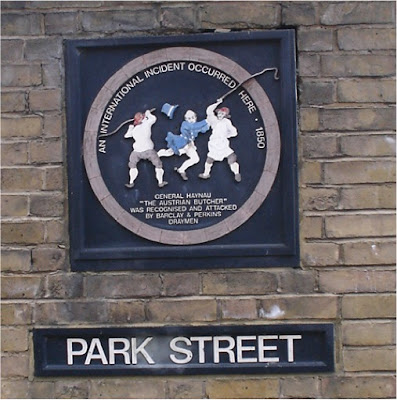
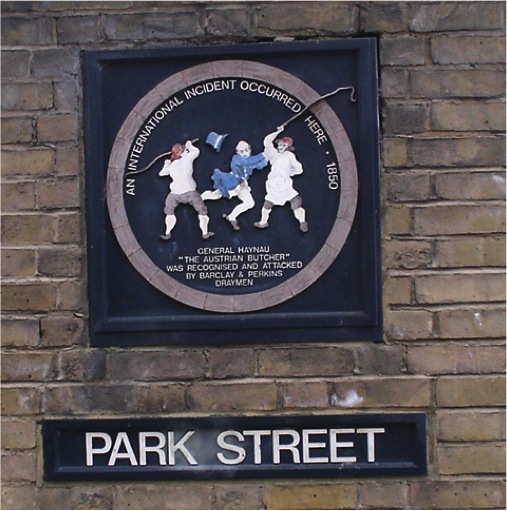
A plaque marking the incident stands in Park Street on the site of the Anchor Brewery.

[1] If you’re ever drinking in Hungary (which I can
heartily recommend) never try to clink glasses with the locals – it’s a social
faux pas.  As the Hungarian generals were
being murdered on Haynau’s orders, the Austrian officers were allegedly
drinking beer and toasting each other by clinking their mugs together.  Hungarians declared that they would therefore
never clink their own glasses together again.  

| Uncategorised

The pub that’s about to become a Wetherspoon’s

“Oh.  Did you know that pub’s about to become a Wetherspoons?”

We’re in town on the cider trail.  The microbrewery tap we’re drinking in doesn’t have rooms, but another pub just round the corner does B&B for thirty quid a night.  We’ve just told the regulars in the microbrewery tap that we’re staying there.  It’s impossible to tell whether they think it’s a good thing or a bad thing that the pub we’re staying in is about to become a Wetherspoon’s.  Either way, they’re very keen to tell us.

“There’s a notice in the window,” they say, nodding, and indeed there is – a Notice of Application for a New Premises Licence, on behalf of J D Wetherspoon plc.

The pub that’s about to become a Wetherspoon’s is bigger than it looks.  There’s only one bar open and the rest is in darkness, but it you were to explore you’d find another bar on the other side, that’s set up to cater for diners who never come.  And then, through a glass door at the back, there’s another room as big as these two bars put together, where there is (or was) a carvery at weekends.  The pub that’s about to become a Wetherspoon’s will make a perfectly good Wetherspoon’s.

The pub that’s about to become a Wetherspoon’s is festooned with small plastic flags – Union Jacks and Welsh dragons hang from every beam.  “They’re left over from the festival,” says one of the regulars at the bar.  On every flat surface, and glued to every wall, there are posters offering you a free pair of sunglasses if you drink a certain quantity of Strongbow.

The barmaid in the pub that’s going to become a Wetherspoon’s is the reason people come here.  Still very attractive, she was obviously stunning ten years ago.  She’s sexy enough to draw men in, and approachable enough to make them think that maybe – just maybe – they might have a chance with her. There’s a story doing the rounds that one of the regulars once took her home with him to meet his wife. Someone pointed out to him that this may have gone down better if it had been the other way round.  But the pub that’s about to become a Wetherspoon’s doesn’t feel like the kind of pub you take the wife to.  It’s not that it’s unwelcoming to women – it’s as welcoming to them as it is to anyone – it’s just that it’s obviously a place men come to get away from their wives.

The pub that’s about to become a Wetherspoon’s is close to the place where a five year old girl just went missing.  Posters are everywhere – the ones you’ve seen on the news, and others featuring different photos of the little girl.  It’s on people’s minds.  Maybe it’s one reason the town we’re in feels like a ghost town.  No one feels like going out.  There’s a depressed tension in the air.

“I’m going to go up there tomorrow to see if I can be of any help,” says the attractive barmaid.

“What can you do?” asks one of the regulars.

“I don’t know, but you’ve got to show willing, haven’t you?” says the barmaid.

The 63 year-old retired property developer is one of the regulars who thinks he stands a chance with the attractive barmaid.  He offers to accompany her to the cellar to change a barrel.  He makes it sound sinister rather than flirtatious, but he doesn’t mean to.

He tells us about the house clearance he just did where the tenant had been a chronic hoarder.  He kept his own bodily fluids in bottles.  Even kept his own shit.  “We haven’t found his nail clippings yet, but they must be there somewhere,” he says.

The attractive barmaid rolls her eyes.  “He tells that story to everyone who comes in,” she says.  “We had a nice couple in the other night who’d just had their dinner, and they turned round and walked out again.”

The 63 year-old retired property developer doesn’t realise that one reason he will never stand a chance with the barmaid is that he keeps telling his house clearance stories.

The pub that’s about to become a Wetherspoon’s has a font on the bar with taps for draught wine.  There are also branded taps for Strongbow, Blackthorn, Cobra, Carlsberg, Tetley’s Cask, Worthington Creamflow, Tetley’s Smooth, Pepsi, and a naked handpump with ‘Bank’s Sunbeam’ written in biro on a fluorescent yellow starburst sellotaped to it.

The Carlsberg is undrinkable, but the attractive barmaid happily swaps it for a Cobra.

“My nose got split last Friday,” says the attractive barmaid.  “I’ve had my lip split before.  They don’t realise when they do it that they’ve just earned a criminal record and lost their jobs.”

The 63 year-old retired property developer says he can’t go home because his wife has guests round, and she doesn’t want him embarrassing her because he’s drunk.  So he stays here, talking politics.  The elderly man who goes to the microbrewery tap first and then comes here and sits alone, smart in his suit and tie, every night at the same time in the same seat, disagrees scornfully with everything the drunk property developer says, like a call and response catechism.

“These two do that every night,” says the barmaid.

There’s still a jukebox in the pub  that’s about to become a Wetherspoon’s.  Not enough pubs have jukeboxes these days.  But tonight the jukebox is switched off, because the TV in the corner is on.  It’s switched to BBC4, which is showing a programme about the life and work of Norman Wisdom.  Clips of him pratfalling, clips of him meeting the Queen, interspersed with ageing comedians and TV executives talking about what a gifted comic he was.

“Whass’on the tellee?” asks one of the regulars.

“Norman Wisdom,” replies the attractive barmaid.  She stares at the screen for a while, then asks, “What was he, a philosopher?”

“No, he was a comedian,” replies the regular.

“Well ‘e can’t have been that funny, I’ve never heard of him,” says the attractive barmaid.

The pub that’s about to become a Wetherspoons stays open late.  When the property developer and the smartly dressed elderly man leave, we’re the only customers in the bar.  The attractive barmaid takes a seat and chats to us, and then three young guys come in for last orders, ans she tells them how long they have to drink up.

It’s late, and I call it a night.  And as I go upstairs to my room, I wonder if – when Wetherspoon’s finally do take over this pub, and they change some things and leave other things the same – I wonder if they’ll rename it the ‘Moon Under Water’?

| Uncategorised

Two contrasting responses to the growth of craft beer from two different big brewers

The big global brewers are coming for craft beer.  And there’s nothing you can do about it.

Craft beer, interesting beer, flavourful beer, microbrewed beer, whatever you want to call it and however you insist on defining it, is the only part of the beer market where there is any significant margin. In First World, mature, developed beer markets, brewers have willingly commoditised big brands and increasingly treat them no different from pet food or toilet roll.  The power of retailers has stripped any profitability out of these brands for the manufacturer, which is why all the big guys are now focusing on developing markets such as China, India and Brazil.  The huge scrap over who gets to own Tiger beer shows just how important these markets are to the giants of beer.

But the guys left in boring old Europe and North America still need something to do.  They can’t simply give up on beer’s homelands.  So they’re hearing all this noise about craft, and coming over to see what all the fuss is about.

This year I’ve had several conversations with global brewers about craft – from the very rich companies who say “please tell us in detail who all the main players are, the secrets of their success, what the main drivers of craft are, who’s drinking it and where it’s going to go,” and then decide they don’t need to know after all when I ask for a fee in return for this insight, to those who seem genuinely interested in developing more of a craft-like arm to their business.

You know it’s getting serious when you see a ‘segmentation’ of craft beers buyers, like I did this summer.  I used to do this kind of thing for a living, and it requires lots of expensive research to put together.  There were four different kinds of craft beer drinker in this study – each segment was a different size, with a different level of knowledge and different reasons for drinking craft.  And you know what?  You were in one of those segments.  Yes, YOU.  So was I.

So the big boys are going to start flirting with craft, to see if they can take some dollars, pounds and euros from hopheads and beer geeks.  In fact, they’ve already started – with Anheuser-Busch having dabbled with a half-decent pumpkin beer, Blue Moon of course, Carslberg’s Jacobsen range, and now, new offerings from A-B and Carlsberg that talk about ‘craft values’ in their launch press releases.

Some of these things are going to be horrible.  Some will be badly thought-out and misconstrued.  Some will even be insulting to the intelligence and the palate of craft beer drinkers.

But will they all be?  I don’t think so.  We all know there are some very talented brewers within the global giants. The question is, will any of them be allowed to make interesting beer that will then be given sympathetic support by the rest of the organisation?

In recent weeks, I’ve learned about two different approaches to craft by two different beery behemoths.

One is excellent, the other is cynical, lazy and contemptuous.  Let’s deal with the good one first – no reading ahead, I’m sure you can guess who the poor relation is.

Last month I went to see my mates Steve and Rudgie in Toronto.  Steve is the world’s greatest beer writer* and Rudgie works for MolsonCoors.** Rudgie will be familiar to readers of Hops & Glory as one of the key men who made my whole trip to India possible, and is now the world’s greatest Professional Canadian.  (Not bad for someone who spent the first three and a half decades of his life being a northerner from Warrington.  But he says al-oo-minum now and everything.)

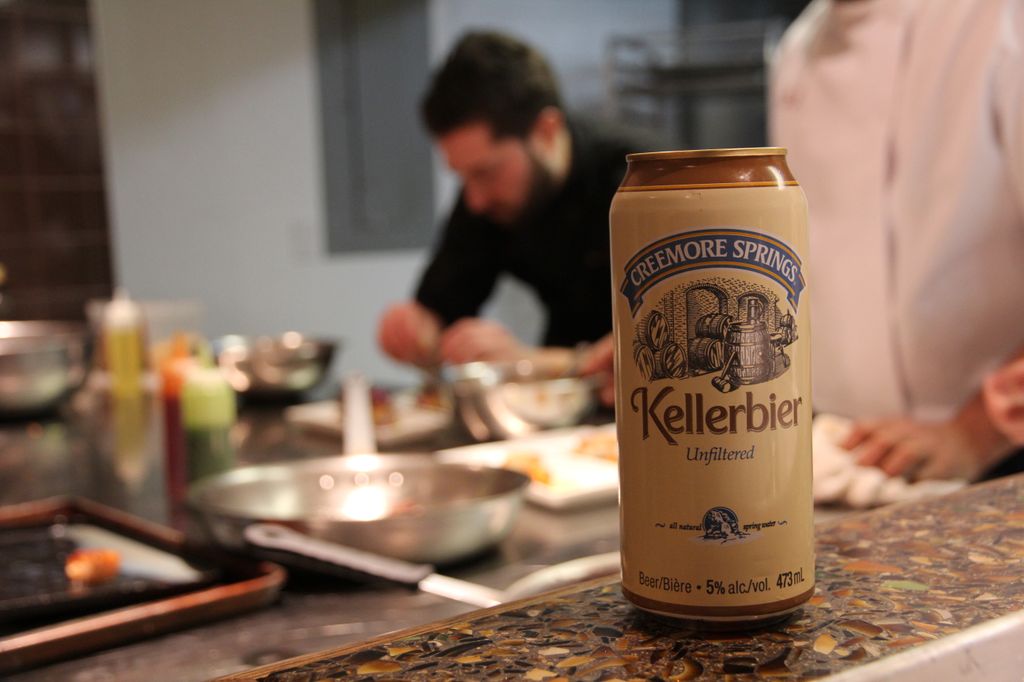
So anyway, last time I went to see Rudgie, he took me to Creemore Springs, a craft lager brewer in the heart of Ontario that proudly boasts of being ‘a hundred years behind the times’ and was bought by MolsonCoors seven and a half years ago.

Having watched what happens when giant brewers buy little brewers, you could be forgiven for expecting these excellent beers, including a sublime kellerbier, to have become blandised, cheapened and bastardised.  Instead, MC invested in increasing capacity and worked on spreading distribution, and simply left the brewing alone, with the clear admission that if they did get involved they would screw it up, because they didn’t understand how the market worked at that level.

In a global market that usually looks no further ahead than two years for return on investment, if they were going to screw it up, they would have done so by now.

Then they took over Vancouver’s Granville Island Brewing – possibly the first craft beer I ever drank when I spent a lot of time in Canada in the 1990s.  Same arrangement.  Granville Island gets sales and distribution support, and doesn’t get accountants sniffing around the hopping rates.

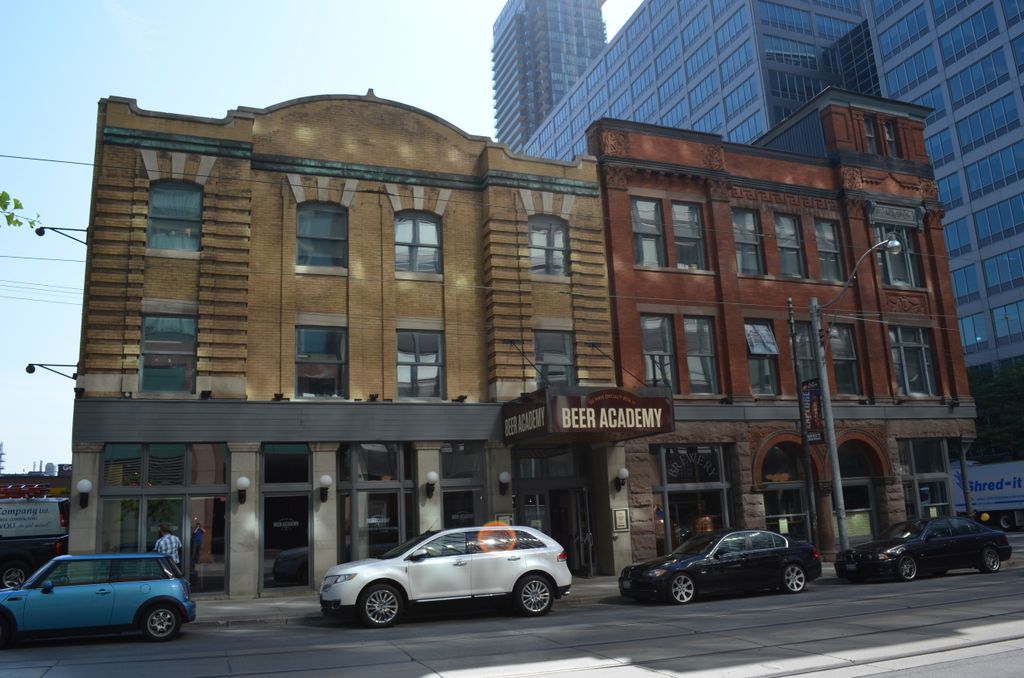
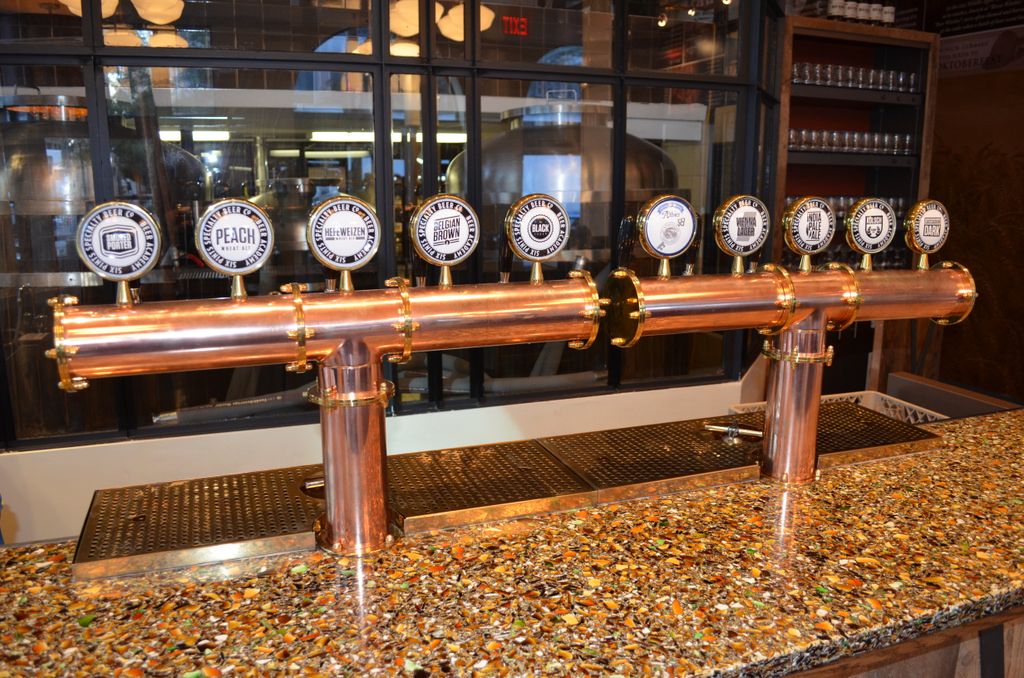
Last year, this flirtation with craft was expanded and consolidated.  Molson Coors bought a brewpub the founders didn’t want any more and created the Toronto Beer Academy.

Here, the brewery makes a range of interesting beers as authentically as possible, from classic styles around the world to new craft creations.

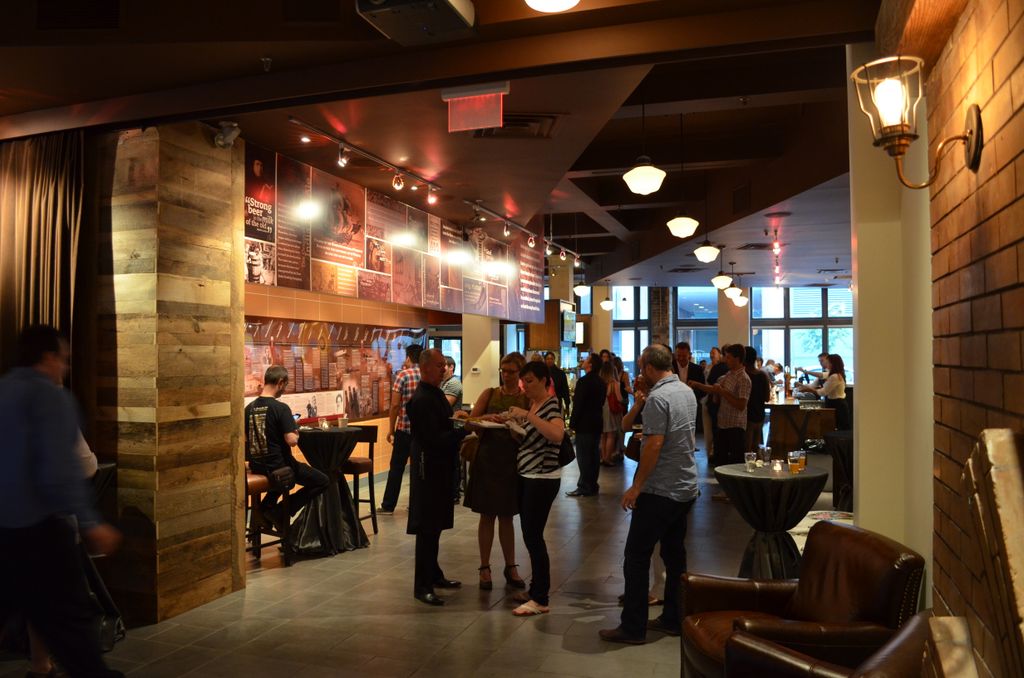
They’re brewed by good brewers who want to make good beer (and have significantly improved the old kit so they can do so), and are sold on site.  Creemore Springs and Granville Island beers are also sold here, in a bar that celebrates beer in all its shapes and colours.
Together, Creemore Springs, Granville Island and Beer Academy are now part of an independent unit within Molson Coors called the Six Pints Specialty Beer Co.  It’s part of MC, but not controlled by it.  It runs as a separate unit, to different rules. There is no MolsonCoors branding here, and no MolsonCoors brands are stocked.
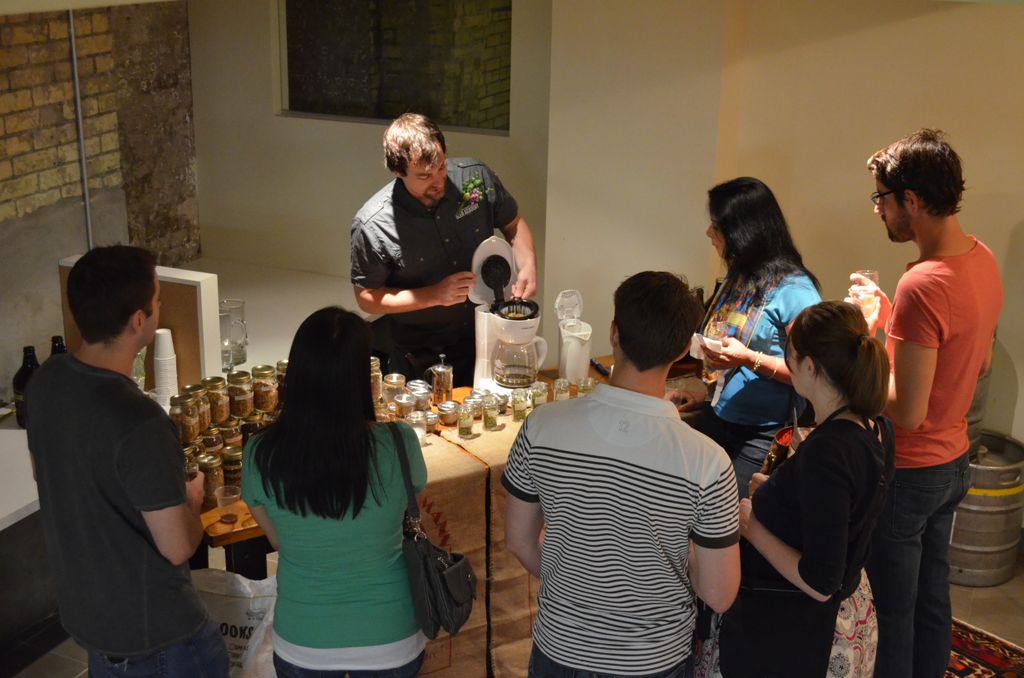
The bar holds brewmasters dinners, and seminars on beer ingredients and the brewing process.  There are new beer launch nights, beer and cheese matching evenings and beer dinners.  All stuff a good microbrewer should do, and done well.
Talking to the guys who run this, there’s a philosophy of enlightened self-interest.  It’s only going to work if it’s done right – and that means not doing it the MC way.  But if it’s done well, it might just create a halo effect that makes people think a little bit more of beer in general, in relation to wine and other drinks.  And that would, ultimately, help the rest of the MC business. 
I’m not saying it’s the best beer I’ve ever tasted, and I’m not saying Beer Academy is the best beer bar I’ve ever been in.  I am saying that this is proper craft beer, served in a proper craft beer bar, and that there is no evidence whatsoever of the ultimate owners trying to screw anything up with short cuts, dumbing down, cost cutting or corporate bullshit.
It’s an extraordinarily intelligent response to the growth of craft beer.
Compare that then, with the billboard spotted in Los Angeles by ace beer photographer Robert Gale:
Photo: Robert Gale – his blog has photos of way nicer beery stuff than this
That’s right: the biggest brewery conglomerate in the world reacts to the growth of craft beer by trying to claim that one of it’s top three priority brands for global domination is somehow in the same space as microbrewers and craft beer.

No shame. And no clue whatsoever.

You might feel that you would always want to support a true micro rather than a big brewer, and that’s a view that’s difficult to argue with.

But not all big brewers are the same.  They all want a piece of craft.  Personally I’ll be welcoming the stuff they do well, in the hope of killing off the crap, insulting stuff as quickly as possible.

* In joke. Not saying it isn’t true of course.

** Full disclosure following the admission that I do some consultancy in this area – while Rudgie is a mate, I have not been paid any consultancy or PR fee by MolsonCoors, and have had no advisory role or any other involvement in what’s discussed here

| Uncategorised

Telling Stories and Drinking Beer

It’s less than six weeks now until the launch of my new book, Shakespeare’s Local.

I had some very exciting news about the book yesterday, which I can’t reveal until contracts have been signed in a few days’ time.  It’s also been confirmed that the book will have a US edition some time next year.

But books don’t sell themselves these days, so I’m gearing up for various events up and down the country where I’ll be reading, talking about the book, and doing beer tastings.

Here’s the schedule so far:

Saturday 29th/Sunday 30th September – Taste Cumbria, Cockermouth
At 3pm this afternoon I’ll be tasting a world of Cumbrian beers as part of this excellent food and drink festival, and maybe doing the odd reading.  I’ll be repeating the tasting again at 1pm tomorrow.

Monday 1st October – Beer tasting mash up at the Manchester Food and Drink Festival
They asked me to do an event.  I said yeah, I could do a tasting of local beers, or beers that match with my books, or a beer and cheese pairing maybe?  Or what about beer and music matching?  It’s the right city for it.  And they said, they all sound great – can you do the whole lot?  So I’ll be attempting to weave together four completely different events at 7pm on Monday in the festival hub.

Tuesday 9th October – Ilkley Literary Festival
I had a blast here with Hops & Glory a few years ago.  Can’t wait to go back and unveil the new show I’ve put together around Shakespeare’s Local – it’ll be a multimedia extravaganza I tell you!  And it’s already sold out! No pressure then…

Thursday 8th November – Official Book Launch!
Finally hits the shops. I may have a celebratory beer at the George.

Monday 12th November – Corbridge
Details to follow

Tuesday 13th November – Urmston
Details to follow

Wednesday 14th November – Caught by the River at Rough Trade East
I love Caught by the River.  I love Rough Trade East.  Thrilled to be doing an event with them.

Wednesday 21st November – Richmond Literary Festival
An event in a beer shop.  And not just any beer shop – realeale.com’s HQ is beer paradise.

There will be many more events to follow, including a few at the George itself in the run-up to Christmas.

| Uncategorised

Cask ale in volume growth! How to stock the perfect range! Yes, it’s the launch of the Cask Report

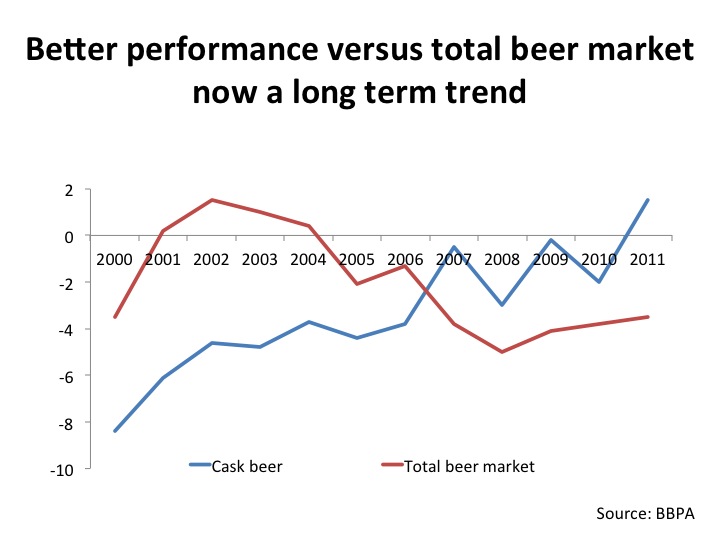
Cask ale, real ale, handpulled ale – call it what you will – grew by  1.6% in 2011.  This is the first time cask volume has grown (as opposed to not declining by very much) for twenty years.  Sales in 2012 to date are steady, which is still excellent news given that the total UK beer market – down 3.5% in 2011 – is down again this year.  Cask now has such momentum behind it that it has overtaken keg as the most popular draught ale format.

This all made my launch of this year’s Cask Report last night very pleasant indeed.  When you’re the messenger, it’s nice when no one wants to shoot you.

This is the sixth time I’ve written the Cask Report.  Up to now, it’s been a weighty tome that acts as a snapshot of what’s happening to cask ale, who’s drinking it and why, and a detailed source of information for licensees about how to choose, stock and sell cask ale in a way that will increase pub turnover and profitability.

This year we’ve done it a little differently.  All the advice for licensees is now running as a monthly section of the Publican’s Morning Advertiser called ‘Cask Matters‘.  With greater frequency we can tailor the advice more precisely, examining in detail how cask can contribute to the character and bottom line of the pub in different ways, with case studies, Q&A’s, advice, industry comment and the occasional bit of whimsy from yours truly.  You can download PDFs here.  We should probably do Boxing Day TV ads saying you get a free binder with the first issue and it builds up into a beautiful collection or something.

The market stats are now in a thinner, flimsier Cask Report that gives a much more concise and easily navigable picture of what’s happening to cask ale.  Apart from the basic stats, this year’s report examines in further detail two issues that have emerged as key in the last couple of years:

  • What are the main drivers fo cask ale growth?  Why do drinkers like it?  And what are the barriers to trial among those who have never tried it?
  • What range of cask ales should a landlord stock?
Drivers and barriers
53% of British adults have now tried cask ale.  Among those who have tried it, 84% have gone on to drink it, at least occasionally.  People like cask because of its flavour and variety – microbrewers are now brewing a wide array of different beer styles:
The problem for cask is that 71% people who’ve tried it drink it occasionally or rarely.  Only 13% claim to drink it often or regularly.  Like ‘Guinness drinkers’ who only ever have a pint on Paddy’s Day, an awful lot of cask ale drinkers are people who tend to order a Peroni or Stella, until the rare occasions they go to a beer festival or visit a nice country pub. 
Those who love cask, as well as loving the flavour, tend to have other reasons for drinking it too.  Some like to support a local producer, others a great British tradition. Some like it for its natural ingredients.  Cask ale allows people who know it to support causes or make statements about things they care about.  This gives brewers and pubs a list of things they could say about cask to encourage trial, or get occasional drinkers more interested.
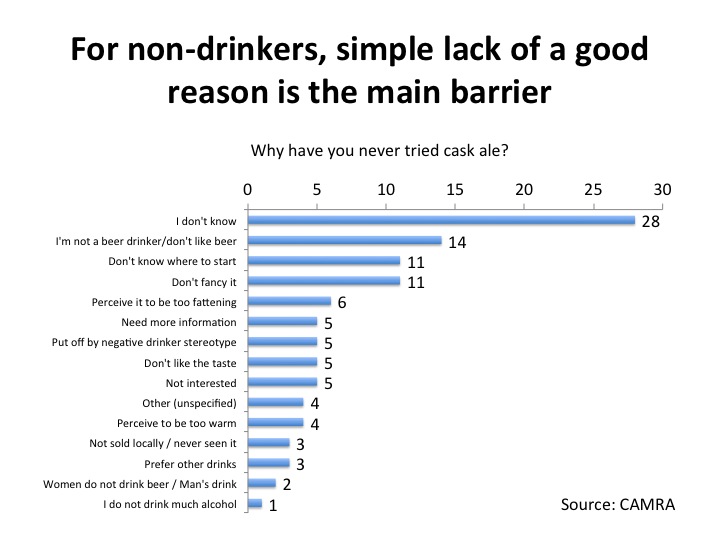
Among those who haven’t tried cask, there are no real barriers – they just haven;t been given a good reason why they should try it:
  

The negative stereotypes about it being warm, flat or an old man’s drink are tiny reasons compared to a simple lack of any reason why they should care.  Again, looking at committed drinkers gives us some good clues as to what those good reasons might be.

Stocking the optimal cask ale range
Talk to a beer blogger and they’ll tell you you should be stocking awesome craft ales from the awesome new wave of microbrewers using awesome New World hops and awesome wood ageing and an awesome lack of finings.  Talk to a regional brewer and they’ll tell you people want to see familiar, tried and trusted brands on the bar.

Both are right.

If I were to open a pub in London tomorrow, London Pride and Doom Bar would be on the bar permanently.  I would then have a seasonal beer from a traditional British family brewer, and three pumps stocking a range of IPAs, milds, porters, stouts, golden ales, all depending on seasonality and availability, the most eclectic and exciting mix I could find.

Most readers of this blog, I would guess, are dismissive of Doom Bar.  So am I. But it sells by the bucketload, and it sells to people who would never buy Magic Rock Human Cannonball.  There are at least 3000 different cask ales in Britain, which is amazing.

But know what?  The top 39 most recognised brands account for half of the total market volume.  Most pubs are stocking too many unfamiliar beers and not enough recognised brands.  Sales go up the more familiar, established brands you have on the bar.

Conversely, it’s eclectic, unfamiliar beers, often brewed by micros, that are driving the current excitement in the cask ale market.  Stock only familiar brands and people will think your range is crashingly dull, and rightly so.

Also – and this is common sense, but you’d be surprised – know your audience.  If you are a self-declared craft beer bar and you know that your clientele consists of people who actively seek out new beers, weigh your range to rotating new and unfamiliar beers.  If you’re a typical high street pub, refresh your range constantly, but always have a few favourites on the bar.

Whoever you are though, it’s good business sense to have both.  75% of cask ale drinkers say a familiar, trusted brand is important when choosing what beer to drink.  And 78% say they like to try new beers from microbreweries.  You may have noticed that adds up to more then a hundred – the same people want both familiarity and novelty – and that’s consistent across every piece fo research we did for the report.

Download.  Digest.  And maybe we can stop arguing – from a commercial point of view at least – about what’s best, big brands or micros?  Both are essential from the point of view of a good pub.

| Uncategorised

Announcement: The Beer Marketing Awards

Older readers will know I came into beer writing via a somewhat unlikely route.

My favourite of all the ads I helped create.  (No, I didn’t write it.)

I used to work in advertising, and one day I was appointed to work on the campaigns for Stella Artois and Heineken.  I was responsible for strategy, and this entailed looking at trends and deeper dynamics in society and culture to establish the motivations behind the brand choices people made.  When I had to do this with beer it completely captivated me and ignited an interest that went much deeper than what I had to do for the latest Stella ad.  It ultimately led to me writing my first book, which in turn led to me developing a much broader love for and interest in beer.

When I tell this story at events or readings, it usually gets a good-natured chorus of booing and hissing. There’s a suspicion among many beer fans about marketing – in its purest form, the belief is that advertising brainwashes people to drink shit, bland commercial beer instead of interesting, quality beer produced by nice people.  At best, there is at least a suspicion that many people choose beers for style over substance.

And to be fair, there is some truth in that.  Back in the day we used to tell each other that people ‘drink the advertising’ – but only when the beers themselves were interchangeable and pretty much identical.  Advertising can’t really persuade someone to drink standard lager instead of a microbrewed IPA if the standard lager doesn’t appeal to their tastebuds, but it can sure make you drink one standard lager instead of another.

Beer ads were the ads that made me want to in advertising in the first place.  The ad below is the one that I talked about in all my interviews, and I still think that it’s a pretty perfect beer ad:

Great gags, plays to the obsession of its target audience, brand name in the punchline. Perfect.

But if beer marketing was ever just about TV ads, it isn’t now, and won’t ever be again.  Back when ‘Dambusters’ played there were only two commercial TV channels and you could be sure pretty much everyone in the target audience saw it.  And regulations meant you could get away with outlandish claims so long as you were obviously joking about hose claims.  One casualty of our binge drinking paranoia is that advertising regulatory authorities have lost their sense of humour.

Marketing in its broadest sense is, at worst, a necessary evil, and at best a great, positive addition to the experience of choosing and drinking beer.  Whether we like it or not, we are a brand-literate, marketing savvy world these days.  I regularly see great beers stymied by awful label designs.  Branded, shaped glassware is at least as much about marketing as it is about enhancing the flavour of beer.  And with more beers than ever before to choose from, we’ve got to find out information about them somehow.  If a brewer chooses to impart some of this information themselves rather than rely entirely on crowd-sourced web reviews, that’s marketing.  When a brewer chooses a bottle shape, designs a label, launches a website, hosts a meet the brewer event, issues a press release, tweets or blogs or sends a punk dwarf to petition parliament, that’s all marketing.

Beer marketers now have to be much smarter.  The tightening regulation and the explosion of different media channels, not least social media, means it’s a much more complex game – but the playing field for that game is more level than it was.  Simply having the biggest budget is not enough (if it ever was – remember Watney’s Red Barrel?)

This is why I was very excited indeed when two industry acquaintances approached me and asked if I would like to be involved in organising the inaugural Beer Marketing Awards.  We have so, so many awards that celebrate the beer itself – and rightly so.  But marketing should not and canot be ignored, and the best stuff deserves to be equally celebrated.  If it takes off, it might even help raise the standard of the shit stuff.

And the joy of it is, it’s about the whole industry.  If you’re AB-Inbev, we want to hear about the best TV ad you’ve made this year.  If you’re Heineken, we want to know how proud you are of sponsoring the Olympics.  If you’re Brew Dog we want to hear how successful your best PR stunt was.  If you’re Magic Rock we want to hear about your Twitter presence.  And if you’re Wye Valley, tell us about your label redesign.  Huge or tiny, established or new, every brewer does marketing of some form or another, and there’s a category for everyone.  Here’s the full list:

Best Advertising Campaign – Print

This category rewards outstanding marketing activity in print media. Designed a standout campaign for national newspapers? Publicised your brand to great effect in glossy magazines? This category’s for you.
—–

Best Advertising Campaign – Broadcast

If you’ve implemented a TV ad campaign that’s really caught the attention of the viewing public, or a series of radio slots that stop people in their tracks, you’ll want to enter this category.
—–

Best use of Social Media

Facebook, Twitter, Google+, or whatever other social media channel floats your boat – if you’ve devised a campaign that has provoked thousands of comments, likes and follows, get your entry written.
—–

Best Public Relations Campaign

If you’ve generated column inches by the score, captivated journalists with your creative approach, or devised an industry focused thought leadership campaign, use your most persuasive talents to tell us why you should win this category.
—–

Best Branding / Design

Making sure your product stands out on the shelves or behind the bar requires a well-designed and consistent brand. You’ll have a good chance of winning this category if you can demonstrate success in this area.
—–

Best use of Competitions

If you’re into competitions, you’ll no doubt have noted that these awards are a fine example of the genre.  If you’ve created a competition or promotion that has gained a high profile for your brand, submit your entry here.
—–

Best Integrated Campaign

Jack of all trades? Accomplished all rounder? If you’ve created a high quality multi-platform campaign that hits print, broadcast, social media and anything else, add it all together and submit it for this category.
—–

Best Stunt / Guerrilla Marketing

If, like Monty Python’s Spanish Inquisition, your chief weapon is surprise, try and catch us unawares with your specialism for stunts or your gift for guerrilla marketing.
—–

Best Business to Business Campaign

Targeting the trade can be as exciting and innovative as targeting the consumer, so if you’ve concocted a campaign that persuades landlords to serve your beer, or masterminded an approach to the off-trade, here’s your category.
—–

Best Website

HTML, CSS, jQuery, JavaScript, PHP – if these terms make sense to you, think about developing (geddit?) an entry for this category. You’ll need to have created a site that is creative and compelling as well as technically brilliant, mind.
—–

Best use of Sponsorship

Sporting events, celebrities, TV programmes – if you’ve created a sponsorship package that has complemented and benefited from a partnership with any of these, you know what to do.
—–

Best use of Merchandise

From beermats to t-shirts, branded glassware to bottle openers – and beyond. If you’ve branded up complementary merchandise to add to your marketing campaigns, let us know how and why you did it.
—–

Overall Winner

No need to enter this one – we’ll choose the most impressive, innovative and successful campaign from all the above categories and give it a special award. You can bet it will deserve it.
—–

Outstanding Individual Achievement

Again, no need to enter this – if you’ve overachieved, chances are we’ll have heard about you anyway. You’ll need to have created a stunning body of work, either this year or throughout your career. We’ll make sure everyone hears all about it.

We’re recruiting a panel of judges from the brewing, pub and creative marketing industries, as well as prominent beer writers and other industry figures.  (Some brewers will doubtless be encouraged to hear that I won’t be judging myself – it’s incompatible with helping organise the event and encouraging entries.)

There will be a media launch at Craft Beer Co in London on 12th September.  The competition is now open for entries, and you can enter here.  Entries will close on 10th December, and the awards event will take place at the Truman Brewery, Brick Lane, on March 13th 2013.  More details will be on the BMA website, which will now be updated on a regular basis with chat about beer marketing as well as details about the competition.  If you’d like to sponsor one of the above awards, we’d love to hear from you.

I’m proud to be associated with this great idea.  Whether you’re a brewer or drinker, we hope you’ll be as excited by it as we are.
  

| Uncategorised

“How many beer bloggers does it take to change a lightbulb?”

“Take my head brewer.  No, seriously, please, take him.”

That was the question I asked on Twitter on Saturday afternoon.  
Some people thought I was angry, that I’d been pushed over the edge by one too many pedants at GBBF last week.  Not at all.  I was hacking away at the garden, feeling a bit bored and a little mischievous, and thought it might be a bit of harmless fun – remember that?
I think it’s safe to say the replies address the whole spectrum of beer blogging.  Some are very similar and I’ve grouped those together.  Some are funnier than others, though this may depend on who you are, so I’ve featured the whole lot below – about half are my own, half other people’s.  I’ve structured some as conversations because they work better that way.
So, how many beer bloggers does it take to change a lightbulb?
“That’s not the question. The question is, what is the true definition of a lightbulb?”
“12 – One to change it & 11 to sit around talking about how much they preferred to old one!”
“4 – 1 to rate it on http://ratebulb.com . 1 to video it. 1 to retweet it. 1 to Google an electrician.”
“Don’t we all just sit in the dark?”
“None. They just stumble around in the dark and end up
peeing in the airing cupboard.”
“We don’t change the lightbulb, we just sit in the dark
arguing about cask vs keg.”
“It depends. If the lightbulb’s in the cellar and there’s
no beer, then one and all.”
“Why oh why do so many people persist in repeating the
unfounded myth that the lightbulb needs to change?”
“A dozen take turns at it whilst pronouncing the old bulb
‘boring’ & the new one ‘awesome’. But nothing actually gets changed.”
“None – as you’re not going to actually find a blogger who
can do the thing they want to moan about.”
“They go on at great length about the importance of an
‘authentic’ light bulb but somehow nobody gets round to it.”
“It all depends who made the lightbulb. If it was mass-produced it was probably shit at giving out light anyway.”
 “I prefer these
local, artisanally produced lightbulbs instead of those cheap macroluminiscent
excuses for illumination.”
“Is it an artisan produced bulb, or mass produced yellow
fizz of light?”
“But how is the electricity made ? I’ll sit in the dark if
it’s not wind power.”
-> “I’m a CAMRA member. I won’t
conform to this new ‘energy saving’ rubbish.”
“One to form a bunch of committees. Then another 140,000 to
sit around reminiscing about the old days before electricity.”
-> “Tallow, it’s the future.”
“I actually preferred the Mk2 lightbulb, which they made for
6 months before they were closed by Mazda.”
“To be real thing, the gas should be vented before turning
on the bulb, although obviously it won’t last as long, about 3ms.”
“I change my lightbulbs every two minutes. That way I know
they aren’t sell-outs.”
“No matter how many try, they’ll never do it as well as
Michael Jackson did.” 
“Why did the proverbial lightbulb die in the first place?”
“Those Americans are doing things with lightbulbs that we
Brits can’t even begin to imagine.”
“Your old lightbulb was shit. The lightbulb revolution
starts here.”
“I think you’ll find that there is no direct proof the
lightbulb was ever invented.”
“That has nowhere near enough wattage to be classed as a lightbulb.”
-> “It’s not the quality of the
light, but the provenance of the inert gas within the bulb.”
“WTF? Lightbulbs!? Why aren’t you guys talking about halogen
striplights?! FFS”
-> “I cannot BELIEVE you people are
still talking about ‘strip’ lights. The correct term is TRACKLIGHTS. JESUS.”
-> “I just bought some AWESOME
tracklights!!!! Over a hundred units of brightness. Awesome!!!”
-> “I think you’ll find they’re
called lumens, not units of brightness.”

“I’m keeping the old lightbulb in, to see how it ages.”

Thangyouverymuch, I’m here all week, etc…