Author: PeteBrown

| Uncategorised

The war against beer

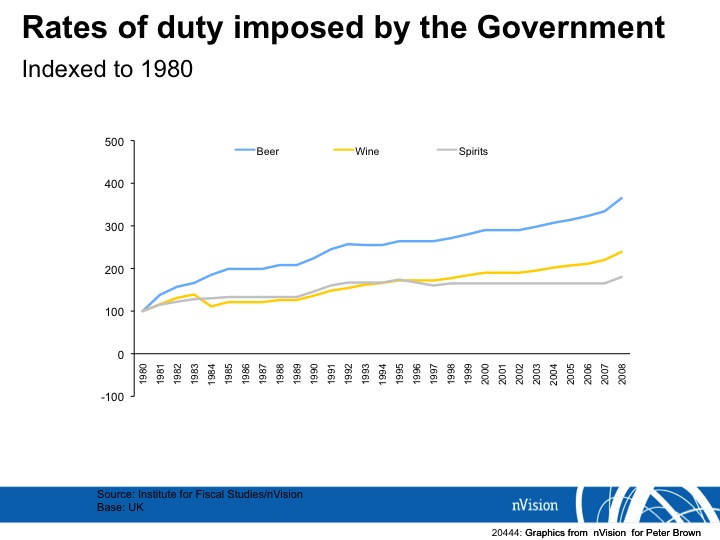
The one good thing about the bit of freelance advertising work I did recently was the opportunity to get my hands dirty in some interesting data.  Research company NVision always pull together numbers in a really interesting way and make some powerful observations – such as this one:

Over the last thirty years, beer duty has increased almost fourfold.  It has increased far, far more than duty on wine or spirits.

Perversely, the less alcoholic a drink is, the more it gets taxed.

Proof that successive governments of any party are biased against beer.

They see duty purely as source of revenue.  Taxation policy has nothing to do whatsoever with trying to curb binge drinking.

And alcohol taxes are regressive – this is an oversimplification, but what’s undeniable here is that poorer people over time pay a constantly increasing proportion of total alcohol taxation.

| Uncategorised

Books and that

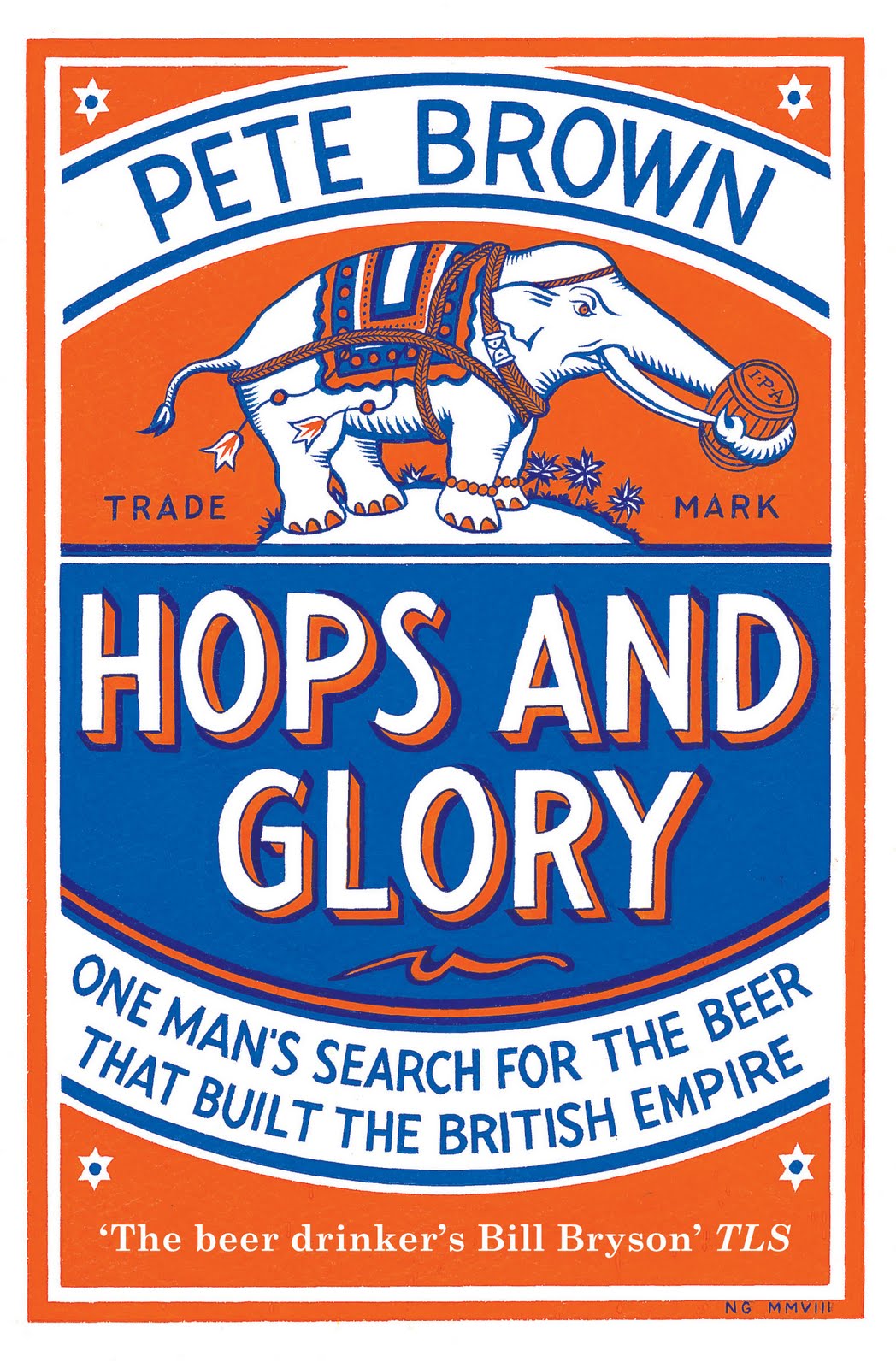
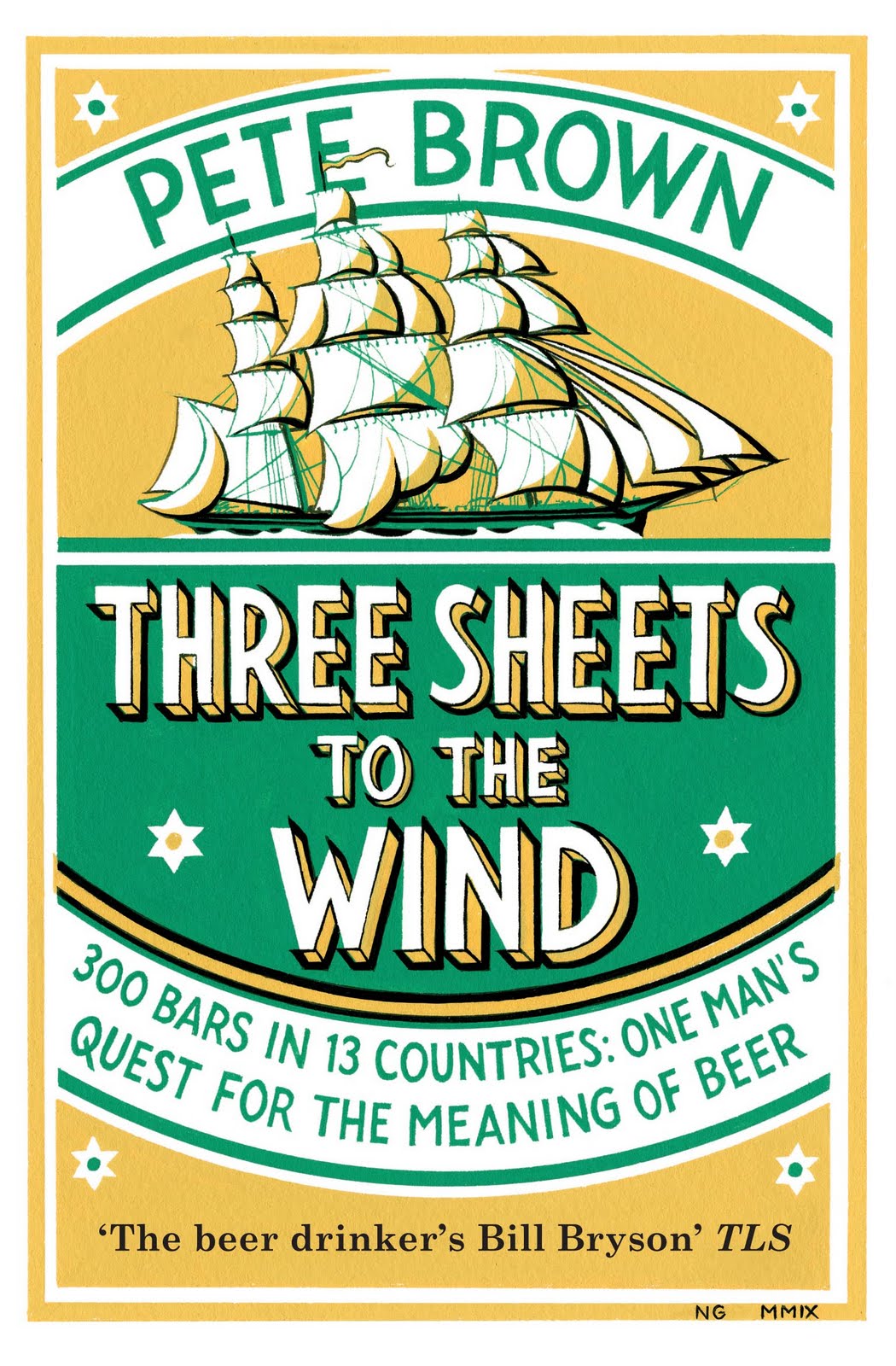
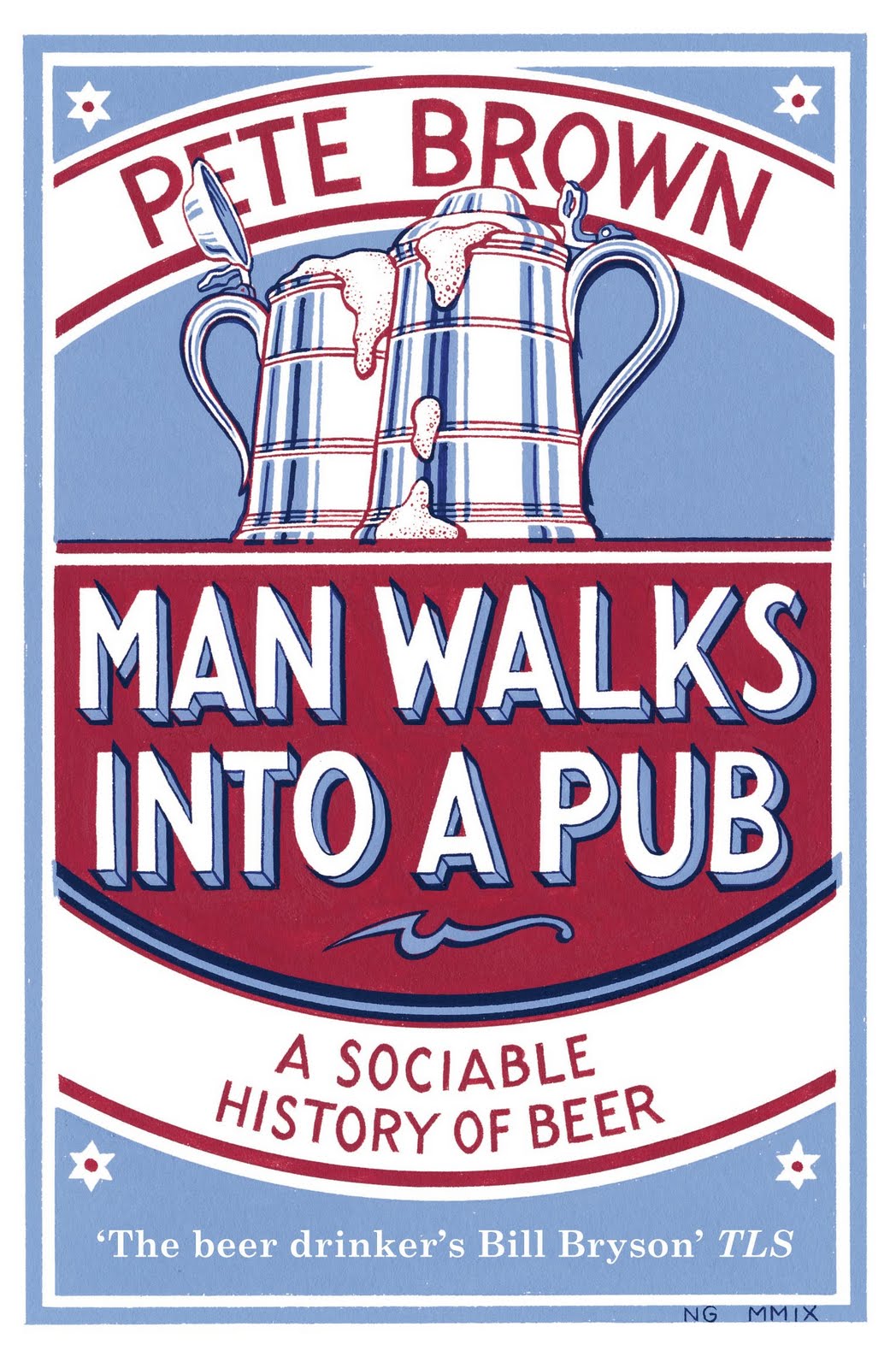
It was a proud day for me yesterday when I found out these had arrived in the warehouse:

The paperback release of Hops and Glory is joined by re-releases of the other too, both with new covers from Neil Gower, the wonderful artist who broke the mould with the Hops and Glory design last year.
As far as text goes, H&G and Three Sheets are unaltered, but Man Walks into a Pub has been extensively rewritten and updated.  I’ll talk more about that in a few weeks – they’re officially released on June 4th.
But anyone living in the North West who wants a copy can be the very first people to get their hands on one!  I’m doing an event at the Southport Food and Drink Festival this Saturday.  Scarisbrick Hotel, Southport, 2pm, I’ll be doing a group tasting of some of the beers from the festival, and trying out a new talk about beer and my adventures through it, drawing from all three books.  I’ll be announcing more festival dates throughout the summer once I’ve got this talk right, but I will have the new books to sell as a special sneak preview.
In other literary news, fans of The Beer Widow may have noticed that she’s been a bit quiet of late.  That’s because she’s organising the first ever Stoke Newington Literary Festival, June 4th-6th, bringing the stars of the literary firmament to our corner of North East London (actually, a lot of them already live here, hence the idea for the event.  
I’m doing two events, each of which will be a little different for me:

Saturday, 2pm: “Eat Your Words”: Niki Segnit, Pete Brown, Alex Rushmer and Ian Kelly
The White Hart
£4

There are only a handful of words that really describe taste and flavour, but collectively we have a seemingly limitless appetite for reading and writing about food and drink.  The author of The Flavour Thesaurus, Britain’s leading beer writer, a Masterchef finalist and the biographer of Anton Careme, the world’s first celebrity chef, discuss their struggle to pin flavour to the page.
Sunday, 3pm: “What’s so great about the Great British Pub?” Pete Brown, Paul Ewen and Tim Bradford
The White Hart
£4 (with free beer)

Beer Writer of the Year Pete Brown hosts an event in his local, The White Hart, getting the beers in and talking to one-man ‘Campaign for Surreal Ale’ Paul Ewen, and local writer and chronicler of small town England Tim Bradford, about what makes the pub such a unique and enduring cornerstone of British culture.  
Very excited about these – My mate Niki has written something that will be essential for anyone who enjoys cooking and wants to move beyond just following recipes, it’ll be cool to meet ‘Food Blogger Alex‘ from this year’s Masterchef, and Ian’s biographies look interesting.  The following day I’m fascinated to see what Paul Ewen is really like after enjoying his book a while back (I reviewed it here) and you’ve got to fall in love with Tim Bradford when you read the Amazon review he got from his mum!  Tickets should be available any second now from here, but in the meantime can be booked by phone (details on the festival website) or bought from the Stoke Newington Bookshop.  
We all take our place well down the running order behind people like Shappi Khorsandi, Phill Jupitus, Danny Kelly, John Hegley, Jeremy Hardy, AC Grayling, Stewart Lee and the legendary Tony Benn.  Come and make a weekend of it!  It promises to be fantastic.  
Check out the festival website for more details on the bill and how to book tickets, and follow @StokeyLitFest on Twitter and on Facebook for up to date news about the line up etc.  Liz has never organised anything like this before and the literary community is amazed at the quality of the line-up she’s managed to pull together for the first year.  But she’s having sleepless nights about the whole thing, so please buy tickets for stuff!

| Uncategorised

Ice Cold in Alex

“They served it ice-cold in Alex…

For the moment that he shut his eyes, he could see every detail of that little bar in the lane off Mahomet Ali Square; the high stools, the marble-topped counter, the Greek behind it. The sound of the place came back… the purr of the overhead fan, a fly, buzzing drowsily, the muffled noise of the traffic seeping through the closed door…

Then he thought about the beer itself, in tall thin glasses, so cold that there was a dew glistening on the outside of them, even before they were put down on the counter; the pale amber clearness of it; the taste, last of all.”

I like to look at how writers who don’t normally write about beer treat it when it crosses their path – some of the best ‘beer writing’ doesn’t come from beer writers at all.  They’re starting from a different perspective and with a different frame of reference. If they’re good, they can make even the most knowledgeable and experienced beer enthusiast think again about the essence and the role of great beer.

Christopher Landon served as a ‘Desert Rat’ in North Africa in the Second World War. In 1957 he fictionalised his experiences for a novel that went on to become one of the most famous war films of all time: Ice Cold in Alex. It contains possibly the most iconic beer drinking shot in the whole history of cinema – but we’ll come to that later. A few months ago I spotted a reprint of the novel in a bargain bookshop. Tempted by the cover illustration of a tall, full, pilsner glass, I decided to give it a go.

The opening passage above forms the opening of the book. Captain George Anson is a man ‘with too much sun, too much sand, too much of everything to bear.’ Stuck in Tobruk as a circle of Nazi armour closes around it, he’s succumbing to alcoholism, cauterizing his senses with a repetitive, metronomic swigging of the whisky bottle.

As the fall of Tobruk becomes inevitable, all non-essential personnel are shipped out to Alexandria before the noose closes. Anson is charged with getting two nurses in an ambulance to safety. He takes with him his faithful mechanic, Sergeant Major Tom Pugh, and on the way they pick up Zimmerman, a stranded South African officer who is not all he seems.

(Oh alright, he’s a German spy.)

Needless to say, things don’t go according to plan. They’re forced to detour deeper and deeper into the desert to avoid the German armour. At one point a German armoured column fires on them, killing one of the nurses. As the Germans decide whether or not to let them go, Anson’s old self emerges, and he swears off the whisky for the duration of their journey:

“Anson’s voice went on, it was different, held a faraway, dream-like quality. “If he has… I’m going to tell you something right now, Tom. It will be a sort of peace offering. Do you know the next drink I’m going to have? A beer, Tom. A bloody great, tall, ice-cold glass of Rheingold in that little bar off Mahoment Ali Square in Alex… and I’ll buy you one, all of you one, because I’m bloody well going to get you there.”

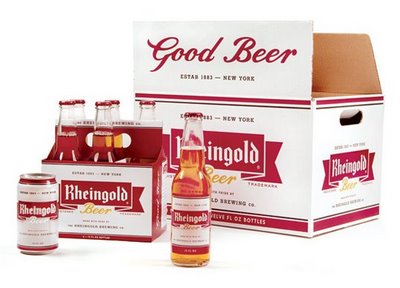
Rheingold was an American lager, from a New York brewery founded in 1883 by a German Jew called Samuel Liebmann.  Anson calls it “The best and coldest Yankee beer in the Delta”. But reading about it in this context, its German name and ancestry says something in and of itself about war’s bitter ironies.

The biggest character in the book though is the desert itself. Landon’s descriptions of the mirage – a solid, shimmering wall throwing all manner of illusions at them – the blazing sun and the unyielding, hostile but ever-changing sand, render North Africa as a different planet. As the book forces you to consider the desert from the point of view of the average Briton in the early 1940s – it strikes you that it might as well have been.

Anson, Tom Pugh and Diana the surviving nurse figure out that Zimmerman’s a kraut spy pretty quickly. But the desert forces them to unite against a common enemy, survival coming before the war against Nazism.

Anson rallies and his inspirational leadership galvanizes the other three. The beer has become totemic to him, not just for the alcoholic hit he’s denying himself until they reach safety, nor for the promise of near-orgasmic refreshment after the parched dessert: he’s promised to buy them a beer. And to buy them a beer, he has to get them to Alexandria.

One night, Anson and Diana are talking on watch, under the stars:

““Let’s talk about something else… Beer.”

“But I thought that was out.”

“It is – until that date in Alex. Do you know – I’ve been thinking about that one particular drink all day. I’ve told you about the bar, haven’t I? But that Rheingold – it’s so bloody cold that there’s a sort of dew on the outside of the glass. I always run my finger up and down – to make a sort of trail – before I have my first sip.””

Beer is hope.

I wrote in Man Walks into a Pub about some ancient myths in which beer is a gift of hope to humanity, a consolation prize for having to cope with knowledge, sin and inevitable mortality. Here it’s a rock that Anson can cling to, to prevent himself from falling apart.

On the outskirts of the city, KATY the ambulance is on her last legs – or last wheels I suppose – rattling and wheezing and leaking and steaming as the city reaches out and pulls them in. The book flits between the perspective of each of the four characters, and as the finale approaches we’re with mechanic Tom Pugh:

“He was not hungry, not thirsty – but once when the captain said, “I hope that beer’s bloody cold,” his mouth started watering uncontrollably.”

Finally, they make it. The bar is just as Anson described it, empty because it’s still early. The barman sees four unwashed, filthy tramps until Anson rouses him with a parade ground bark.

““Get cracking, Joe. FOUR VERY, VERY COLD RHEINGOLDS.”

When they came up, again they were as he said they would be, pale amber in tall thin glasses, and so cold, the dew had frosted on the outside before he put them down. They stood in a row now, but Tom waited, as he knew the others were waiting, for Anson to make the first move. He stared at his for a moment, looking all round as if it were a rare specimen, then ran his finger up and down the side of the glass, leaving a clear trail in the dew. He said, “That’s that,” and lifted the glass and tilted it right back. Tom watched the ripple of the swallow in the lean throat, and there was a tight feeling inside him and his eyes were smarting and he knew that in a moment he would cry. So he lifted up his own glass and swallowed it fast.

When Anson put his glass down it was empty. “I quite forgot to drink your healths,” he said. Then to the barman, “Set ‘em up again.””

It’s ready-written to be the climactic scene of the film adaptation. This is the ultimate thirst, the best beer you’ve ever tasted, a reward for the hardest day’s work imaginable. It works perfectly in the film – so perfectly, in fact, that all it took was one editor’s snip, one line of dialogue and a title to turn it into the second-best beer ad of all time.

Of course, the fact that for some reason the filmmakers switched Rheingold for Carlsberg detracts a level or two from the meaning. But without that bit of corporate chicanery, there’d have been no ad. And if there hadn’t been an ad, I would have forgotten about the film. And if I’d forgotten about the film, I would never have read this powerful, moving little book.

I can’t find the ad itself on YouTube, and blogger won’t let me upload the mpeg I have of it from my laptop, but here is the piece of film Carlsberg later used in the ad, without title and voice over:

So let’s hear it for the ice-cold, dew-dropped glass of lager. Given the choice I tend to go for cask ale these days. But if you were in Anson’s baked, cracked shoes, you’d have to be some kind of pervert to fancy anything other than one of these frosty bad boys.

| Uncategorised

Wikio Mea Culpa

Here are the REVISED Wikio rankings for April.

Tricky situation, because every month they offer a blogger an exclusive, before they go live.  There’s a narrow window to get this exclusive up before the rankings go live.  So even though it looked dodgy, I had to go with it – but it turns out it was wrong.  So here are the right ones:

1 Pete Brown’s Blog (=)
2 Pencil & Spoon (=)
3 Brew Dog Blog (=)
4 The Pub Curmudgeon (+2)
5 The Beer Nut (=)
6 Tandleman’s Beer Blog (-2)
7 Woolpack Dave’s beer and stuff blog (=)
8 Spittoon (+4)
9 `It’s just the beer talking` ? Jeff Pickthall’s Blog (+1)
10 The Bitten Bullet (-1)
11 Beer Reviews (+6)
12 Zythophile (+3)
13 Boak and Bailey’s Beer Blog (-5)
14 Called to the bar (-3)
15 Reluctant Scooper (+4)
16 Real Ale Reviews (=)
17 Brew Wales (-3)
18 The Wine Conversation (-5)
19 Travels With Beer (+1)
20 Taking the beard out of beer! (+9)

Ranking by Wikio

A couple of thoughts and observations:

The fact that I post these rankings more than anyone else doesn’t mean I attach more importance to them than anyone else.  Wikio asked me to co-ordinate this for them and I agreed, not having any reason to refuse.  I view it as a bit of harmless fun.  You’re entitled to disagree.  But every month I ask if anyone else would like to have the exclusive ands trail it on your blog – it’s an extra spike in hits if nothing else.  Hardly anyone ever volunteers.  It would be great if more people would like to share it around.

Secondly, I still stand by my challenge about making beer blogging more interesting.  Some people agree, but it’s upset some other people.

I hate upsetting people.  I hate spats and fights.  I have enough of them so believe me, I do know how much I hate them.  I write something I feel has to be written, and then when it all kicks off my stomach starts churning, I lose my appetite, and it’s hanging like a cloud at the back of my head, infecting everything I do, until it dies down.

My blogging challenge coincided with the decision of Impy Malting to return to the beer blogging world after a long absence (Hurrah!  Impy’s blogging again!).  Reading her return post (I recommend you do)  – which was largely about why we blog – helped me clarify what was behind my ‘blogging’s getting boring post’ better than I expressed it initially, so I want to expand on that here.

It comes down to why we blog.  I started blogging for the same reason I do all my writing – to turn on new people to beer and educate casual drinkers on delights they may not be aware of, and to try and help build a career as a full-time writer.  Both these reasons require a larger, general readership if I’m going to succeed. I also have to accept that I was established as a beer writer before I started blogging.

But different people start blogging for different reasons.  The wonder of blogging is that you can simply write what you like and publish it in seconds.  Some people might do it just to see the satisfaction of “I made this”.  Other people do it as a form of therapy.  Some do it just for themselves, and some do it for a specific group of people – friends or colleagues or family – with absolutely no care at all what anyone else might think.

No one has any right to tell these people what they should or shouldn’t be doing with their blogs.

So then we come on to the beer blogging community.  Impy talks about how she decided to blog about beer for her own reasons, and when she started doing it she found this community of beer bloggers (that’s you guys) and was delighted to be welcomed in by them.  It opened up a whole new dimension of chat, opinion sharing, ideas and friendship.  I’ve found exactly the same – and more.  I do the occasional bit of consultancy with brewers, and the first thing I tell them in marketing is that beer brands can now be built on line, that the blogging community represents a new medium, a new audience, through which beers can be made famous.  Ask Brew Dog.  Ask Crown Brewer Stu.

SO I AM NOT SLAGGING OFF THE BEER BLOGGING COMMUNITY.  OK?

But.

The thing about beer blogging is that, even though we may be read by a wider audience, the people who comment on our blogs tend to be other beer bloggers.  This tends to dictate the directions of the conversations we have, the subjects we cover.  We start to write specifically for other beer bloggers.  And ultimately that means the conversation becomes a closed loop, ultimately excluding someone who isn’t a member, or at least offering them no invitation to join in.

I include myself in this, more than anyone – shit, look how often I post the Wikio rankings – as Beer Nut pointed out, on that evidence I’m worse than anyone.  But I am my own harshest critic.  Well, apart from Roger Protz.  And my agent.  And the Beer Widow.  OK, I’m my fourth harshest critic.

My challenge to beer bloggers is a challenge to myself.  When I rewrote Man Walks into a Pub this winter I realised how far I’ve strayed from the original reasons I began writing about beer, and I want to get back to that place.

But it’s also a challenge to anyone who feels like sharing it.

If you blog about beer and you’re perfectly happy having a closed-loop chat with other beer bloggers, sharing in-jokes and comparing your latest discoveries – and I’m not making a value judgement there, it’s your right to do so – I have no right to tell you to do something differently.  So I unreservedly apologise if I’ve offended or come across as too bossy.

But if you’re blogging because, like me, you want to (a) continually improve as a writer and/or (b) be read by more people, my challenge still stands.

You never know – other beer bloggers might find it refreshing too.

| Uncategorised

Wikio Rankings for April 2010 – and a call to action

Yes, it’s time once again to start arguing about what constitutes ‘influential’, ask each other what algorithms are, show off if you do know what algorithms are, and wonder aloud why anyone is reading Stonch’s blog months after he stopped posting – last month’s Wikio rankings are in, and they go live tomorrow.

And just look at this table.  It might look a bit familiar.  Now look at it again, paying particular attention to the movers and shakers – or lack of them:

1 Pete Brown’s Blog (=)
2 Pencil & Spoon (=)
3 Brew Dog Blog (=)
4 Tandleman’s Beer Blog (=)
5 The Beer Nut (=)
6 The Pub Curmudgeon (=)
7 Woolpack Dave’s beer and stuff blog (=)
8 Boak and Bailey’s Beer Blog (=)
9 The Bitten Bullet (=)
10 `It’s just the beer talking` ? Jeff Pickthall’s Blog (=)
11 Called to the bar (=)
12 Spittoon (=)
13 The Wine Conversation (=)
14 Brew Wales (=)
15 Zythophile (=)
16 Real Ale Reviews (=)
17 Beer Reviews (=)
18 Jamie goode’s wine blog (=)
19 Reluctant Scooper (=)
20 Travels With Beer (=)

Ranking by Wikio

How weird is that?  Every single one of the top twenty blogs in the same spot it was in last month.

Let’s deal with the most obvious and popular suggestion first – it means something has gone wrong inside the big algorithm machine.

Well, I double-checked this with Wikio before I posted and they assure me it’s correct.  Certainly unusual, but definitely correct.

If it really is correct, it means that no beer or wine blog is any more or less influential than it was a month ago.

And the problem is, I can sort of believe that.

It might just be me, but the beer blogging world seems to have stagnated of late. Are people getting bored?  Busier?  Is everyone too preoccupied with the election or something?

Because I confess that I’ve started to find beer blogs a bit… boring.  Obviously mine isn’t.  Mine’s really interesting.  And if you’re reading this wondering if I’m talking about you, then I’m not talking about your blog either, honest – whoever you are.

That last paragraph was tongue in cheek, by the way.

But collectively, our online beer conversation does seem to have settled into a complacent rut.  It’s not any one person, but taken as a whole we all seem to be writing about what awesome beers we’ve had recently, how extreme they are, how rare they are, how hoppy or how aged they are.  Beer blogs have become an online beer geek diary, a hi-tec glorified form of ticking.

I brewed this beer.  I bought this beer.  I drank this beer.  In this pub.

Too many conversations form decaying orbits around brewing technicalities or beer definitions.

Could it be that the lack of action in the rankings reflects a lack of action – or at least a lack of momentum – in the blogs themselves?

This is not me sitting at number one slagging everyone else off.  I include myself in everything I’m saying here.  And I hardly posted in April.  Lots of other people posted less frequently than they normally do.  I have my individual reasons and I’m sure you do too.  But have we run out of interesting stuff to write about beer? We analyse beers so closely, have we done it to death?

I don’t think so.

So why don’t we try to shake it all up in May?

The lazy way to do this would be to start a fight (*looks uncomfortably at today’s earlier post*) but there are other ways too.  Try to wind someone up if you must – try to wind me up if you want, so long as you’re constructing an intelligent argument and not simply hurling abuse.  But also think about writing something heretical.  Write something that scares you.  Write something very personal.  Write something you don’t think any other beer blogger would or could write.  Turn that last pub visit into more a story with characters and themes and twists and gags.  Write something you’re not sure you agree with but just write it anyway, post and be damned – you can always write another post tomorrow saying you’ve changed your mind.

Think I’m out of order for saying this?  Think I’m being patronising or unfair or superior, or missing the point of what beer bogs are all about?  Think I should have a word with myself before challenging anyone else?  Excellent! Post an argument on your blog explaining why!

Of course, tomorrow Wikio may well reveal that, having checked, there was something wrong in the big machine after all.  If so I apologise for offending anyone.  But I still think we should try and rearrange the beer blogging furniture a little bit.

After these last two posts, the only thing I need to do now for my next post is meet my own challenge in a way that’s not slagging anyone off.  I will do this, I promise. In the interests of balance, I’m going to write a really positive post related in some way to the awesome achievements CAMRA as a body have made over the last 39 years.  Just as soon as I can think of an original and interesting way to do that…

UPDATE HALF AN HOUR LATER…
Just heard there may indeed be a problem with the algorithm monster!  I’ll publish updates on this as they come through, and a revised table if necessary, but whatever the outcome I still think my challenge stands. 😉

| Uncategorised

CAMRA’s noxious culture of entitlement

Long ranty post alert – apologies in advance, but this all needs saying…

One of my character flaws (I promise you I only have two, maybe three max) is that I can sometimes come across as arrogant. I never feel arrogant on the inside, but things I say or do can sometimes make it look as though I am.

When it happens, it’s not because I think I am superior – quite the opposite. It’s because I feel insecure and need reassurance. I over-compensate. Curiously enough, as I’ve become more successful as a beer writer, my ‘arrogance’ has declined as my inner confidence has grown.

The same is probably true of many other people who come across as arrogant. I guess it’s a kinder explanation than thinking that these people truly do believe they’re God’s gift.

But sometimes, I’m not so sure.

This is something that’s been tickling my brain since the scheme of pub discounts for CAMRA members was announced. It’s become quite controversial. Tandleman, as ever, gives a very reasonable argument in defence of CAMRA. (If only more of its prominent members were like him, there would be far fewer rucks like the one I’m about to prompt.) He claims that any organization is free to negotiate discounts for its members. If they put the effort in, and they succeed, fair play to them.

I can’t possibly disagree with that argument – I’ve worked in offices before now where HR have negotiated a staff discount in local shops – so why is it that the CAMRA discount winds up so many?

It’s this.

I was in the Sheffield Tap a few weeks ago, nursing a half of Thornbridge St Petersburg at the bar. In came two middle-aged guys with – and I swear I’m not making this up – plastic carrier bags full of VHS videos of locomotives, which they were swapping with each other. They went to the bar, ordered a couple of beers, and said, loudly enough for all the pub to hear, “We should get a discount in here!”

“Why’s that?” asked the barman.

“Because I’m a CAMRA member! And we spread the word about places like this!”

Now. Solipsistic as I am, I can only judge this by my own actions and experience. I’m Beer Writer of the Year. It seems that what I say carries a certain measure of influence in some misguided corners of the world. Sometimes in the Sheffield Tap the staff recognize me and insist on buying me a drink or giving me one on the house. If they do, I thank them as graciously as I can (being a Yorkshireman it’s hard, but I try) and accept.

I hope it’s not too arrogant of me to suggest that I “spread the word” about pubs more widely than Mr Deltics 1975-82 on VHS.  But I have never – in my life – walked into any pub and either demanded or expected a free or discounted drink because of who I am, or what I do. If I did, I would expect and deserve to be called a complete and utter fucking twat by anyone who witnessed it.

But with some CAMRA members there’s this sense of entitlement. It has nothing to do with head office having negotiated a commercial discount; it’s about this or that individual believing they deserve special treatment simply because they are a CAMRA member.

They know that a local branch can choose to make or break a pub over some perceived slight that has nothing to do with the quality of the real ale on offer. Similarly, CAMRA’s brewery liaison officers know they carry a great deal of influence. I’m sure many branches and many BLOs do their jobs conscientiously and responsibly. But I hear regular stories of others who let the power go to their heads.

When the bloke in the Sheffield Tap said his piece, he said it with a threatening tone. “We spread the word about places like this” was delivered with the protection racketeer’s implicit threat that ‘the word’ could just as easily be bad as good if his demands weren’t met. The Tap needn’t worry – no word this pathetic little man could spread would have anything like the power of the positive buzz coming from the vast majority of decent, sensible people – CAMRA members and non-members alike – who are raving about the pub.

So all this was buzzing around my head when we sat down to a free dinner in the National Brewery Centre last week. Master Brewer Steve Wellington had chosen a beer to go with each of the three courses we were served, and he stood up to introduce and explain each match.

Every time he took the microphone, the specially invited CAMRA members on my table heckled him, bellowing “P2 stout! Give us some P2 stout!” Now, this is a remarkable beer. But it wasn’t available. The first time they demanded it, Steve explained that there was none available because it hasn’t been brewed for a while. This didn’t put them off.  The first time it could be excused as good-humoured banter.  As the evening wore on, it just became fucking rude.

The final course was served with Kasteel Cru Rose. Like most beer geeks, it’s not a beer I care for that much, but Steve had his reasons for matching it with the dessert. Not a single one of the CAMRA guys would even touch it. They were disgusted, insulted, seemingly forgetting that this was not a CAMRA dinner, and that CAMRA has not financed the £700,000 reopening of the brewery centre. A private leisure company had, and Molson Coors – license owners of Kasteel Cru – had.

The demands for P2 stout grew louder. Finally, Steve went out into the driving rain, ran across to his office and found five bottles from his personal stash. He placed them on our table, and the CAMRA members, without a word of thanks to Steve, proceeded to divide these bottles among themselves, not offering to share them with anyone else. The guy sitting next to me told me that I could have some of his if I could get the bottle opened. Why he felt he was in a position to decide whether I was entitled to drink some of Steve Wellington’s beer speaks volumes.

When I opened the bottle and poured it for him, he grunted, “This had better be bottle-conditioned.”

While we were enjoying a dinner that had probably cost the NBC in the region of eighty quid a head, for CAMRA members to show such visible and audible disgust at the beer choice of a brewer they and everyone else has huge respect for, to barrack and heckle in such a way, and to display such a sense of entitlement when they got what they had so rudely demanded, was not just grossly disrespectful; it was the behaviour of sugar-rushed ten year-olds at a birthday party.

I hope that every decent CAMRA member reading this is appalled by the behaviour of people who were there in their name, representing them. These were not some junior local branch hangers-on; they were senior members with significant responsibility for pursuing the aims and objectives of the organization.  But they acted just as obnoxiously as the inadequate trainspotter in the Sheffield Tap.

From their point of view, there had been a perceived slight in the speeches when CAMRA had not been thanked adequately for their role in the brewery centre being reopened. Personally I don’t think there was any such slight. But even if there had been, it didn’t excuse this behaviour. And the perceiving of a slight in the first place is yet another manifestation of what I’m talking about. (As soon as the reopening of the centre was announced, CAMRA members were phoning up demanding free/discounted entry.)

This culture of entitlement is – as far as I can see it – arrogance in its truest form, a genuine belief that simply by being a CAMRA member you are somehow superior, more deserving than other paying customers.

Of course, not everyone who is a CAMRA member behaves this way (I’m not even suggesting every CAMRA member at the dinner behaved this way). 
But everyone who does behave this way is a CAMRA member.

| Uncategorised

You wait ages for locally based beer phenomena and then two come along at once

I’m starting to think there might be something in this beer lark.

Just a week after the Jolly Butchers reinvents itself as one of London’s top five beer pubs, The Alma on Newington Green is having a bank holiday weekend real ale festival.

The Alma is a pretty pub in a great location, on the border between N1 and N16.  Bobby Gillespie out of Primal Scream lives just around the corner, and he blew his entire wad of Indie Rock credibility a few years ago when he complained to the council about the noise from the pub.

It’s a gastropub – one of the best in the area – really nice food, freshly prepared, nice wine list, lovely staff, great atmosphere.  But up to now the beer selection has been nothing to write home about.

This weekend landlady Kirsty Valentine changes all that with a festival celebrating the extraordinary renaissance of London brewing in recent years.  There’s a full list of about twelve ales, all from Sambrooks, Brodie’s, Twickenham and Redemption, none of which existed six years ago (Twickenham is the oldest, having opened in September 2004).

And the nice thing about the mix, given that they’re drawn from four local breweries, is that there’s a really interesting array of beer styles in there – a few golden ales, a few session beers, and some stronger, darker stuff.

Some of the brewers will be turning up at various points throughout the weekend, and I’m going down there tomorrow (Saturday) hopefully to meet the nice man from Tottenham’s Redemption Brewery.

It’s three quid a pint (10% off for CAMRA members, not that they deserve it – sorry, Tandy etc – I’m grouchy about appalling behaviour by some stereotypes who were at the National Brewery Centre launch last night) and there’s a live band on Sunday.  It kicks off Saturday at noon and runs until chucking out time on Bank Holiday Monday.

See you there!

| Uncategorised

Do we need another brewing competition? Dunno, but I think we need this one…

The Brewing Industry International Awards are back. They were last held in 2005, but are happening again on 9th – 11th February 2011 in Burton on Trent, hopefully in the new National Brewing Centre (grand opening tonight – I’ll be there!).

These awards are notable in that brewers are judged only by their peers – other brewers.  Pundits and hacks like me don’t get a look in.  (This led to a fantastically entertaining meltdown by a certain beer writing legend when the Guild of Beer Writers discussed at the first AGM I ever went to.  As I said at the time, it was worth the price of joining the Guild on its own.) 
Anyway, there’s lots of stuff here about categories, judging and all that.  In the gap since these awards were last held, the World Beer Cup has become pre-eminent in this field.  The BIIA are joining to give them a run for their money once more from now on. 
But what interests me most is not yet official news, but was revealed yesterday by Ruth Evans, CEO of BFBi, which runs the BIIA (OK, that’s enough acronyms for one blog post), at a conference we were both speaking at.  Ruth said that at the end of the competition, there are approximately 10,000 pints of beer left.  Wouldn’t it be a good idea if, instead of pouring this beer down the drain, they had an international beer festival?  As Ruth points out, it wouldn’t be like a CAMRA beer festival – it would incorporate the best beers from around the world, of all styles, and there would be plenty of brewers on hand to talk about them.  And if this festival were held in the National Brewery Centre… well, talk about putting Burton back on the beer map.
Ruth stressed that nothing is definite yet – discussions are ongoing.  But if this came of, it would fill the gap left by the extremely premature demise of Beer Exposed after just one fantastic event in 2008.  It would be a phenomenal event for everyone involved in the global beer industry, and could be the start of something much bigger, giving Burton a new role on the global beer stage.      
I urge everyone connected with the National Brewing Centre to play nicely on this, and any potential sponsor or media partner to jump in.  Let’s make this happen. 

| Uncategorised

The Jolly Butchers: my manor gets its own serious beer pub

I write for lots of different reasons, some of which go very deep. I’ve wanted to be a writer – of some kind – since I was nine years old. But among all the complex psychology, creativity and ego needs, there are a few more pragmatic reasons why I’ve wanted to write specifically about beer over the last ten years or so.
One of these is that I really love drinking well-made, tasty craft beers, be they American hop bombs, beautifully balanced real ales or perfectly made pilsners.
The trouble is, until a few years ago not many pubs served them. I much prefer drinking in pubs to drinking at home, and nine times out of ten I would have to settle for something deeply average.
So purely selfishly, I figured that if I wrote about beer, and I was really good at it, I might in some small way encourage the spread and appreciation of great beer, and that would make it more common in pubs, and that would mean I could enjoy better beer when I’m out. You might think I do it to turn other people on to great beer, but my ultimate motive is entirely selfish.
And it’s kind of working. I’m not claiming any measure of direct credit for the spread in good quality beer, the huge rise in imports and the critical and commercial revitalisation of cask ale, but I am part of a big wave of enthusiasm that’s pushing the spread of great beer.
My local, the White Hart, used to have one dusty Spitfire pump in the corner of the bar. Now it has three well-kept cask ales – Doom Bar and Tribute on permanent, and a rotating guest.
And as of today, up the road, opposite the bus stop, we have the Jolly Butchers.
Previously, the Jolly Butchers was a Stoke Newington institution – in more than one sense of the word. It was also known as Stokie’s Bar and Father Ted’s, each rebrand not replacing the previous name but adding fresh layers to to it, like the coats of grime on the windows.
It was populated exclusively by old men wearing what the late Pete McCarthy dubbed ‘Irish drinking suits’, those once smart, now shiny and stained dark jackets and trousers that are the uniform of a certain type of veteran drinker. They’d huddle together in a vast, derelict space to watch an endless diet of horse racing on the pub’s many TVs, pumping the change from their pints of Foster’s into a bank of gaming machines.

The pub had a certain notoriety in Stoke Newington’s broader population thanks to its 3am licence, but whatever business this brought in it clearly wasn’t enough: rumour has it the pub was losing thousands of pounds a week when it finally closed earlier this year. Twitter briefly flurried with comments along the lines of “Where are we going to go to have a late night fight with an Irishman now?” and then fell silent.

Two days ago I was invited for a sneak peak at the new Jolly Butcher’s.

The Victorian wrought ironwork and stained glass above the windows, previously boarded over, has been exposed. The walls have been stripped back to the brickwork and left unfinished, stylishly shabby, apart from one wall covered in trendy Fornasetti wallpaper.
The central bar that once dominated the centre of the room has been moved to the side, and an open kitchen has been built in the corner. And as for that bar, well…

There are ten handpumps, combining beers from London’s late-to-the-party but finally emerging range of craft brewers, plus regular beers from Thornbridge and Dark Star, real cider from Gwatkin’s and a perry.

Apart from the ales, there’s smoked beer Schlenkerla on draught, as well as De Koninck, Bruges Zot, Mort Subite Kriek, Vedett, Erdinger and Meantime Helles. Yes, all on draught. Then there’s a lot of Chimay in bottles, some more Meantime and a few others. The bottle range does need beefing up, but landlord Martin wanted to focus on getting the draught range right first.
I used to have to get on a train for two hours to drink Jaipur on draught. Now I have to walk five minutes to the end of my street. My plan has worked.
I can’t claim any credit at all for the Jolly Butchers though – Martin had never heard of me until he started placing orders for beers. But when he did, people kept telling him I lived locally and he should get in touch with me. I’m so glad he followed their advice.
The other day I chipped in a few comments about the beers as the staff were taken through a tutored tasting of them by Martin (behind the bar, above). Some of the Irish drinking suits were hanging around outside, curious, proprietorial. They’re still welcome if they’re happy with no racing, no bandits and Meantime Helles instead of Foster’s.
Martin knows what he’s doing – he also runs the Rose and Crown in N16 and the Wrestlers in Highgate. Both those pubs are tied, but the Jolly Butchers is a freehouse. As such, he couldn’t wait to get his hands on it and turn it into a beer shrine. Why? Martin is a beer fan, but not a beer geek. He enjoys a decent pint, but talking to him you realise first and foremost he’s a businessman. He’s reinvented the Jolly Butchers, taking it from one extreme of the pub spectrum to the other, purely because he believes he’ll make a lot of money by doing so.
“If this doesn’t work, that means I don’t understand pubs. And the thing is, I do understand pubs – I’ve worked in them all my life,” he says.
It’s striking that he had to wait until he could get a freehold to do this – that PubCos simply wouldn’t allow him to create this dream. When the Jolly Butchers makes more money than Martin’s other pubs, than other Enterprise and Punch pubs, it will prove what readers of this blog understand but PubCos, global brewers and mainstream media still do not – craft beer is thriving, and when forty pubs a week are closing, catering to craft beer is a sure fire route to profit.
See you there tonight.