Author: PeteBrown

| Uncategorised

The White Hart @StokeyLitFest

It’s taken me a week to recover from the Stoke Newington Literary Festival.  Four hours sleep a night for five days, phenomenal stress, unimaginable peaks of pride and delight.  Written up as ‘The new Hay’ by none other than The Times, we’ll be back bigger and better next year.

My events went well – both sold out.  In the flavour event we had a foodie crowd rather than a beer crowd, and doing a beer tasting caught them completely off-guard.  Otley O-Garden turned on thirty-odd people to beer, and the idea that you could taste beer properly, for the first time.  It’s a powerful weapon.  That event also earned me my first ever piece in The Times – a World XI of beers for the World Cup, which ran on Thursday but doesn’t seem to have made it to the online edition.

Me in our pubs talk

Then on Sunday we had the pubs event in the White Hart.  I got shivers running up and down my spine as I read Orwell’s Moon Under Water.  Tim Bradford proved he’s a beer writer struggling to get out from within a successful narrative non-fiction author when he read pub reviews from all three of his books, none of which is ostensibly about beer and pubs.  And Paul Ewen very kindly did a review of the pub we were sitting in, based on a visit a few weeks before.  It was a brilliant introduction to Paul’s surrealist style, and we talked afterwards about how the pub – with all its Man Walks into a Pub jokes – often demands a surrealist response in a way any other public space or retail establishment simply cannot.

Paul has very kindly given me permission to post his review below.  If you enjoy it, and if you like pubs, please buy his book from Amazon, right here.

The White Hart,
69 Stoke Newington High Street,
London N16 8EL
Nearest Train Station:  Dalston Kingsland
It was a glorious sunny afternoon as I made my way along Stoke Newington High Street, and the dazzling light reflected off the windows of passing cars, and from the spectacles of orthodox Jewish men. Some of the shops I passed were painted in bright and gay colours, to match the cheerful day, and I found my spirits lifted by their festive and perky tones. But the dark exterior of the White Hart pub was, in comparison, rather ominous and foreboding. It reminded me of an old scary house at the top of a windy hill, with bolts of lightning zig-zagging all about it. 
On one of the front windows was a paper sign. On the sign was an arrow and a message that read:
DON’T USE THIS DOOR, USE THAT DOOR.
Following these directions to the appropriate entrance, I proceeded into the White Hart, as if entering a dark purple storm cloud, full to bursting.
It was raining inside. It was pelting it down. I was immediately struck by a flurry of hard wet drops, so raising my hands like a wig-wam above my eyes, I peered about in a search for dry shelter, but there was none. My hair and eyebrows were quickly drenched, and my mouth was like a plughole in a bath, surrounded by the wet wispy hairs of my silly little beard. Resigning myself to the elements, I ran like a person with a limp in both legs towards the large central bar, which lay just a short distance ahead, past some outlying tables and chairs. The barmaid was in good spirits despite everything, and the bucketing water gave her the distinct appearance of an Afghan Hound beneath the ocean.
A pool table to the right of the bar resembled a large birdbath, and a few young fellows were engaged in a match with the red and yellow balls, persevering atop the waterlogged felt. When a ball was struck, the sound it made resembled that of a plump duck landing on a pond. Next to the pool table was a large old fireplace, and this was stacked high with round logs of soggy firewood.
The rain water plop-plopped into my 3 pints of English ale, and when I raised one of these to my mouth, some of the drips ran off my nose and fell into my drink.
After leaving the bar with my ales, I found a square wooden table not far from the entrance door. Foolishly, I took out my handkerchief to give my chair a wipe, before realising my error as the rain beat about my head. To cover my embarrassment, I quickly hid my face behind the menu on the table, which the management had very sensibly chosen to laminate.
A large droplet-shaped light fitting made quite a show in the front bar, with many individual glass pieces sparkling in the heavy downpour. The bulbs and sockets were fizzing and sparking, and steady wisps of smoke were escaping from the fuses, but nobody seemed to mind. Making the best of the conditions, I tapped my flat soles on the watery floorboards, creating a loud ‘slapping’ noise. As I slapped away, I quietly sung along to a random tune that had formed within my head:
Every Sha-la-la-la
Every Wo-o-wo-o
Still shines
Every shing-a-ling-a-ling
That they’re startin’ to sing’s
So fine.
At an adjacent table, two large lads had been engaged in earnest conversation, and my singing had somehow managed to disturb them. Raising a wet hand, I took the opportunity to engage in conversation.
“What about this weather, ay?” I exclaimed.
“What?”
“I was just saying, what about this weather, ay”?
The two men shook their heads and turned angrily back to their conversation. Feeling small, and a little bit stupid, I reached for my satchel and fumbled about inside for my pub review notebook. By huddling over the top of it, I thought I could spare the open pages from the torrential, pouring rain. But it was a thankless task, and the squiggly black ink soon resembled dangly goldfish poo, which is dragged around a bowl, like an advertising message behind a light aircraft.
The pint I had been drinking had quickly refilled with rainwater, and my other two drinks were also being diluted and watered down. It really was a ridiculous state of affairs. But there was no use fighting it. I was in England, and if there was one thing I knew, you had to roll with the weather. So instead, I laughed. I laughed aloud! I laughed aloud and said,
“Ah, heck!”
And then…I poured each pint over the top of my head, one after the other. There. As if it mattered!
Well, the bar manager of The White Hart came over very shortly after that, and I noticed his shirt was very crisp and very smart.
“Right”, he said. “You, out. Go on, out. And you can forget about coming back ‘cos you’re bloody barred.”
Outside, on Stoke Newington High Street, the sun continued to blaze. It was very bright and very hot, and as I trudged away, my sponge-like shoes left behind little squelchy puddles.

| Uncategorised

Hops and Glory: Officially back on sale today!

Hope you haven’t minded this week of relentless self-promotion too much, but this is the final post in the series: today is both the first day of Stokey Lit Fest, and the official launch day of the Beer Trilogy in newly jacketed, beautifully produced paperbacks.

So far I’ve discussed the revisions to Man Walks into a Pub and tried to offer a reappraisal of Three Sheets to the Wind.  So what can I tell you about Hops and Glory?

If you’re a regular reader, probably not much more than you already know.  There are no changes to the text (apart from a few name spelling corrections and sorting out the sequencing of some footnotes).

But in its own way, this is the most exciting release of the lot.

Hops and Glory was the first book of mine to be released in hardback.  This was a big status thing for me.  But the thing is, a lot of people don’t like hardbacks.  They’re big and heavy and expensive, and I know a lot of people have very weak wrists.  So today is an exciting day for you!  The paperback edition is MUCH cheaper, MUCH lighter and MUCH smaller!  It’s way better for reading on the beach, in the bath, in bed, on the bus – in fact, anywhere!

The paperback edition of Hops and Glory – you know it makes sense!

I’ll be signing copies of all three of the Beer Trilogy at Stoke Newington Literary Festival this weekend.

| Uncategorised

What’s so great about the Great British pub? Stokey Lit fest, Sunday 6th June

What’s so great about pubs?

We all know the answer to that one, of course. But that doesn’t mean we can’t have the discussion all over again.

Sunday afternoon will be the culmination of lots of threads. The Beer Widow decided to organise a literary festival when I was reading Hops and Glory at lots of them last summer, and we realized that of all the places that have LitFests, our local manor, Stoke Newington, should have one, because of its rich and multi-layered literary history (Stokey residents invented feminism, sci-fi, horror, even novels, if you allow yourself to go with the flow of local history).

When we agreed that she would go ahead with the idea, I always thought it would be nice to do an event in my local pub. The White Hart has a good function room upstairs that often hosts great comedy nights, and I launched Three Sheets to the Wind there.

But it would be wrong of me to simply do another lot of readings from my books, like I do at other literary festivals. I want to use the occasion, the fact that we’re organizing it, to do something different, creating an event that you won’t get anywhere else.

So we’ve taken the topic of pubs – of locals – and made something special out of it. Regular readers may have noticed that I’ve become increasingly fixated by Orwell’s essay, ‘The Moon Under Water’. 

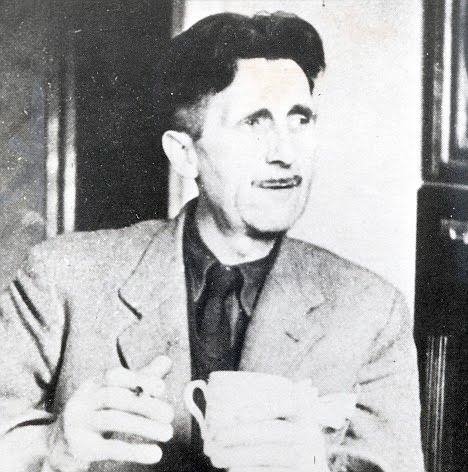
Orwell with a tea cup.  I bet it’s got beer in it.
So I’m going to kick things off by reading that, instead of my own work. I think that one essay says more about pubs, more effectively, than I’ve been able to do in all the many thousands of words I’ve written about beer and pubs. I want to hold it up to the light, while we sit in the pub, and see if it’s still a useful yardstick to measure the perfect boozer.

Then Tim Bradford tells us what he loves about pubs. Tim is a writer in the vein of people like Stuart Maconie and Andrew Collins – fond memories of growing up, reflections on British culture, a story that works because although it’s personal, its shared by many of us. He’s written about growing up in smalltown England, and of course the pub is a vital component of that. 

As I’ve said before, it’s always interesting to hear someone who is not a beer writer talking about pubs – they spot things the rest of us sometimes miss. The Glasgow Herald says “He comes across as the kind of guy you’d love to have a drink or three with.” So that’s what we’re going to do.
Finally we have an absolute treat from Paul Ewen. If you like pubs, and you live in or around London, and you don’t own a copy of his London Pub Reviews, you’re even more insane than he is. 
They start off as any pub review does, but increasingly descend into surreal madness. I’ve always loved the pub partly because it gives licence to the irreverent, absurdist streak that runs through British culture. Paul is a Kiwi – this streak is foreign to him – but he’s fallen in love with it, warped it and presented it back to us in a way that makes it alien to us too, like a picture that’s run and blurred, a pub on an acid trip. 

I asked Paul if he would come and do one of his reviews on the White Hart, and he has done. Fuck knows what he’s written, what he thinks happened there. I have no idea what he’s going to say. But he will unveil this review during our event – a unique thing – we’ll be sitting in the pub he’s describing, in a review that has never been seen before. Trust me, it’ll be like no other pub review you’ve seen. Steven hall, author of the amazing The Raw Shark texts, says Paul is “A surrealist’s dream, a landlord’s nightmare!” I’m just worried we might get chucked out or even beaten up by the time he’s finished. 
Things will be eased along by free beer – Schiehallion and Bitter & Twisted – kindly donated by Harviestoun Brewery. Buy their beers. They really are rather wonderful. I’m not just saying that because they sponsored the event – I asked them to sponsor the event because of how much I love the beers.

The event kicks off at 3pm on Sunday and tickets are available – until 5pm today – from here, and after that at Stoke Newington Bookshop, the festival information and box office point at the library, and – if there’s any room left – on the door of the venue.

| Uncategorised

Three Sheets to the Wind

My second book is the difficult middle child of the beer trilogy.

At the time of writing this post, Hops and Glory is number 3 in Amazon’s beer books, Man Walks into a Pub number 7, and Three Sheets number 39.  That’s pretty typical of the relationship between the three.

It’s simply never had the same level of commercial success or beery acclaim of the other two, and so I start to think of it as being not as good as the other two.

But it is.

I re-read it recently expecting to be embarrassed by it, and I wasn’t.  It is by some way the funniest book I’ve written so far.  It hangs together as a concept.  It has a broad appeal way beyond beer geeks, yet hopefully still manages to teach the geek a new thing or two.

The true story behind Three Sheets was varnished a little for the book.  My editor decided the first draft of the first chapter set the wrong tone, and I think he was right: a conversation between publisher and writer along the lines of ‘why don’t you write a travel book?’ doesn’t really set the right tone in the book itself.  But that conversation did happen, so I’ve decided to publish the first draft of the first chapter – something only me, my former editor and the Beer Widow have read before now – which I’ll cut and paste below.

Just before I do that, if you don’t know the book, the premise is as follows.  After writing Man Walks into a Pub, a history of beer in Britain, it kind of made sense to do an international comparison of beer drinking.  There are two ways I describe the book, depending on who I’m talking to: the laddish way and the cultural studies way. Both are equally true.

The laddish way is that I wanted to go on the world’s biggest pub crawl.  I drank in over 300 bars in 26 cities in 13 different countries.  As a self confessed ‘crap traveller’, most of the humour comes at my own expense.  You’d never believe the person who struggles to negotiate getting on a bus just outside Dublin is the same person who took a barrel of beer on a three month sea voyage to India.

The cultural studies description is that it’s a search for the meaning of beer.  I was struck by the beer drinking moment, the significance of it, the uniqueness of it compared to other drinks.  Also, I was writing at a time when binge drinking hysteria took off in Britain, when everyone in the media was making a simple, causal link between the availability and consumption of beer, and anti-social behaviour among people who had been drinking.  This didn’t make sense if you consider that there are many countries that drink more than the UK but don’t seem to share our problems of anti-social behaviour.  So I wanted to see if there was such a thing as a universal ‘meaning of beer’, or whether drinking culture is shaped more by national cultural traits and characteristics.

Practising what sociologists euphemistically call ‘participant observation research’, I attempted to drink how the locals drink in each country I visited, and discovered that the answer is a bit of both.

There is a universal meaning of beer.  The deep rhythms and meanings of beer drinking – the fellowship, bonding and democracy it represents – are both universal and timeless.

But the way in which we drink – the styles of beer, where we drink it, how and it what servings – are culturally determined by the country in question.

In an age of globalisation, many of these local traits are disappearing as cultures homogenise.  In places like Japan, Spain and China, I felt like this was a ‘last chance to see’ type book as global giants invaded.

People who have read the book have really enjoyed it.  I even get letters and emails from people who use it as a travel guide in some of the cities I visited.  So if you haven’t given it a go yet – and the sales figures suggest you haven’t – please give it a try!

Here’s that never-seen-before original opening, rightly deleted from the book.  It’s more travelly than beery, in fact it’s hardly beery at all.  Hope you enjoy it.  I’ll break it up with some of the photos from my travels.

One: “Well, I’ve been to Blackpool a fair few times, I can tell you…”

St. Andrews

“Tell me.  Do you trAAARGHvel?”
The word echoes off the walls, those capital letters really giving it some force.  The speaker curls his mouth around the word, performing a passionate verbal cunnilingus that really shouldn’t be seen or heard in public.  His lips are wet, and I swear his eyes glaze and unfocus as he barks it.
He’s been at it fairly constantly since we arrived four days ago, at the start of Fresher’s Week.  I’ve ignored him until now, having very little to say to a braying, ginger Sloane Ranger.  But he won’t go away.  Every night after dinner he sits there in the corner of the hall of the residence common room, telling stories about how crap the buses are in Afghanistan, how charming the natives in Pakistan, how amAAAYZing the sunsets in Goa.  And every night, the gaggle of first-year girls surrounding him grows larger.  After three nights talking to cumbersome blokes studying chemistry and a strange little man called Simon Dresner who describes himself as a “Sherlock Holmes enthusiast” (yes, in those exact words), and who the porters keep trying to throw out because they think he’s a child from the local school, it’s become clear to me that the only way I’m going to meet any of these rosy-cheeked, fresh-faced girls is by joining them in Sloaney Ginger TRAAARGHveller’s orbit.  So here I am, hovering on the fringes of his audience, when he interrupts an anecdote about a gourd to subject me to the full honk. 
“Tell me.  Do you trAAARGHvel?”
Of course, he already knows the answer.  He can see it in my eyes.  His apparent attempt to include me in the conversation is really no more than a strategy to keep me out.  And what’s this “tell me” at the front all about?  For Morrissey’s sake: only chat show hosts, people in TV programmes like Crossroads and Howard’s Way and utter twats start a sentence with “tell me.” 
Do I travel?  I’m eighteen years old and in my first term at university.  And it’s 1986: A-levels are difficult, gap years are a privilege not a right, and we can remember when it was all fields around here.  Oh, and I’ve just finished growing up in Barnsley, a Yorkshire town whose residents are unlikely to be famous for their spirit of adventure any time soon.
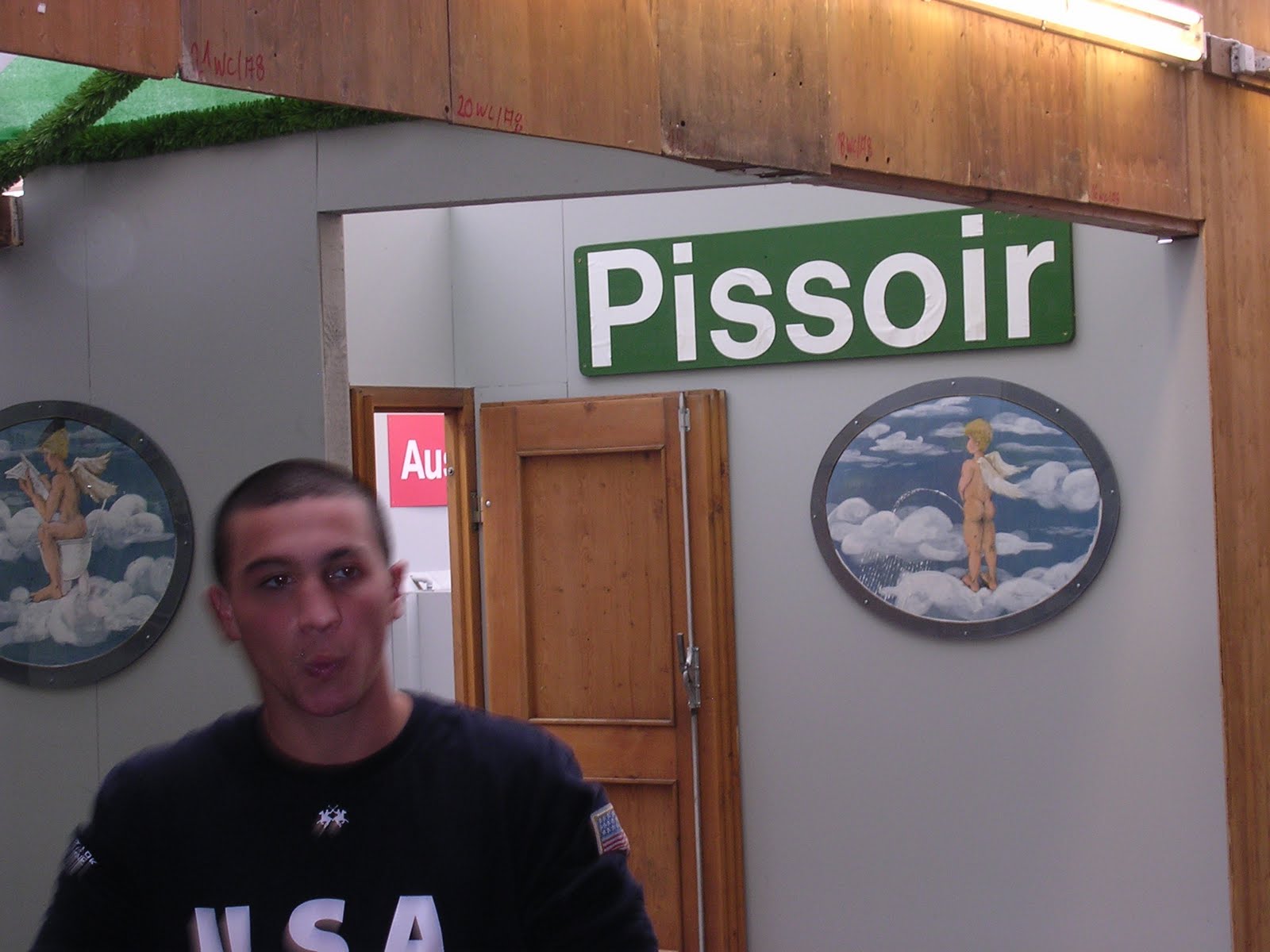
I have hammered my student railcard over the summer, but I’ve got just enough sense to realise that’s not what the Sloaney Ginger TRAAARGHveller means.  I’ve never even been on a plane, unless you count the time we got to fly in a glider when I was in scouts.  And that was in North Yorkshire.  When I was thirteen I went by bus to France on an exchange scheme, and lived for three weeks in Pas de Calais with Bruno, who managed to embody every negative stereotype the British have of the French before I even knew what they were.  I’ll admit I earned a bit of kudos back at school by bringing back the news that the French had toilets called pissoirs, a fantastic triumph because I said ‘piss’ in French class and the teacher had to congratulate me.  But apart from that, I’ve never been abroad in my life.  I’m in Scotland now, and apart from Bruno’s house it’s as far away as I’ve ever been from the place I called home until a few days ago.  I don’t even have a passport.
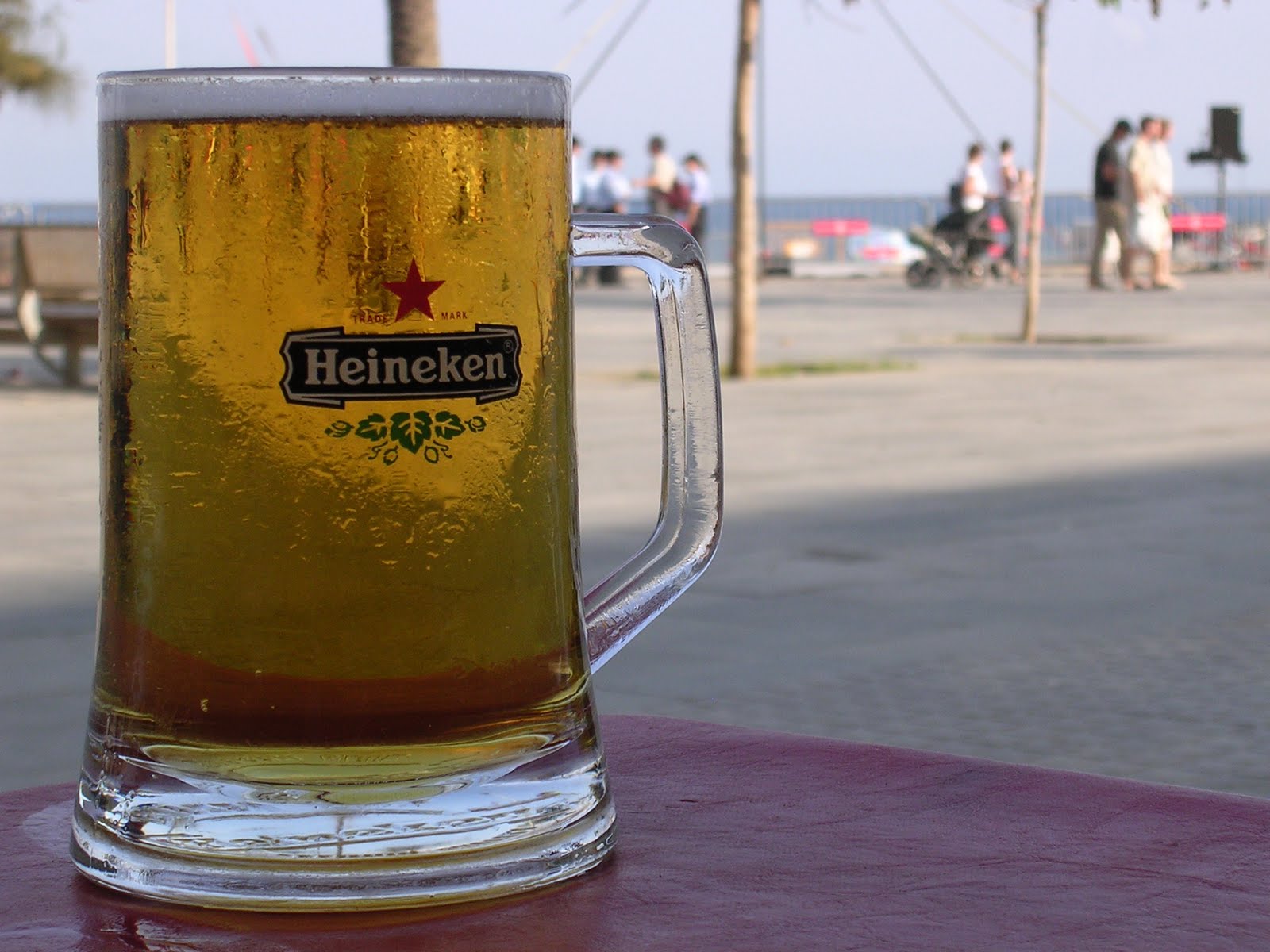
They like their beer REALLY cold in Sydney 
Sloaney Ginger TRAAARGHveller knows all this of course.  I’ve never met him before, but he can tell.  And he knows I’m trying to muscle in on his action.  He’s counting on me saying something like “Travel?  Well, I’ve been to Blackpool a fair few times, I can tell you.”  But I’m determined that he will not humiliate me in front of the rosy-cheeked girls.[1] 
In this one question, I learn my first lesson at university: never trust a Second Year who comes back “to help out” during Fresher’s Week.  They’re after one thing.  They didn’t get it when it was their turn, so they’re using their extra experience to steal it from you now.  But this realisation has come too late.  “No, I don’t travel,” I smile back.  You smug cock, I add telepathically. 
For a second, the girls acknowledge my existence.  But it’s all calculated.  Sloaney Ginger TRAAARGHveller looks at me with disappointment, a little sympathy, a smidgen of disgust, a soupcon of loathing.  Apart from anything else, he’s placed my accent.  A moment later I will cease to exist, not just for him, but for the whole group.  “ANYway, as I was saying, these gourds…” 
I wander off into the hallway, to gaze – again – at the notice board crammed with appeals from an array of societies that are desperate for me to join them.  Three days later, Steve From Luton, who dresses all in black and never goes to dinner or sits in the common room afterwards, hears The Smiths moaning from my room while he’s walking past.  He pops his head around the door and we start talking about music.  Pretty soon, Sloaney Ginger TRAAARGHveller is forgotten along with the cumbersome medics (though sadly Simon Dresner endures for the next four years), and the rosy-cheeked girls are dropped in favour of the whey-faced indie chicks.  And that’s the end of my interest in travelling.
An ‘Ice Cold in Alex’ moment in Barcelona 
A lot happens in my next few years at St. Andrews University.  I become lead singer of the uni’s only punk cabaret band (with Luton Steve on rhythm guitar, The Other Steve on bass, Andrew the Bad on drums[2], and Iain ‘Bonker’ Jameson, who used to jam with Wet Wet Wet before they were famous, our secret-if-rather-unstable weapon on lead guitar.)  I run for office in the Student’s Union, and win because no-one can really be that bothered about standing against me, seeing how I seem to want it so much.  I get to know Nicholas Parsons so well that he feels unembarrassed about me seeing him in his underpants.  And after putting my Bono-at-Live-Aid mullet out of its abject misery, I even start to enjoy some success with girls of both the rosy-cheeked and whey-faced-indie-chick variety. 
But the travel situation never changes.  I get nervous going to Luton to visit Steve.[3]  Many of my new middle-class friends enrol with BUNAC and jet off to be handlers at North American summer camps, or inter-rail across Europe.  Back in Barnsley, my non-uni mates (who are now working and driving cars) start going on Club 18-30 holidays.  They come back with stories of the exoticism of the food, the beer, the women and, especially, the contents of their arses.  Meanwhile, I spend summers back home in a village where pit closures have removed not only most of the jobs, but also the whole point of the community existing, and get deservedly laughed at in Barnsley Job Centre when I ask if there are any summer jobs for students.  Or I stay in St. Andrews, becoming more deeply involved in the Union and working behind the bar in our favourite pub, the Niblick, my skinny frame blissfully unaware of the impact this will ultimately have. 
And all the time, at the back of my mind, there’s this assumption that people who Travel can do so because they have skills that I don’t yet possess.  Skills like being able to start conversations with people you don’t know.  Skills like being able to walk into a travel agent’s.  I really don’t think I’m scared of flying or anything – I’d dearly love to fly.  What I’m scared of is being rumbled as the gauche, nervous bumpkin from Barnsley I’ll always remain.  Travel simply doesn’t make it onto my agenda.
Four years later I eventually get my first passport.  I’m going out with a girl from Canada, and it’s serious.  I’m going to spend six weeks of the summer living with her family.  She’s already gone home, so I’m going to buy a plane ticket on my own, go to Heathrow on my own (via Luton, obviously – you have to take these things one step at a time) and get on a Boeing 747 and travel six thousand miles.  On my own.  I’ve just turned twenty two years old.  How brave am I?
Listen, they know why this makes us snigger. 
“I’m sorry, this flight is full.”
“It’s WHAT?!” 
Thinking back to this incident, trying to recreate it, I find it impossible to re-inhabit my twenty two year-old self.  Instead I see myself from a third-person perspective.  I’m looking down from the ceiling of Heathrow Terminal Four at a wet-behind-the-ears student wearing a cheap Burton suit and a bleached blond flat-top haircut.  His face crumples.  He’s trying to look stern and angry, but the smart money is on him bursting into tears.  Perhaps at the time I had left my body, as people do when they’re close to death.
My briefcase clatters to the floor.[4]  I start to sweat into my suit.[5] 
“I’m sorry sir, but it is policy that we overbook these flights, and sometimes when we’re very busy, seats are over-allocated.”
This makes no sense at all.  I’m here precisely two and a half hours before check-in, as requested.  I’ve bought and paid for my ticket (well, my Dad has).  Jill will be waiting for me at Vancouver airport.  (Not yet obviously, but by the time this plane lands.  I hope.)  I have to be able to get on it. 
“So what we’ll have to do is upgrade you to Business Class,” finishes the check-in lady.
I’m back in my body with a bump.  Obviously I’ve never heard of this practice before, but I like it.  On my first ever proper flight, I am a transatlantic Business Class traveller.
Later, people will tell me that however unlikely it sounds, it was probably the suit that did it.  Sometimes they do have to upgrade people, and they choose those who look the part.  The main reason for this – I know now – is so that upgrades are not too obvious and insulting to the people who’ve paid several thousand pounds to sit in Business Class legitimately.
“I got upgraded!”  I say to the two middle-aged businessmen sitting next to me, as we taxi out to the runway.  “My first ever flight and I’m in Business Class!  I’ve never even been on a plane before!  Have I fastened this seatbelt properly?  Oh look – socks and a toothbrush!  Do you have to pay for these?  NO?  Fantastic!  Ooh yes, a glass of wine please.  No, not champagne, I couldn’t afford – what, that’s free as well?  Oh, go on then!  Yeah, through the student travel service I got this ticket for three hundred and fifty quid.  Well, my Dad lent me the money.  And I’m in Business Class!  Sitting next to real Businessmen!  This is the first time I’ve ever flown you know.  Upgraded just like that!  Can you believe it?  Yes, I know I’m very lucky.  Yep, I certainly do appreciate it.  What?  You want to watch the film now so you have to put on your headphones?  Oh, okay then.  That’s strange; the film on my set doesn’t seem to have started yet…” 
I don’t know who those guys were, but to this day I have never been upgraded again.[6] 
Look, it’s true (Oktoberfest) 
Over the next ten years I do start to earn a few air miles.  A few more trips to Canada, two honeymoons (don’t ask), three package holidays and a smattering of business trips later, my passport has some stamps in its pages.  But I never compete in the destination point-scoring of my work colleagues.  I never holiday in places like Guatemala or Mauritius, or even Ibiza.  I never trek.  I never backpack.  I never eat anything I can’t pronounce. 
I certainly never Travel like my friend Allan, who after graduating does Peace Studies in America during the first Gulf War, almost dies of the irony, and recuperates by going to Central America to teach English, where huge floods wipe his village clean away, and he has to climb trees when he wants to go to the toilet, finding a comfortable branch at a safe height from which to do his business. 
I never Travel like my friend Alastair, who starts at St. Andrews after spending a year in Pakistan.  The habit of haggling over everything from big scarves to the price of a pint doesn’t endear him to the local barmen, and he achieves the dubious fame of being regarded as tight even by his fellow Scots.  After graduation he goes to teach English in Cairo.  Three years later, the day he leaves his apartment to return home, he’s clearing out his room and realises that if he’d had his bed where his wardrobe was, he’d have woken up to a view of the pyramids every morning. 
No.  All my travel is strictly lower case, safely looked after either by holiday reps or office PAs.  Holidays are full of transfers to and from the airport, all-inclusive deals and vouchers that need to be given to nice people in slightly patronising uniforms.  Business travel means someone else doing all the booking, then giving me envelopes stuffed with tickets, currency and detailed itineraries.
This is my secret.  A decade and a bit after university, I’ve been to America and Africa and Hong Kong, and I count myself very lucky to have done so.  But by today’s standards, I am a Crap Traveller.  I hear they don’t even let you into university these days unless you’ve caught dysentery in Phuket or planted mango trees in Kerala.  Small children chide me for my naivety about the world and tell me I need to get out more.  I remain the same ingénue the honking Sloaney Ginger TRAAARGHveller saw straight through nearly twenty years ago.  And nothing will change that.
 Night out down Shanghai


London

 “You should write a travel book, you know.”
If we listed all the possible things Jason, my editor, could have said to me, I hope you now realise that this particular sentence would rank some way below “You’ve won a Pulitzer”.
We’re having lunch together, celebrating the end of hostilities on my first book, Man Walks into a Pub, a ‘sociable history’ of beer.  I’ve finally written it and rewritten it to his satisfaction, it’s printed, and it’s ‘selling in’ to book shops better than we dared hope.  It will never cause J.K. Rowling or Dan Brown any sleepless nights, but it looks like the publishers won’t lose money on it.  And that means they’ll entertain the idea of me writing another book for them.  We’re talking about what this book could be, and I’m wondering if this travel nonsense is just a desperate attempt to change the subject from the various ideas I just finished proposing[7].  But looking at Jason now, I realise he’s been thinking about this seriously.
He’s nodding and chewing thoughtfully, oblivious to my incredulity.  I try to frame a response, but it takes a while.
“Umm… why?” I eventually manage. 
“Well.  Travel writing is really hot just now.  Not guidebooks, you know, proper travel writing.  Stuff that’s engaging and funny.  You’d be good at that”
“Right.”
“You need a twist,” he continues.  “You can’t just write a straight destination guide.  There’s got to be a hook.  An angle.  And, well, beer seems like a good angle.  It fits.  And no-one else has done it.”
Suddenly it makes sense.  I start to get that upgrade feeling again.  I need to choose my next words very carefully.  “So… you’re saying that you will pay for me to go around the world drinking beer and writing about it?” 
“No.  Of course not.”
“Oh.”
“What I’m saying is, if you pay for yourself to go around the world drinking beer, or get someone else to pay you to do it, we’ll almost definitely publish the result.”
Almost definitely?”
“Go away.  Think of an angle.”
“Around the world in eighty pints?”
“No.  Something interesting.”
“OK.”
“Perhaps you could get a TV company to pay for you to go round and do a programme off the back of it.”
“Excellent idea!  Do you have any contacts we could talk to about that?”
“No.”
“Ah.”
The day I fell in love with America. 
A few weeks later, I resign from my job without another to go to, so I can divide my time between working freelance and taking unpaid time off to focus on finding the hook.  I phone my Mum and tell her the news: I’m going to be a travel writer.  She’s silent for a few seconds. 
“Are you sure about this, luv?” she asks eventually.

[1] I’m perfectly capable of doing this myself without any help from him, as I will shortly demonstrate in tonight’s three-legged pub crawl.
[2] Trust me, that’s as much as you want to hear about Andrew the Bad.
[3] Of course, we all still do.  But in the late 1980s the nervousness is because they have posh accents, there are proper curry restaurants, and Steve’s dad does a job that means he has to wear a suit.
[4] Looking back, I’m really not sure why I’m carrying a briefcase.  I think it was a 21st birthday present from my parents, who had by now resigned themselves to the fact that I wasn’t going to come back to work in the carpet factory, and were symbolically showing me that they understood I was now an upper-class twit, or at least a middle-class twat.  But I’m going on holiday.  Apart from my recent sabbatical in the Student Union, I don’t have a job.  But there it is.  I can see it now.  It’s definitely a briefcase.  It probably has 2000AD comics and copies of Melody Maker inside.
[5] I remember why this was though.  I had no idea what people wore on planes.  My only frame of reference was the seventies Airport movie franchise, and in every film the men all wore brown suits.  So a week before the trip, I went to Burton’s and splashed out sixty quid.  Thinking about it, perhaps the briefcase was just a misguided attempt to complete the look.  After all, I had to make a bit of extra effort to compensate for the fact that I’d compromised on collar width and tie kipperness. 
[6]In fact I’m the only person I know ever to have been travelling on a fully paid-for business class ticket and be downgraded to economy on a long-haul flight, which happened to me eleven years later.  There’s karma for you.
[7] Which, for our purposes here, we can refer to as: 1. “Been done”; 2. “Not really sure what the hook is’; 3. “Hmmm…” [uncomfortable silence] and 4.  “A novel you say?  Oh look!  There’s the sales director from Harper Collins!  Hi Jim!” 

| Uncategorised

Eat Your Words on Saturday

The first of my two events at Stokey Lit Fest sees me face my biggest insecurity as a beer writer: tasting notes.

Writing tasting notes – describing the flavour of a beer – requires two separate skills: identifying flavours on your palate, and translating those flavours into text that conveys a sensory experience reasonably accurately in a way that will be meaningful to your reader.

Let’s take the first part first.  We’re all born with a certain number of flavour receptors in our mouths, and that number varies widely from person to person.  And like most people who prefer a hop bomb or Imperial stout over a perfectly balanced session beer, the simple truth is I’m a poor taster – I have fewer taste buds than average.  That’s why I also prefer hot curries and strong cheeses.  At the other end of the scale, ‘super tasters’ have loads of taste buds, and can find the hop bomb I love almost physically painful.  As I tell people in all my tastings, it doesn’t mean they’re a wuss – it means they have a far more delicate and effective palate than I do.

I’ve compensated for this by doing a lot of flavour training, and if I work hard I can usually nail subtleties of flavour.  But in every session I do, there’s always someone who just gets it, with what seems to me to be an almost supernatural gift.

Then there’s the second part – conveying meaningfully what’s going on in your mouth.  At a tasting session, this is where a good dose of auto-suggestion helps.  The novice will often sit there struggling, saying “I like it, but it just tastes like beer.” It’s only when you say, “Anyone getting a hint of citrus sweetness there, a taste of grapefruit perhaps?” that the lights start to go on.

I’m better at the language part of the tasting equation than the flavour identification part.  Once I have my building blocks laid out I can relax, because I know I can put them together in a readable and original way.  But my facility with language makes me think often about how we do this.

Many readers of this blog will already know this, but while we use the words ‘flavour’ and ‘taste’ interchangeably – I still do in everyday speech – they’re quite different.  Taste is a subset of flavour.  Taste is detected by the tongue, which can identify four or five basic tastes: sweet, bitter, sour/acidic, salty and, if you believe in it, umame (savoury – think soy sauce).  But our noses and nasal cavities are full of flavour receptors.  Aroma is a huge part of the total flavour equation.

So how do we describe flavour?  Bitter, sweet, salty, sour and savoury are pretty much the only words that truly describe taste.  Period.  But we write such florid flavour descriptions – so how do we do it?

Brewers or beer judges have a technical language that’s useful for scientifically pinpointing flavours that should or shouldn’t be there, but is useless to the average reader – estery, phenolic, diacetyl.

The unimaginative or lazy writer will default to describing the ingredients: it’s malty, it’s hoppy, it’s got a hint of Bret (Brettanomyces, or wild yeast).

How do we make it more interesting and evocative?  We enter the field of comparison, and board the raft of tasting knowledge.

Let’s say you want to expand on ‘hoppy’ for someone who has no idea what that means. (I was working around beer for about three years before I knew what ‘hoppy’ meant.  “This beer is really hoppy.” “Is it? How?  Why?  What is it in this glass that you’re referring to when you say that?”)

You might start with, “Hops give beer it’s aroma.  What you’re smelling when you smell beer is mainly hops.”

“Oh yeah?” comes the reply, “Well it JUST. SMELLS. LIKE. BEER. Help me out here!”

So we’ll start using words like citrusy, or grassy, or spicy.  That’s fine if someone knows what those things are, and tasting notes work because the vast majority of us do, and have a reasonable level of agreement on what those things taste or smell like.  But what if we didn’t?

“What do you mean, citrusy?”

“Well, can you detect that hint of grapefruit?”

“Dunno, what’s grapefruit taste/smell like?”

“Well, a bit like a lemon, only less sour, kind of like a cross between a lemon and an orange.”

“What’s an orange taste like?”

Can you answer that last question?  What does an orange taste like?  Orangey? Sweet? Citrussy?  In language terms, you’re back where we started.

My belief is that the actual words don’t exist, and you have to rely on constructions of language, a level of artistry rather than simple description, to accurately convey a ‘mood’ of the flavour.  But then you run the risk of becoming pretentious and alienating the very novice you’re seeking to attract.

It’s not easy.

These are questions that face anyone who writes about any food or drink.  And at my Eat Your Words session, I’m joined by three other writers for a unique event to discuss the issue.

Niki Segnit is a great friend of mine and regular reader of this blog (Hello Niki!)  This month she releases a book she’s been working on, in one form or another (it wasn’t always going to be this book) for the best part of a decade.

The Flavour Thesaurus is a stunning work – both to look at and to read.  Heston Blumenthal has already declared it “original and inspiring”.  Niki has taken 99 ingredients, and has for each one analysed what the flavour is, and worked out which other ingredients it best pairs with.  The result is a book that can help anyone who follows recipes and knows what they’re doing in the kitchen start to think in terms of flavour combinations, and ultimately cook without recipes.  Chocolate and tomato? Pork and rhubarb?  Beef and lemon?  This shows you why, and how.  Niki’s going to be kicking things off with what she learned about the whole taste and flavour thing.

Then we’ve got Ian Kelly, who among many other things (including being Hermione’s dad in the Harry Potter films) is an historical biographer.  He’s written about Careme, the first ‘celebrity chef’, who cooked for people like Napoleon and George III, and also about Casanova – who, it turns out, had a day job as a food writer, and – being him – was very into the whole sensuousness of food and drink.

Ian will look at how people used to write about taste and flavour, and we’ll be discussing how first Victorian prudishness and then years of war and austerity stopped us from appreciating flavour, and how we’re now just starting to learn how to write about it with gusto again.

Our final speaker is a perfect example of this – Elisa Beynon was an unpublished writer when she entered a Waitrose Food Illustrated competition in 2007, and won it with “enthusiasm, warmth and gentle humour” and “a truly original voice” according to judge Nigel Slater.

She’s now published The Vicar’s Wife’s Cookbook, and after giving a cookery demo in Stoke Newington Farmers’ Market with organic ingredients from the market, she’ll be joining our panel to talk about how she has tackled writing about flavour in a way that’s seen her cut in to a very overcrowded market and establish a niche for herself amid endless celebrity chefs.

Our session is at the White Hart, Stoke Newington High Street, this Saturday 5th June, at 2pm.  Tickets are £4, £3 concessions.  We’ll have samples of beer and chocolate to help the discussion along.  Hope to see you there!

| Uncategorised

Big week in Pete Brown Beer World

* Long self-indulgent post alert – I beg your forgiveness, but this one’s been years in the making… *

It’s the week of ‘The Beer Trilogy’.  Pan Macmillan have released rejacketed, shiny new editions of my three books.  And it’s also Stoke Newington Literary Festival Week – the event organised by the Beer Widow which, perhaps inevitably, I’m speaking at, and perhaps more inevitably, the event I’ve spent the last month or so working full time co-organising.  I’ve got a bit of a taste for it to tell the truth, though with only four days to go my organisational skills are starting to unravel.

So this week I’m going to do a shameless sales plug for each of the three books – shameless but honest, so you can decide if you need to buy them (again) or not.  And I’m also going to reveal more about my events at the festival.  Somewhat astonishingly, although the session with Tony Benn being interviewed by Suzanne Moore sold out last week, and Stewart Lee reading from Arthur Machen is about to sell out any second now, there are still tickets left for both my events.
So what to talk about first?
Let’s start with this one:

Man Walks into a Pub was my first book.  I’d wanted to write books since I was nine years old.  When I was 25 I won a short story competition run by Time Out.  I thought this would be the first step on the road to literary stardom, that the phone would ring off the hook with agents asking if I had a novel, and I’d reply “Why yes, here’s my coming of age novel about a bloke who went to university in St Andrews and now works in London in an ad agency and fucking hates it.  Totally fictitious obviously.”

The phone didn’t ring.  Worse than that, Time Out cancelled the short story competition and have never run it since.  But I used the laptop I won – my first ever – to finish the novel, flog it until one agent was kind enough to tell me how bad it was instead of giving me polite refusals like all the others, wrote a few short stories that got better and better but remained stubbornly unoriginal, and finally bought a bigger computer, discovered real time strategy games and stopped writing for a couple of years.

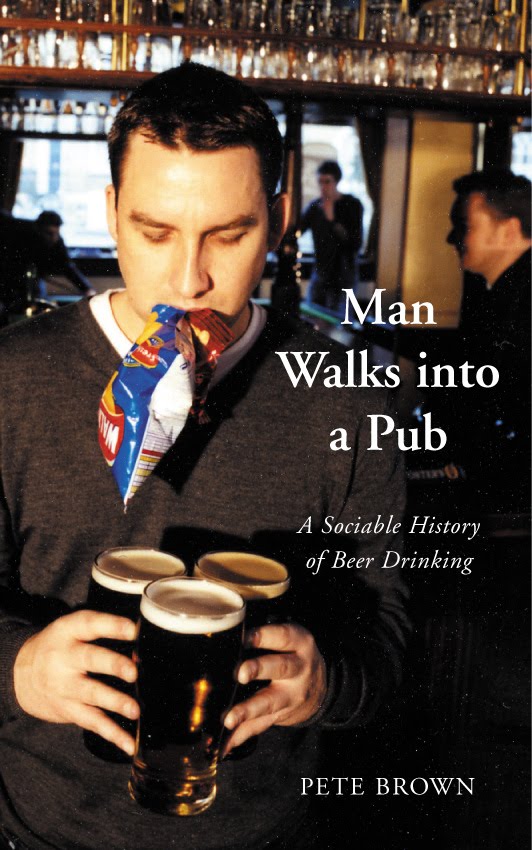
Nine years after the Time Out short story, Man Walks into a Pub was published.  Lots of people bought it, and continued to buy it over the years.  At first it had this cover, the idea for which me and Chris came up with in the pub:

That’s me at the bar in the background – that’s how long ago this was.  When I did readings and events and interviews, any women present struggled unsuccessfully to hide their disappointment that I wasn’t the bloke in the foreground.  CAMRA felt this cover was ‘yobbish’ for some reason, when they slated the book, and WHSmith didn’t like it either.  But I did.

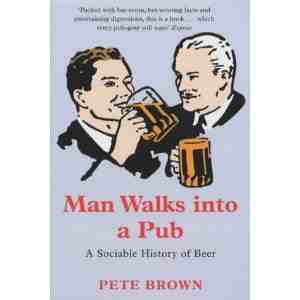
Then, when we moved from the posh ‘trade paperback’ edition to the ‘mass market’ paperback, it had this cover, which I hate beyond reason, and snarl at whenever I see it:

The first time I saw it I said, “Hmm, not sure about the rough; when do we see the finished design?”

“This is the finished design,” replied my editor.

“It can’t be.  I could do better myself on PowerPoint.  The image looks like a piece of clip art, for God’s sake,” I said.

“Well WHSmith say they love it and with this cover they’ll order seven thousand copies,” said my editor.

“I love it,” I said, “It’s a fantastic cover.”

And so we went with it, and then Smith’s changed their minds and didn’t take a single copy, and we were stuck with it for six long years.

Not many authors get the chance to do a revised second edition of their books, but you lot kept buying it, and it continues to make a bit of money for Macmillan and a much smaller bit of money – about the price of a cheap holiday – for me each year.  But as time went on, it wasn’t just the shit cover I felt guilty about.

MWIAP narrowly beat Martyn Cornell’s Beer: The Story of the Pint onto the bookshelves (something for which I think Martyn may just about have forgiven me).  They’re two very different books on exactly the same subject and I’d urge you to buy both if you haven’t already done so.  Mine is definitely the easier read.  But one of the reasons for that is that I simply repeated all the tall stories that have been handed down through beer books over the last century or so – everyone says it, they were saying it in that book in 1912, it must be true.  But we live in an age when that’s no longer good enough.  The blogosphere, especially writers like Martyn and Ron Pattinson, pinpoint myths and bullshit and destroy them with forensic analysis.  The start of that – for me at least – was reading Martyn’s book and realising that key parts of mine were inaccurate.

On top of that, the world moved on.  Man Walks into a Pub was finished before Progressive Beer Duty caused an explosion in microbrewing, before most beer fans in Britain were aware of the stunning beers coming out of the States, before the rise of neo-prohibitionism, before beer duty hikes and the smoking ban, before the Licensing Act and the liberalisation of pub opening hours.  It was badly out of date.

Finally, it was my first book – and it was trying too hard to please.  The tone and overall voice of the book was still right, but occasionally the footnotes grated and some of the ‘jokes’ made me wince on rereading them.

So: new cover that pisses all over the previous two and provides an essential addition to any beer fan’s book shelf aside, if you’ve bought/read MWIP before, do you need to buy it again?  Here’s a list of changes.  Depending on your level of interest and sanity, you can decide for yourself:

  • Overall, a general read-through correcting bits that were factually inaccurate, removing the jokes and footnotes that didn’t work, changing bits that were just too gauche or naive.  
  • A new preface to the second edition which expands on the story of how I went from Stella ad man to beer writer, and the thinking behind the new edition.
  • Some newer, more clearly thought-out stuff on the origins of beer and what early beer was like.
  • A completely new section on the origins and history of Porter, which owes a debt of thanks to Messrs Cornell and Pattinson.  And the admission that the most often quoted bit of the first edition – the Meux Brewery disaster – was a load of bollocks.  I’ve tried to atone for this by offering the most detailed, factual account so far of what really happened on that fateful day in 1814.
  • A new section on IPA – a very brief precis of the story in Hops and Glory.
  • A more accurate and expanded version of the origins of Pilsner.
  • A fully updated and revised version of the chapter on CAMRA.  I first gained notoriety with this book by being the first beer writer (that I knew of) to slag off CAMRA in print.  Since then I think I’ve changed and I think CAMRA have changed – for the better in both respects (my recent spats notwithstanding).  I set out to cut down the slagging bit and write a new section on how the organisation has progressed over the last decade.  That part is present and correct.  But I wasn’t quite as successful in cutting down the criticism as I’d hoped.  OK, I admit it, the critical bit is even longer than it was.  But it is balanced by fulsome praise where it is due.  I hope it also comes across that I no longer slag CAMRA as one homogenous organisation: some bits and people do great stuff, other bits and other people do silly stuff.
  • A fully revised and updated version of the chapter about big lager brands.  Gone are the pages of praise for Stella.  I’m not recanting my admiration for the brand of ten years ago, merely documenting its rapid fall from grace, as part of the account of the decade when big lager brewers simply ran out of ideas, and the craft beer revolution took off.
  • A fully revised and updated version of the chapter on the recent history of pubs, taking in the PubCos etc, and all the shit that pubs now face, the impact of licensing reform and so on.
  • Finally, a new last chapter on the rise of neo-prohibitionism.  This is not a rant.  Nor is it a forensic analysis of the bullshit claims of the neopros like I did in January on this blog.  It’s a history of binge drinking as a media and political phenomenon, which demonstrates that the current case against drink is built on a tissue of bad science, political expediency and media bollocks.

Apart from that, large sections of the book – the core story – have not changed.  But only one chapter out of fourteen has had no revisions at all.  I’d say 15-20% of the total text is different.  

The official release date is Friday (4th June), and Amazon is still showing the horrible old cover.  But the new editions are already in my local bookshop and if you look closely, the version on Amazon is the revised edition.  We just need to get the visual changed.

If you haven’t read it before, I really think you should order it right now.

| Uncategorised

Pete’s Pub Etiquette: no.4 in a depressingly rare series

Changing the format of this series from a rip-off of Viz Top Tips to a rip-off of You Are the Ref, with apologies to Boak and Bailey who had that particular idea first.

This time, you are the beer drinker.

You’re in a pub – one of your local haunts.  You know the landlord pretty well and he knows you write about beer so he’s always keen to get your thoughts on his offering and he buys you the occasional pint.  But he’s away – he’s got to go and sort out another pub in the small group to which this one belongs.

You buy a pint of cask ale and it isn’t right.  It’s clear, but the flavour is all wrong.  You suspect the reason for this is that the beer has been put on sale before it has had time to condition fully.  You take the pint back, and the staff change it, asking you what you think is wrong.  You tell them you think it’s been put on sale before being fully conditioned, and the duty bar manager says, “You’re probably right.  We had such a busy weekend the beer’s being flying out, and I wouldn’t be surprised if we’re putting the cask beers on too early.”

With this information, you decide to order a pint of Pilsner Urquell instead.

Back at your table, you find the Pilsner is also undrinkable.  It’s full of acetaldehyde, the green apple flavour indicative of oxidisation.

So here’s the first question: you’ve already taken one beer back.  You’ve got another that’s undrinkable.  Do you:
a) Take the second beer back, tell the the lager’s shit as well as the ale, and make yourself a complete pain in the arse, inevitably looking like a bit of a twat even though you’re in the right?
or
b) Just leave it untouched on the table and go somewhere else as soon as the Beer Widow has finished her Leffe?
or
c) Something else I haven’t thought of?

Because I dunno.  I do know that if I didn’t know the circumstances, with the landlord being away and everything, I’d never set foot in the place again.

But there’s a part two as well.

As you’re leaving, you walk past the bar and you see the bar manager serving a customer with the same cask ale you took back, the cask ale he has admitted should not be on sale.  Now, what do you do?  He’s either calling you a pain in the arse behind your back, or he’s assuming other customers who aren’t the same sticklers as you will simply not notice.  But what if other customers do notice, and without your level of knowledge, they just assume that the beer is shit, or the pub is shit, or both, and go somewhere else next time?

You like this pub.  Again, what do you do?

| Uncategorised

The Jewels in Greene King’s Crown

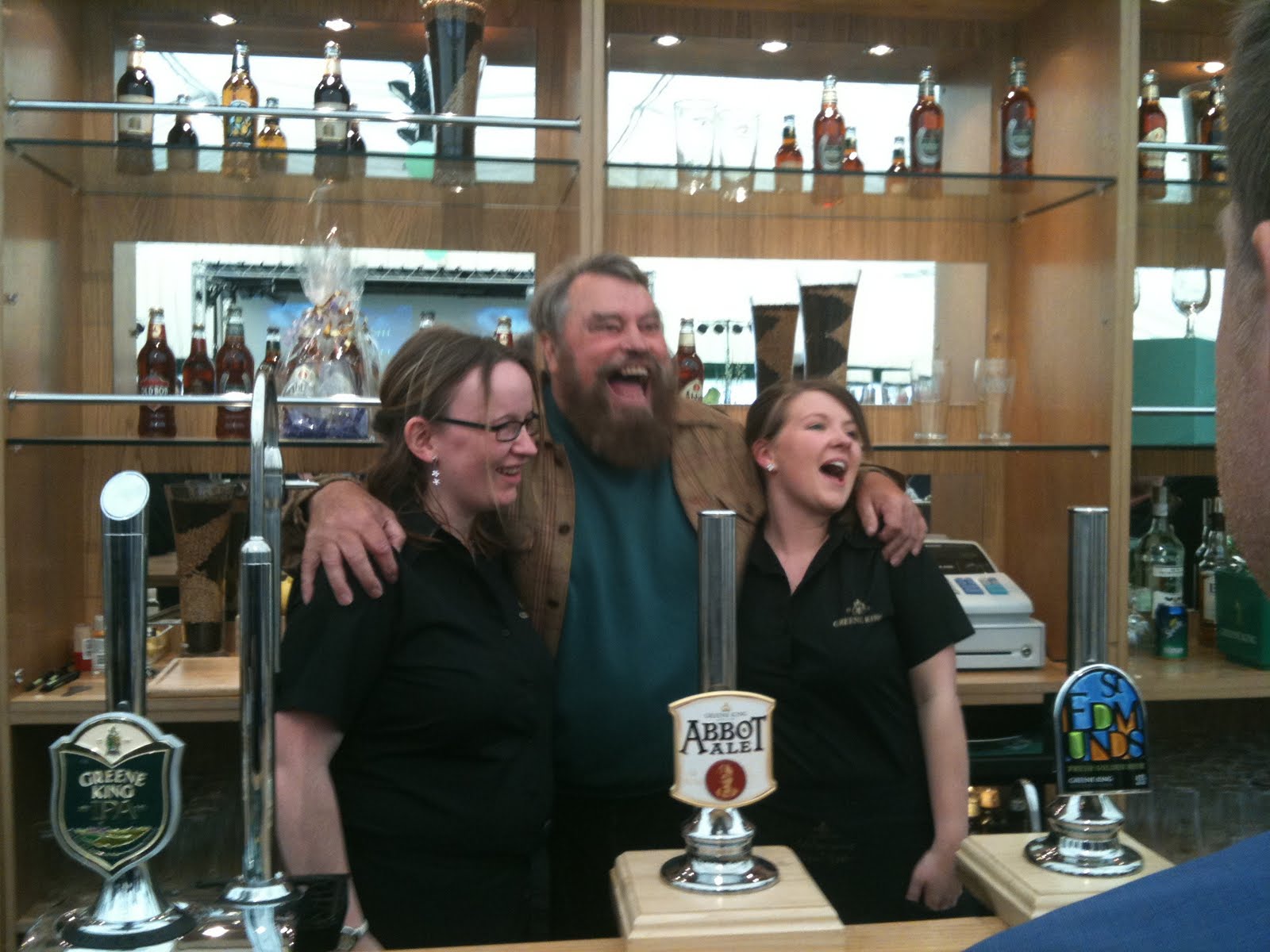
He’s the Guv’nor, Brian Blessed.  If Labour had used him during their election campaign, they’d still be in office with a healthy majority:

And now he has a marketing relationship with Greene King, telling Man Walks into a Pub jokes on Dave in the sponsorship idents during Friday night comedy.  The more I think about it, the more perfect that seems.  Here he is doing my favourite ever MWIAP joke:
And best of all, he’s from Barnsley – Mexbrough to be precise, a small mining village on t’other side of town from the mining village I grew up in.  I met him last week.  He’s 72 now, and he was telling me how when the war ended and he was just a lad, he ran down to the prisoner of war camp at the bottom of the village and bellowed – even at the tender age of 7 or 8 – “HITLER’S DEAD!” through the fence, and all the Italian POWs were really pissed off because it meant they would have to leave the paradise of an open prison in Barnsley and return to shitholes like Tuscany and Milan.  
From “Hitler’s dead” to “Gordon’s alive” – the symmetry of genius.
I met Brian because I was invited to a couple of events being hosted by Greene King, one of which he was doing a speech at – but more of that later.
I spent two days in Bury St Edmunds, having a brewery tour and tasting, a meeting about the forthcoming Cask Report, a charity black tie dinner and a head brewer’s lunch for publicans.  I came away with a changed impression of Britain’s biggest  (depending on how you look at it – Marston’s would probably disagree) cask ale brewer.
I’m not going to sit here and pretend I love Greene King IPA, or tell you they’re my new favourite brewer, or defend corporate howlers like the debacle they had in Lewes over trying to make people drink their beers instead of Harvey’s, but I saw a different side to them, and detected a change of attitude.  Greene King is perceived in many places as the cask ale brewer we love to hate, what with them being booed when IPA was runner-up Champion Beer of Great Britain a few years ago.  I’ve never written a single favourable word about them on this blog before now and I’m not sure many other beer bloggers have either, so in the interests of fairness and balance, I merely offer the following observations:
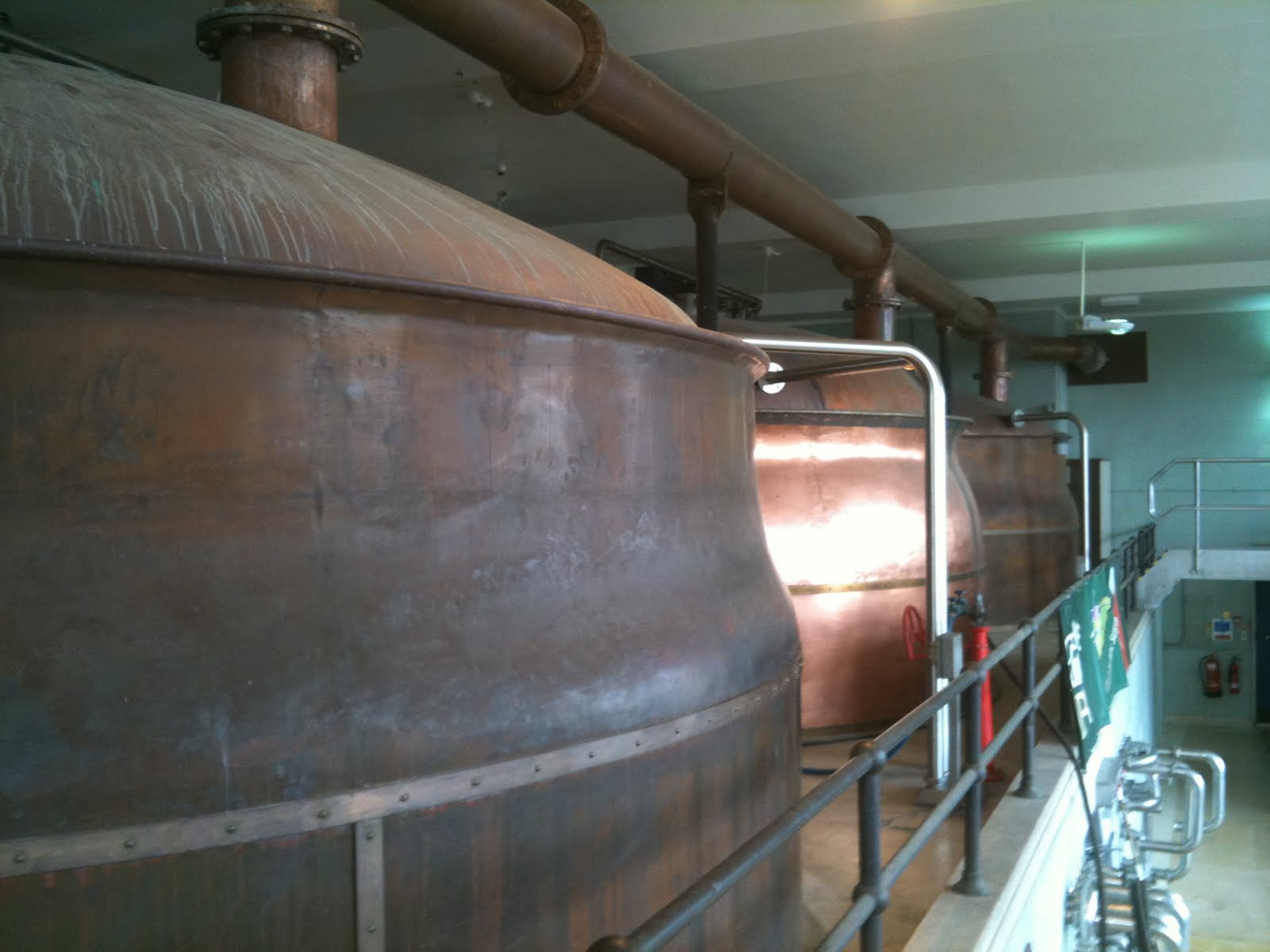
1. The brewery tour starts on the roof.  From up there, you can see the whole of Bury St Edmunds, incredibly green and pretty.  You can see where the locally sourced malt comes from, less than two miles away.  You can see that while the brewery is big for such a small town, it’s nowhere near the size of the big corporate behemoths the multinational lager companies own.  And inside it still looks like this:
2. I have never met a brewer who is more obsessed by quality and rigour throughout the brewing process than head brewer John Bexon. I’ve started having nightmares about being caught in a crossfire conversation between him and Stef Cossi from Thornbridge, staring down an eternal abyss of enzymes, sugars and Kieselguhr.  GK does product tastings every morning in a tasting room deep in the bowels of the brewery, where there are no atmospheric effects or odours to interfere with the palate.  Tasting is done from black glasses, under red light, so all stimulus apart from the aroma and taste of the beer is stripped away.
3.  I’ll never really get on with Greene King IPA, but tasting it in the brewery tasting room, fresh and perfectly kept, almost made me utter the words, “There are some amazing beers from around the world, but none of them can match a cask ale at its peak” (a sentiment I’ve seen on other blogs this week, but not in relation to Greene King IPA).  There’s a light in the tasting room that they use for checking the condition of the beer.  This is what it looks GKIPA looks like in front of it:
4. The water for GK’s beers comes from artesian wells beneath the brewery.  This water has to be purified because fertilisers and chemicals from the surrounding farmland have got into the aquifiers.  Once it has been purified, Bexon adds back in the salts for Suffolk water for Greene King beers, the salts for Nottinghamshire waters for Hardy & Hanson’s beers, the salts for Essex water for Ridley’s beers, and so on.
5. Greene King have a reputation for going around swallowing up smaller brewers.  But in two high profile cases over the last few years – Ridley’s and Hardy & Hanson – it was the other brewer that first approached Greene King asking to be bought.
6.  St Edmund’s Ale is nothing special but a perfectly pleasant drink on a balmy spring evening on the lawn.  Strong Suffolk Ale is a really good beer.  Abbott Reserve is one of the best beers I’ve tasted this year. And they’re just launching a 7.5% ‘Special IPA’ based on an authentic Victorian recipe.  They’ve compromised on the hop levels (the simple fact is Bexon is not a hop-head) so it’s not a hop bomb, but it’s strong, complex, nicely balanced and fantastically and dangerously drinkable for 7.5%.  So yes, Greene King IPA and Abbott Ale are fairly unchallenging if you’re really into your beer.  I choose not to drink them if I have a choice.  But this brewery can and does produce some pretty special beers.  
7.  I get the distinct impression there’s been some soul searching going on.  It felt like GK has realised they’re seen as the big corporate baddies of the ale world and taken some of that on board.  I found them more reflective, more open, more friendly, than ever before, with a renewed emphasis on being proud of being a Suffolk brewer, proud of Bury St Edmunds.
8.  Brian Blessed’s dad drinks Greene King IPA. ‘Nuff said.
So back to Brian’s speech.  It was mad, hilarious and inspiring.  He holds world records for going up in planes to the edge of space, and going up Everest without oxygen.  He tells us this is because his brain doesn’t need oxygen to function.  
He warns us of the dangers of going out from a tent just below the summit of Everest for a shit, of how the howling wind can catch your turds, throw them back into the air so they land on your shoulder as you climb back into the tent.  
He tells us of the time he told this story to the Queen.
He tells us he’s almost finished his astronaut training, and that next Spring he will become the oldest person ever to fly into space, when he will enjoy a stint on the international space station.  He’ll be 73 years old.
And he treated us to “GORDON’S ALIVE!”
Anyone who is alright by the guv’nor is alright by me.