Author: PeteBrown

| Beer, Books, Hops & Glory, IPA

Long Read: Burton IPA’s arrival in India.

The reason I’m not blogging at the moment is that I’m deep into writing up my next beer book, What Are You Drinking? I’m hoping to finish this draft in the next two weeks, and it’ll be published spring next year. 


I’m going through the four key raw materials of beer and telling their stories, and I’m currently up to water. It’s the toughest one to do. Today, after writing about Dublin and Bohemia, I’m writing about the special water that made Burton on Trent the ale brewing capital of the world, and I’ve gone back into my first draft of Hops and Glory for help. That first draft was 50 per cent longer than the book that was eventually published. I remember my editor reading it and saying, “Look, I’m enjoying it OK? But I’m expecting to read about a sea voyage to India and all I’m saying is I’m on page 156 and I’m still on a canal boat outside Burton.” My first attempt at editing it resulted in it being 5000 longer. 


We had to be brutal. A lot of the granular history of Burton and IPA got cut, whole chapters summarised into a few lines each. I’ve sometimes regretted this because while many people tell me they enjoy the book, it doesn’t get mentioned in the canon of historical research on IPA very often. It was aimed at a general audience rather than a beer geek or brewer, and some of the stuff serious beer heads might find fascinating really slowed the pace down for everyone else.


So this morning, I’ve dug out the first draft hoping to find a previously unpublished treatise on the properties of Burton water and its suitability for brewing strong pale ale. It’s not quite there, and I’ve misremembered what a lot of the research actually told me. But I did find this, and I found it fascinating. If you’re a hardcore IPA nut, you might find it interesting too. Long-read blog posts seem to be in fashion at the moment, and this makes up for me not writing anything else here, and there’s no other way I can use it, so why not? If you don’t fancy spending 20 minutes reading detailed beer history, you can leave now and I’ll come back to proper blogging as soon as I can.


The following passage was cut down to about half this length in the book, and loses many of the primary quotes, which get summarised  But in full, it tells the story of what happened when Burton IPA first arrived in India. In writing the book, I didn’t just want to get an accurate handle on what the beer was really like; I wanted to know why. What made it work in India? Why did it take off? Why did the British in India drink it? How was it served? What did they think of it?


So here we are. To set the scene: The London brewer Hodgson’s owns the beer market in India. He has good links with the East India Company’s sea captains and they make a lot of money by transporting and selling his beers. But Hodgson gets greedy and tries to hike prices, flooding the market with cheap beer whenever a competitor appears, then whacking them up again when the competitor backs off. Campbell Marjoribanks of the East India Company visits Samuel Allsopp in Burton and suggests that he might like a crack at the Indian market. He gives Allsopp a sample of Hodgson’s beer and Allsopp brews a version of it in Burton, unaware that the difference in brewing water compared to London (see?) will make it a dramatically different beer. But will its superior quality be enough to counter Hodgson’s sharp marketing practices? He places his first brew on two ships sailing from Liverpool: the Bencoolen and the Seaforth. They’re also carrying some of Hodgson’s beer. Six months later, they arrive at the dock in Calcutta…

Given the Bencoolen factory’s historicreputation as a disease-blown, drink-sodden, last chance saloon that convicts rather hang than be posted to, and its censure by ‘John Company’ over its
enthusiasm for Burton ale, it’s perhaps fitting that Samuel Allsopp’s first consignment
of strong beer for India went on a ship of the same name.  But much had changed in the century since the
Bencoolen public table’s legendary binge.
Affairs in the east were more organised, more civilised now.  Beer was a
respectable drink, a sign of good standing, drunk by people who were creating a
New England that was different from home in only a few key respects: it was
much hotter, a bit more dangerous, and they were able to live like lords rather
than clerks.
But an exotic world still lay outside the
window.  Fanny Parkes, arriving only a
few months earlier, painted a vivid picture of the sight that would have
greeted the Bencoolen as she made her
final passage up the Hugli River:
Passing through the different vessels that crowd the Hoogly
off Calcutta gave me great pleasure; the fine merchant-ships, the gay,
well-trimmed American vessels, the grotesque forms of the Arab ships, the
Chinese vessels with an eye on each side the bows to enable the vessel to see
her way across the deep waters, the native vessels in all their fanciful and
picturesque forms, the pleasure-boats of private gentlemen, the beautiful
private residences in Chowringhee, the Government-house, the crowds of people
and vehicles of all descriptions, both European and Asiatic, form a scene of
beauty of which I know not the equal.
A further key difference is that here,
beer was still a luxury rather than the centuries-old staple it was back
home.  The market Hodgson’s dominated was
not huge.  John Bell, who compiled trade
figures for the Bengal authorities, estimated the average annual consumption of
beer at almost seven thousand hogsheads, a quarter of which went to Madras, the
rest to Bengal.  ‘There is reason to
suppose that the demand would increase if the price was steady’, he wrote, ‘but
while it fluctuates from six to fifteen rupees a dozen it is not likely that
the consumption will be increased’.  On
the contrary, ‘thousands would be compelled to give it up and take to drinking
French clarets, which are and have been selling at from three to eighteen
rupees a dozen’.  French clarets?  Less than a decade after Waterloo?  No, we couldn’t have that.  The supply of affordable beer had to be
stabilised.
The fact that pale ale occupied a very
similar price range to French claret speaks volumes about the quality of the
beer and the demand for it in this climate.
That quality was strictly upheld by the import agents.  Some historians wax dramatically about how
rejected beer was poured away into the harbour.
This did sometimes happen – WH Roberts heard from a correspondent in
1845 of 80 hogsheads being poured away – but it would have had to have been
incredibly bad beer to warrant such measures.
The Calcutta Gazette carried
plenty of ads such as the one in April 1809 for ‘62 hogsheads of REJECTED BEER,
bearing different Marks, imported on the Honourable Company’s ship General
Stuart.’  Even broached casks – with beer
that could only have been stale – were sold for anything they could get: ‘8
full and one ullaged Hogsheads of Damaged Beer imported on the Honourable
Company ship Tottenham’ were sold by Captain Hughes once permission had been
given by the customs collectors.
Because even beer that couldn’t pass
muster had its uses.  It might have
molasses pitched in, the sugar giving it an additional fermentation, then be
watered down and mixed with spices to disguise the rank taste.  If it was too bad even for that, it could be
used to form the base of ketchup: one of the first recipes for ‘catsup’ was
devised by Hannah Glasse in 1747 ‘for the Captains of ships’.  It could keep for up to twenty years, and
consisted of stale beer, anchovies, mace, cloves, pepper, ginger and
mushrooms.
But there was to be no Samuel Allsopp’s
ketchup after the tasters had done their work.
The Burton pale ale was approved.
The cargo went to the city’s auction houses, and the Calcutta Gazette filled up with beer
ads.
Hodgson was clearly at the
swamp-the-market phase in his protectionist cycle.  He must have got wind of Allsopp’s intentions,
because eleven and a half thousand hogsheads of beer were imported in the
1822-23 season, double the amount of year before, four times the amount the
year before that, and double anything that would be achieved for the rest of
the decade.  The ads in the paper became
increasingly lyrical in their praise.  In
April the front page boasted ‘prime picked’ Hodgson’s pale ale, which
‘surpasses in superiority of quality, any of the former season’s… as fine
Malt Liquor as ever was drunk’.
The price of ale plummeted.  Hodgson’s beer was selling for twenty-five
rupees per hogshead – the price of Allsopp’s ale was set at twenty.  It was a good start, but it wasn’t great –
twenty rupees a hogshead when in some years you could get fifteen for a dozen
quart bottles was not the basis for a profitable business.  John Bell wasn’t happy:
The enhanced scale of importation which took place in
1822-23 was both unwise, and attended with great loss to those immediately
concerned with the trial of monopolizing the Indian market; and the sorrowful
winding up of that speculation, by forced sales of unsound beer… evinced a
want of proper discrimination on the part of those whose time would have been
more properly and advantageously employed in the immediate exercise of their calling.
Allsopp’s second consignment fared
better, helped by a fortunate bit of circumstance.  When the second ship, the Seaforth, came in, Tulloh & Co as
usual offered ‘the finest stock of HODGSON’S ripe PALE ALE to be met with in
India’, but further down the page sat the following notice:
REJECTED BEER
To be sold by Public Auction, by Messrs Taylor & Co, on
the CUSTOM HOUSE WHARF, by permission of the Collector of Sea Customs, at
eleven o’ Clock precisely, on Saturday next, the 28th Instant, 48
HOGSHEADS of Hodgson’s BEER, and 17 empty HOGSHEADS, landed from the ship
Timandra, and 30 hogsheads of Hodgson’s BEER, landed from the ship Seaforth.
A good portion of Hodgson’s beer had
spoiled.  Allsopp’s beer, on the same
ship, had not.  This time, it fetched
forty rupees at auction.
With a journey of up to six months each
way, brewers in England had to wait for up to a year to learn how their
business had gone.  But slowly, the
letters began to arrive back in Burton.
Mr Gisborne, a customer of the first order, wrote to Allsopp in July
1823 asking if the trade in Burton ale could be expanded, recommending that he
be given the authority to bottle the ale for retail on arrival.  In November 1824, Mr J C Bailton wrote from
Calcutta:
I have watched the whole progress of your ale… With
reference to the loss you have sustained in your first shipments, you must have
been prepared for that, had you known
that market as well as I do; here almost everything is name, and
Hodgson’s has so long stood without a rival, that it was a matter of
astonishment how your ale could have stood in competition; but that it did is a
fact, and I myself was present when a butt of yours fetched 136 rupees, and a
butt of Hodgson’s only 80 rupees at public sale.
Captain Chapman wrote that the ale had
turned out well, that a bigger shipment should be sent the following year, and
that even then it might be scarce.  In
the same month, Messrs Gordon & Co. wrote:
After bottling off a portion, which was approved by our
friends, the demand for this article has since been very great, and we now have
orders to some extent for this ale.  We
would, therefore, strenuously recommend Mr Allsopp to make further consignments
of it; and we have every reason to believe he will have a fair competition with
Messrs Hodgson & Co.
The trickle of orders coming in via
agents in Liverpool and London turned into a steady stream.  In 1824 Allsopp sent out two thousand
barrels, and in October 1825, Captain Probyn wrote that large numbers of his
passengers preferred Allsopp’s to Hodgson’s ale, and that ‘many who had been
long in India, declared it to be preferable to any they had ever tasted in the
East’.
In the Calcutta Weekly Price Current of November 1826, the following entry
occurs:
Rupees
ALE –      Hodgson, per
Hogshead    170
                 Allsopp’s
Burton    ”       170
No other beer is quoted.
In the Calcutta Gazette, the auction houses were advertising ‘a fresh
importation of Allsopp’s Highly Admired Pale Burton Ale’.  Messrs Tulloh & Co, for so long in the
grip of Hodgson, (it was they who would go on to write the highly critical Circular on the Beer Trade of India) had
much pleasure in announcing to the public that they had available a small batch
of ‘ALLSOPP’S FAMOUS PALE ALE… Great attention was bestowed on the brewing of
this batch, and is it has come out in the short period of 105 days from
Liverpool, there is every reason to expect it will turn out as almost all
Allsopp’s Shipments have done, in excellent order’.  They still sold Hodgson’s beer of course, but
now there was a worthy rival the copy for Hodgson’s seemed a little less effusive: ‘it will be carefully examined by Messrs
Watson & Co and none passed but such as is pronounced to be decidedly of
the very best quality’, they reassured us, and while it was still ‘the finest
beer that comes to the Indian market’, this was only ‘as far as the general
taste goes’.  As Tizard put it, ‘the
spell had been broken’.  In four seasons,
Allsopp had shattered Hodgson’s grip on the market.
In the face of seemingly insurmountable
odds, there was something about Allsopp’s beer that was powerful enough to
supplant the established, dominant market leader who seemingly held all the
cards.  Of course some of this success
was due to the vision and determination of Allsopp himself, a man who ‘saw no difficulties
which time, perseverance, resolution, consistency, and steady, unswerving
honour could not overcome’. But there was more to it than that.  What Campbell Marjoribanks couldn’t have
realised when he decided to court Allsopp is that he was approaching a brewer
who possessed a very special ingredient.
The Trent Valley is a broad trough carved
out of ancient rock, covered with a layer of sand and gravel anywhere up to
sixty feet deep.  Rain water trickles
through these beds for tens of thousands of years, and as a result, by the time
it emerges from wells and springs it contains a unique composition of minerals
that makes it not only superior to soft, southern water from London, but the
best water for ale brewing found anywhere in the world.  It has a higher sulphate content than any
other major brewing centre, giving a dry, bitter flavour to beer.  Sulphate means brewers can add large amounts
of hops to the beer without it becoming too astringently bitter.  Brewing scientists also claim that water for
ale should be high in calcium – Burton has the highest calcium content of any
major brewing region.  It should be high
in magnesium  and low in sodium and
bicarbonate – once more, Burton water is.
The strong, hoppy beer devised by Hodgson was given a whole new
dimension when brewed in Burton.  It was
a phenomenal stroke of good fortune, bringing a style of beer that suited the
Indian climate to a place that would never have had good reason to brew it, but
was, in the words of one later Bass historian, ‘The one spot in the world where
the well-water is so obviously intended by Nature for kindly union with those
fruits of the earth, to give beer incomparable’.
In 1828 a senior partner at George’s, a
porter brewery in Bristol that had decided to experiement with pale ale,
suggested that Hodgson’s beer simply didn’t match up to the new brews from
Burton.  Writing to Willis & Earle in
Calcutta, he said of Hodgson’s ale, ‘We neither like its thick and muddy appearance
or rank bitter flavour’.  Two years later,
when George’s joined the golden beer rush to Calcutta, the same partner
explained, ‘We made a slight alteration to the Ale by brewing it rather of a
paler colour and more hop’d to make it as similar as possible to some samples
of Allsopp’s ale’.
Even if Hodgson’s recipe was recreated
exactly in Burton, with the only difference being Burton instead of London
water, the Burton version would have been superior in quality and character
when it reached India.  And Hodgson was
simply his own worst enemy.  Having
already pissed off the East India Company to such an extent that one of its
directors went out of his way to find someone capable of putting up a fight,
Hodgson, surely expecting to rout Allsopp from the market, changed his terms of
business in 1824 and shut out the very people he relied on to get his beer to
India. According to the Circular on the
Beer Trade in India,
the captains and officers of the East Indiamen had
been Hodgson’s best customers thanks largely to the generous credit terms he
extended to them.  Hodgson’s ale was ‘one
of the principal articles in their investments’ until, in 1824, he not only
raised his prices to them, but refused now to sell on any terms except for hard
cash:
Hodgson & Co., confident of the power they had over the
market, sent the Beer out for sale on their own account; thus they, in a short
time, became Brewers. Shippers, Merchants, and even retailers.  These proceedings naturally and justly
excited hostile feelings in those engaged in the Indian Trade at home; while
the public here, seeing at last the complete control which Hodgson endeavoured
to maintain over the market, turned their faces against him, and gave
encouragement to other Brewers who fortunately sent out excellent beer.
That ‘encouragement’ took many
forms.  Happy customers were eager to
advise Allsopp not just on how to brew his beer, but when the best time was to
send it.  Then as now, one of the things
that mattered most was that the beer was served cool, which wasn’t easy when
the temperature rarely dipped below thirty degrees C and refrigeration wasn’t
going to appear for another fifty years.
Happily, one of India’s main manufactures provided the answer.  In 1828, when young Henry Allsopp was working
for Gladstone & Co, a Liverpool shipping agent, he received a letter for a
Mr Lyon in Calcutta:
I would advise your father to ship his Beer
in the month of November or latter end of October, to arrive here in March or
April; it is then our hottest season, and the quantity of Beer then consumed is
tremendous.  Your Beer is certainly a
most delightful beverage during the hot season; it is always cooled with
saltpetre before it is drank; we can make it by this article as cold as ice.
‘F.E.W.’ reminisced in a newspaper
article years later that ‘beer was always deliciously cooled with saltpetre,
when everything else was lukewarm; a point very much in its favour’.
A bottle or flask of ale would be
immersed in a solution of saltpetre.
Water was added, and as it mixed with the saltpetre it would cool within
a few minutes.  It was an effective
method but fiddly and expensive, especially given that a more lucrative use of
saltpetre was in the manufacture of gunpowder, which the Company still needed
even more than cold beer.
Gradually, an even more ingenious cooling
method came into use.  Bottles were hung
outdoors, inside a cage or cradle, and covered with a wet cloth, the edges of
which sat in a trough of water at the bottom of the cage.  The hot wind evaporated the water, and the
evaporation cooled the water.  The cloths
sucked up more water, creating a continuous cooling process.
Michael Bass soon noticed what was
happening over at Allsopp’s.  He’d
already experimented with pale malts a few years previously, and now, shut out
of the Baltic trade by Benjamin Wilson twenty years before, it was time for his
revenge.  Forced to turn back to the
domestic market after the Baltic fiasco, Bass had built far better trading
links with important cities such as Liverpool, London and Manchester.  Now, his network was more developed than
Allsopp’s, and he knew the canals better.
From 1823 there was a sharp increase in Bass sales to London
agents.  By 1828 41 per cent of Bass’
output was going to London and Liverpool, much of it in large consignments for
export.  In 1828 the Calcutta Gazette was advertising ‘Hodgson’s Allsopp’s and Basse’s
Beer in wood, and in bottle, of different ages, some all perfection, others
approaching it’, and most auction houses continued to promote all three brands
over the next few years.  In 1832 Bass
exported 5193 barrels to Calcutta – slightly more than Hodgson and Allsopp’s
combined shipments.  Although Michel Bass
didn’t live to see it (he died in 1827, leaving the brewery to his son, Michael
Thomas) his victory over Allsopp’s was decisive.  The two would remain rivals for another
century, each far bigger than any other Burton brewer, but Allsopp would never
again quite challenge Bass’ supremacy.
In 1835 John Bell noted that the beer
trade had fallen off again, and that ‘the most remarkable deficiency is in
supplies from Hodgson; on the other hand, Bass and Allsopp have shipped more
extensively.’  A year later, he could
barely keep the triumph felt by Bengal’s populace from his remarks:
Beer is an article subject to the vicissitude of caprice
more than any other article perhaps imported into Calcutta.  A very few years ago Hodgson stood alone in
the market, and the idea of rivalry was never entertained.  Thus he was enabled to reach his own terms –
cash – without any guarantee as to quality; and success, for some time, gained
for him a name and wealth.
People in England and India, at length began to discover,
that the magic spell might be broken by the strong hand of competition; and
although some of those who first had temerity enough to enter the field against
so formidable an antagonist, supported as he was by the strongest prejudice,
suffered severely, Hodgson was at length defeated, and the market is now
supplied by a variety of brewers.
Tizard was happy to advise this ‘variety
of brewers’ on how to prosper in India:
The first point of consideration is Quality… The ale
adapted for this market should be a clear-light-bitter-pale
ale of a moderate strength, and by no means what is termed in Calcutta heady;
it should be shipped in hogsheads which, we need scarcely observe, should be
most carefully coopered… Another point is, that by frequent consignments, you
acquire a name, which, as you may be
aware, is everything in India.
While it would be a long time before the
word was used freely in commerce, in order to succeed, these beers had to be
strong brands.  This was Hodgson’s legacy: his name became
synonymous with quality.  To beat him,
you had to beat him not only on quality, but also on sheer brand
awareness.  It’s no coincidence that,
fifty years after establishing itself in India, Bass would become the UK’s
first registered trade mark.
As well as the triumvirate of Bass,
Allsopp, and to an increasingly lesser extent, Hodgson, by 1833 brewers such as
Ind and Smith, Worthington, Charrington and Barclay Perkins of London and
Tennent of Glasgow were sending pale ale to India.  By 1837 Bell notes the arrival of beer from
the United States and ‘Cape Beer’, but these were to make up a tiny amount of
the beer drunk in India – as Tizard states, it was ‘clear that England must
furnish the supply’.
Imports doubled through the 1830s.  The competition and regularity of supply
stabilised prices, allowing the taste for beer to spread throughout
Anglo-Indian society, right through to ‘the poorer classes of British
inhabitants, which having once acquired, they will continue to indulge as long
as prices remain moderate’.  Allsopp’s
‘Burton India Ale’ lost out to Bass in sales, but was still considered by many,
including Tizard, to be ‘the most salable’, thanks mainly to its ‘superior
lightness and brilliancy’.  Soon,
according to Bell, ‘no less than twenty brewers now send out Beer from England,
where one occupied the field a very few years ago’.
Beer now quickly supplanted other drinks.  Sales of Madeira collapsed from 85204 rupees
in 1829-30 to 21632 rupees in 1833-34, with Bell observing that ‘this
once-favoured wine stands… as an example of the effects produced on trade by
the caprice of fashion… the sudden distaste for Madeira would almost lead us
to believe that some magic influence had been at work’.  The consumption of spirits was ‘certainly not
so great as formerly’, port was ‘limited’ and other drinks such as champagne
and hock had ‘never been very great’.  As
for the over-supply of Claret, ‘we hope that the French have at last seen the
folly of driving such a ruinous trade’.
As Bushnan remarked in
1853, thanks to the many fine qualities of Samuel Allsopp:
Since the year 1824 no Englishman has been
reduced to the sad necessity of drinking French claret for the want of a
draught of good, sound, wholesome, and refreshing English Burton beer.

| Uncategorised

Why don’t you switch off your smartphone and go out and do something less boring instead?

… such as coming to one of my summer festival events?

This weekend it’s the Stoke Newington Literary Festival. Set up by my wife Liz in 2010, it’s now become recognised as one of the coolest small festivals in the UK, thanks to a combination of it being a nice place with some lovely venues to sit and listen and talk about books, having an excellent audience, amazing volunteers, and Liz’s boundless enthusiasm and extraordinary knack for programming events. Even if I had nothing to do with it you should still come if you can, for legendary novelists, celebrations of Punk’s 40th birthday, a little bit of politics, some food, drink and superb comedy.

But I also happen to be doing a couple of events too.

Amended from the original after I first posted it. Thanks, Tom Stainer!

On Saturday at 6pm I’ll be welcoming four of London’s best breweries to chat beer in Stoke Newington Town Hall. Is London’s brewery boom showing the first signs of slowing down? Are we getting bored of Citra hops yet? Is our love affair with craft beer turning sour? Or are we set for an ever-expanding beery universe after London brewing’s 2010 Big Bang? Such questions can only be answered with a beer in hand, so Redemption (who have sponsored Stokey Litfest since its inception) London Brewing Co (who are helping us run the festival bars this year) 40FT (who are possibly the closest brewery now the Stoke Newington) and Brewed by Numbers (who are currently making my favourite London beers) will each be bringing one of their beers along for you to taste while they share their thoughts. We did a similar event at Stokey Litfest three years ago. It sold out, and people are still talking about it. Tickets for London’s Brewing are £5 and available here, and include four beer samples. It’s the best deal you’ll get on London craft beer anywhere this weekend.

The festival bars will feature loads of great beers and ciders, and not o be missed is the marquee outside the town hall, sponsored by our lead beer partner Budvar. The Czech brewery will be bringing their new krausened beer as well as the original Budvar, and the tent will feature performances by bands, poets and musicians across the weekend including the phenomenal Andy Diagram (ex-James) doing things with a trumpet that will blow your mind – here he was at the festival two years ago:

and the legendary Edward Tudor Pole out of Crystal Maze and Tenpole Tudor (suit of armour probably not included this time).

If I can tear myself away from that, I’m doing a second event on Sunday. My friend and fellow N16 author Travis Elborough has written a fine book about the role of parks in shaping, enhancing and defining our communities, and we thought pubs – the other great people’s institution – had a lot in common with that, and I have a new book on pubs coming out in the summer. The affable and engaging Mark Mason’s new book looks at Britain by postcode, and how they shape the way we think of an area. The three of us had a chat on stage at the festival three years ago and everyone wanted it to carry on in the beer tent afterwards, so we’re all back with our new books this year to pick up where we left off. According to the official programme, we’re Stokey’s literary boy band. Terrifying. Tickets for Pubs, Parks and Postcodes are £4 and are available here.

Later in June, I’m ridiculously excited to be making my gigging venue at the Glastonbury Festival. At 3pm on the Friday, I’ll be talking apples and tors, orchards and Celtic myth, and about how ridiculously excited I am to get to see Phillip Glass’s Heroes Symphony live. If you’re lucky enough to have got s ticket to Glasto this year, try to find me at the Free University of Glastonbury Stage.

A couple of days after that I’m getting on a plane to South Africa! Beer Boot Camp is a one day conference with a difference – it goes on tour! I’ll be chatting beer ingredients and my forthcoming book to brewers and beer enthusiasts in Jo’burg in the 2nd and Cape Town on the 9th. More information and tickets here.

And finally for now, I’ll be at the Green Man Festival from 18th to 21st August. My beer and music matching at Green Man has turned into a regular gig and one of my favourite events of the year. With 100 beers and ciders in the beer tent and a wonderfully eclectic line-up across the stages, I’ll be kicking off Green Man 2016 at noon on Friday by pairing the beers and performers of the festival. we had over a thousand people packed into the literary tent last year for this so if you are going to Green Man, get there early to get a seat!

| Pubs, Shakespeare’s Local, Southwark, The George Inn, The Tabard

Shakespeare’s Real Local?

A tantalising new scrap of evidence about the bard’s drinking habits has emerged.

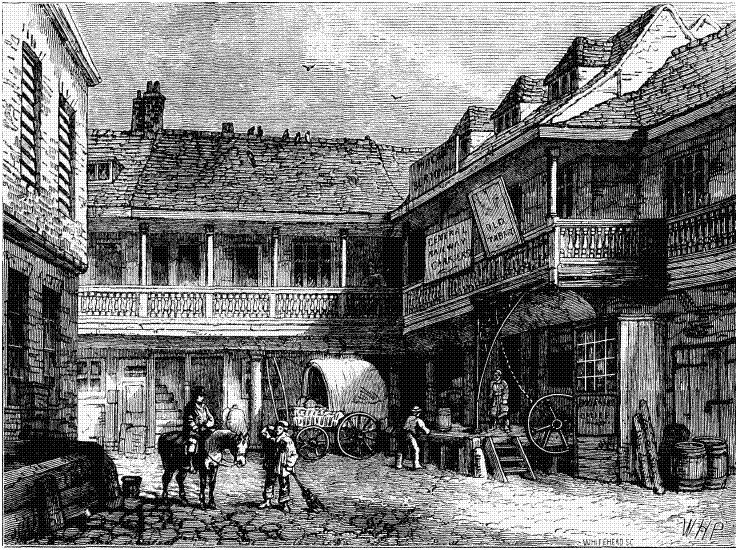
The Tabard Inn, Borough High Street

When I wrote Shakespeare’s Local I upset some readers because I failed to prove the contention in the title of the book – that William Shakespeare drank in the George Inn in Borough High Street.

At a time when most people were illiterate, very little got written down. Information about Shakespeare’s life is so scant there’s not even really any evidence of where he lived when he was in London, let alone where he enjoyed a pint. When I wrote the book, there was not one single mention of Shakespeare ever having been recorded as being in any pub, ever.

And yet we know he did live in London for many years, even if we don’t know exactly where. And we know that unless he was a very unusual man for his time, if he lived in London he went to the pub in London. Because everyone did. Beer was safer to drink than water, and you had to go to the pub and get it. And if you wanted to sit back and relax with friends, there was nowhere else for most people to do that other than the pub.

In the absence of evidence, you can only make informed guesses – just because there’s no proof of something doesn’t mean it didn’t happen, so you have to construct the most likely scenario based on the soundest possible assumptions.

My argument in the book was that Shakespeare definitely worked in Southwark, where the Globe Theatre was, so it’s likely he lived close by – most historians believe he did. If he lived and worked in Southwark, he would have visited Southwark’s pubs. We know he was aware of the White Hart pub on Borough High Street, because he set a scene in one of his plays there. The White Hart stood next to the George, so he must have been aware of the George too. The George and its immediate neighbours were the most famous pubs in London at the time, which we know thanks to the meticulous work of John Stow, a contemporary of Shakespeare’s. It’s thought Shakespeare lived in the area for ten years. If he was going to pubs most days, it’s far more likely that he did drink in the George at least occasionally than that he didn’t.

On this, the 400th anniversary of Shakespeare’s death (and the 452nd anniversary of his birth) I would love to be able to announce that new evidence has come to light that Shakespeare really did drink in the George. But in all my research on the place, it never quite works out like that.

I was indebted to an American academic called Martha Carlin when I was writing my book. She’s done more research on medieval Southwark than anyone else, and she recently contacted me to tell me that she’s found the first and so far only record of someone claiming to see Shakespeare in a specific pub.

Of course, it’s not the George. It’s the George’s next door neighbour. It always bloody is.

The White Hart stood to the left of the George on Borough High Street. Not only did Shakespeare write about it, Dickens used it as the location of a crucial scene in the Pickwick Papers. To the right of the George stood the Tabard. This was the inn which Chaucer used as the starting point for the Canterbury Tales. At the time he wrote those stories, he could have picked any of several inns lining Borough High Street. He could have chosen the George. Instead he chose its next door neighbour, immortalising the Tabard for ever as the birthplace of English literature.

The three greatest names in English letters, then, each of them associated strongly with the old inns of Borough High Street, each of them making their strongest link with the inns either side of the George.

Now, Martha writes, the words of an anonymous actuary writing in 1643 have been unearthed, describing “Some notes for my Perambulation in and round ye Citye of London for six miles and Remnants of divers worthie things and men”.

The author announces that his survey is intended “only to notice those places and things that have been passed by or littled [sic] mentiond [sic] by those greate Antiquaries that have written of this noble Citye and ye which places are fast ruining as the Tabard Inne and ye many houses of Priesthood old Monuments Halls Palaces and Houses of its greate Citizens and Lords and may be useful to searchers of Antiquitye in time to come.”

The Tabard Inn, like many of London’s great landmarks, is by now falling into ruin – so we learn that the lamenting the passing of great pubs is nothing new.When he gets to the Tabard, our anonymous correspondent writes, “Ye Tabard I find to have been ye resort Mastere Will Shakspear Sir Sander Duncombe Lawrence Fletcher Richard Burbage Ben Jonson and ye rest of their roystering associates in King Jameses time as in ye lange room they have cut their names on ye Pannels.”

So graffiting the pub was nothing new either!
Unfortunately, Shakespeare’s vandalism of the Tabard was lost when the inn burnt down along with the George and the White Hart, in the great fire of Southwark in 1676. All three were rebuilt the following year. The George is the only one that has survived until today.
So the Tabard – already already famous as Chaucer’s Local – now has a far better claim to be Shakespeare’s Local than its neighbour.
But thanks to this find, we now know that Shakespeare really did go to the pub in Borough High Street. Did he and his fellow ‘roysterers’ ever do a crawl of the great inns? Did he graffiti the George as well as the Tabard? Most likely, we’ll never know. The idea of the group of players carving their names into the panels suggests, to me at any rate, that they were regular visitors who wanted to leave their mark. It makes perfect sense that Shakespeare would choose the Tabard because of its associations with Chaucer, placing himself in a great literary tradition. But did he only ever go to the Tabard, and never to the pub next door? I find that hard to believe.
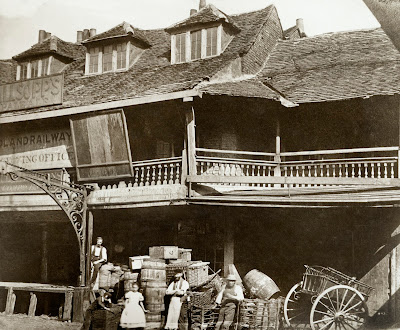
The point is, the George is the only one of those great inns to have survived the coming of the railways. The Tabard, as well as the White Hart, fell into ruin because they were up for sale for years and no one wanted to buy them. By the time the Tabard was finally demolished, it looked like this:
The Tabard, 1870s
The George was the only one of the great inns to escape this fate, the only one that’s still there to write about and to visit. The main reason it did so was thanks to an extraordinary landlady who used every means at her disposal to keep it going as the inns either side were being pulled down – including telling outrageous lies and exaggerations about its associations with Dickens and Shakespeare to attract tourists and build fascination with this last survivor.
Let’s just say I make no apologies for having sympathy with her aim.

| Beer, Beer Writing, BrewDog, IPA

When Michael met Stef and Martin

Trawling through old notebooks can yield unexpected treasures.

The new beer book I’m currently working on was initially inspired by a few experiences that I’d never properly written up and used.

Sometimes I’ll visit a brewery or go to an event and I’m inspired by it, taking pages of notes, and I’ll decide to write them up for one of my columns. A typical column is 700-800 words long, and while the column itself might be good, it only skates across the surface of the notes and observations I’ve made.

When I decided to write a book about hops, it was because I knew I had unused material that I’d gathered on a visit to the National Hop Collection in Kent, a jaunt to Slovenia to see the hop farms there, and a hazy account of Chmelfest, the hop blessing festival in the town of Zatec in the Czech Republic, home of the revered Saaz hop. I’d written up the National Hop Collection and Slovenia for short Publican’s Morning Advertiser columns, but I’d never known quite what to do with the Chmelfest notes. That’s where the idea for this book was born. About thirty seconds after deciding to use these three stories as the basis for a book about hops, I thought, ‘Why just hops?’ And What Are You Drinking? was born.

So now I’m deep into pulling the book together, writing up notes from trips over the last year and digging into my pile of old notebooks to find bits from over the last few years that also belong in this book.

I went to Chmelfest back in 2007, just as I was starting work on the first Cask Report and while I was trying to plan the sea voyage that would become my third book, Hops and Glory. So I dug into my pile of notebooks trying to find the one I’d been using in early 2007.

It turned out to be the same one I’d been using in late 2006 – number 6 in the stash of anally numbered notebooks I began when I first started travelling to write about beer. Chmelfest is about two thirds of the way through, and the notes are more intact and coherent than I have any right to expect. But near the front of the book, undated, is a short set of notes – just two pages – about a meeting between Michael Jackson and Stefano Cossi and Martin Dickie, who were then two young brewers at a new brewery called Thornbridge.

I remember this meeting taking place at the legendary White Horse pub in West London. I can’t remember why I was there, why I’d been invited, but the two brewers were sitting against the wall with Michael facing them across a table. I was sitting two seats down, watching, not daring to join in.

I remember being inspired by Michael that night, and later feeling lucky that I was there. A year on from this meeting Michael would be dead and Martin would have left Thornbridge to start up BrewDog. Martin has spoken often about what an inspiration the meeting was to him. It’s become part of BrewDog folklore, a key event in the origin story, which makes me feel weird that I’d been there as a silent observer.

The occasion was the launch of a new beer called Kipling. Michael thought it was interesting because it used a new hop called Nelson Sauvin which came from New Zealand, and no one had brewed in Britain using New Zealand hops before. (In my notes I wrote ‘Nelson Sauverne’, which is how it sounded when Martin said it.) Martin and Stef had encountered a sample of these hops and immediately ordered some in. They wanted to make a beer that celebrated their flavour, because they were already, according to my notes, ‘bringing in obscure US hops’ for beers like Jaipur.

In a demonstration of my stunning beer writing skills at the time, my tasting notes stretch to ‘grapefruit in the finished beer.’ I also wrote down ‘Fills in the gaps that are left by the flavour spikes in spicy, deep-fried spring rolls.’ I don’t know if I wrote this because that’s what the beer was paired with because I didn’t write any more detail about what we were eating and drinking. I may have been quoting someone. (Does anyone really think spring rolls have flavour spikes?)

I’ll spare you my clumsy notes about Thornbridge and my observations about its two young, moody brewers. The reason for sharing the reminiscence is the notes I made about Michael Jackson. I was paying more attention to him during the interview than I was to the two brewers.

I’m tempted to tidy up my notes and write them better. It’s a rubbish piece of writing, embarrassing in parts, but I wanted to share the sentiments it contains, so here it is quoted as I wrote it, unvarnished by later experience or hindsight:

Michael going on – interesting enough stories. Meeting some of these people is a bit special. He’s created this thing, still sees it w the novelty he genuinely discovered for the first time.

Gentle, warming method of questioning that draws the best out of his subject – “Why this beer?” “What did you think of the hop the first time you tasted it?”

It doesn’t seem like much, written up. But this was an absolute inspiration to a fledgling beer writer. The obvious passion, undimmed after thirty-odd years. And the focus on the people, how they felt, making it about them and getting the best from them. I remember sitting there thinking, “THIS is how you do it.”

I still think that. My own notes are better now.

| Uncategorised

Why I haven’t been blogging much

A cautionary tale, with a happy ending. 

About two years ago I started getting shooting pains down my left leg. I went to the doctor about it and they said it was sciatica. Although the pain was in my leg, it was actually a result of nerves in my spine being irritated. “It’ll go away eventually,” said the doctor. “If it gets too bad, just take some painkillers. Exercise will help, as would losing a bit of weight.”

Eventually the pain did go away, but every now and then it would return. In January 2015 it came back and didn’t go away.

One morning at the end of January, I was in a hotel near Heathrow airport where I was attending a brewer’s brand conference and workshop. I woke in quite extraordinary pain, the worst I’ve ever felt. I went from thinking “This is embarrassing. I hope there’s no one next door who can hear me screaming,” to thinking, “Actually, I hope there IS someone next door who can hear me screaming, and they call for help.” I realised I was in quite a lot of trouble and decided to phone someone. My phone was six inches away from my grasp on the bedside table. It too me half an hour to reach it.

Very soon after I did, I was in the back of an ambulance greedily sucking down most of a canister of gas and air. When I got to the hospital they gave me liquid morphine. It took the edge off a bit, but I still couldn’t move without yelling.

Two days later I was discharged with a pile of drugs including Tramadol and Diazepam. I spent the next three weeks feeling fucking wonderful in a kind of dissociated way.

It turned out I had two slipped discs at the base of my spine that were pushing against my spinal cord. I had to have an injection of steroids into my spinal column to sort it out. I’m fine now, but the pain is still there as suggestion, reminding me of my promise to lose weight, improve my posture, take regular exercise and build my core strength so it never comes back properly again.

I haven’t yet kept that promise, mainly because of what I did when I was fucked and bombed on very strong drugs.

About a week after I stopped taking the drugs, the latest issue of the Publican’s Morning Advertiser came through the door. As soon as I saw it I thought, “Shit! I was supposed to write my column for this week!” I briefly wondered why they hadn’t chased me for it, before turning to the page where it usually runs to see what they’d done instead.

There was my column.

I had written and submitted it as usual, but had absolutely no memory of doing so. Technically it was a bit sloppy, but it was uncharacteristically warm and affectionate.

I later discovered that I’d written four different features while I was high. Four that I’ve been able to find, anyway.

I had also done something else that was really, really stupid.

My last narrative book, Shakespeare’s Local, was very successful when it launched. It was picked up by BBC Radio 4 as their Book of the Week and read out by Tony Robinson, who made it much funnier than my writing is, and the book spent the week before Christmas sitting comfortably in Amazon’s Top 100, outselling Hunger Games books and Downton Abbey tie-ins. It was easily the most successful book launch I’ve had to date. And it almost killed my book publishing career.

The issue was, it represented a transition point from my being a beer writer to being a mainstream, general non-fiction author. The publisher who had bought my first four books – and specifically, the man who had edited the last two – felt quite understandably that my next book should push me right into the bestseller lists, that I should be, if not the new Bill Bryson, then perhaps the next Stuart Maconie or Simon Garfield. I was very happy to agree.

The problem was coming up with an idea for a book that fit the bill.

I spent the next two years submitting ideas that were rejected. The usual response was along the lines of “Well, I’d read it like a shot, but I’m not sure it’s going to sell beyond your current audience.”

Mainstream publishing is changing and getting more difficult. There’s no longer room for ‘the midlist’ – books like mine that sell OK and cover their costs but don’t build and break out. My confidence began to plummet, until we reached the break-up conversation that goes along the lines of, “If you’d like to move on and see other people, that’s OK with me.”

I started pitching ideas to other people. I didn’t have a clear strategy, I just knew I wanted to start work on another book. If writing books is what you do – and for me, everything else is filler that keeps me busy and pays the mortgage between books – whenever you finish one you’re effectively unemployed until you sign a deal for the next one.

Did I want to carry on trying to crack a different, broader market? Or did I want to go back to writing about beer and pubs? Yes.

So I was having various different conversations with various different publishers about various different ideas when my back went and I got taken to hospital.

Then, during a particularly rotten, bleak and desolate comedown from the drugs that was every bit as miserable as the high was euphoric, I realised that I’d signed three different contracts, with three different publishers, to deliver three different books – all within the same timescale.

This was a really fucking stupid thing to do.

It normally takes me two to three years to write and research a book. Now, I had to write and research three in little over a year. And I had to break it to each publisher that while I was very happy about our new relationship, I was also seeing someone else.

This did not make for the kind of stress-free time I needed if I wanted to get happier and healthier. And so I haven’t. But now, fourteen months later, I’ve just finished writing the second of the three books, and I’ve managed to delay the third one, which I’ve started writing up today. I’ve mentioned them all at various times here and there, but with the first two now out of the way and with their release dates confirmed, here’s what’s coming up.

The Pub: A Cultural Institution
Publication Date: 18th August 2016

For all I’ve written about pubs, I’ve never really done pub reviews. This book is one of those coffee table, picture-led affairs with lots of gorgeous photography of old inns, pubs signs and real ale casks. But I also wanted it to be much more than that.

The book contains reviews of 300 pubs across the UK. 250 of these are short, 80-word listings, but fifty of them are double-page spreads featuring longer essays. Rather than just say what beers are on or what the decor is like (information which would quickly go out of date and is better sourced from websites) I’ve tried to review each of these pubs on its atmosphere, which is, after all, the main reason we choose one pub over another.

It’s much harder to do than reviewing the physical space or offering, and I don’t quite succeed with every one of the fifty. But I’ve also tried to make each one a story about the many different reasons why pubs are so special: a couple focus on legendary publicans, some focus on the relationship between the pub and its environment, one celebrates the ritual of that coming-of-age moment many of us experienced in our first pub, another talks about the institution of the pub juke box. One is about a marriage proposal, while another sees a pub help sort out an old man who has been made temporarily homeless.

I’m now going through the inevitable phase of “Sounds good! Did you write about the Three Old Codgers in Little Frumpington? Whaaaaat? You’ve never been to the Codgers? You haven’t lived, mate.” If you know the best pub ever, it’s probably not in here. But I promise you the 300 featured pubs are very good indeed.

Available for pre-order on Amazon – click the pic above for a link.


The Apple Orchard
Publication Date: 29th September 2016

When I wrote World’s Best Cider with Bill Bradshaw, I spent a lot of time in orchards. I was moved by these beautiful places, enraptured by the customs and traditions around apple growing, and the people who kept them alive. I made loads of quite lyrical notes and observations, most of which never made it into the cider book because it wasn’t that kind of book. So I decided I wanted to revisit the subject.

The result is a book that follows the apple year, from blossom time in spring through to wassail in January. It explores the cultural meaning of the apple as well as its practical value. Was the apple the Forbidden Fruit in the Garden of Eden? Could it have been? Does it matter? If it wasn’t, why do we think it was? Exploring questions like these was like pulling a loose thread that led me all over the place. There are ancient Pagan festivals, an appreciation of soil, discussions about GM, and quite a bit of morris dancing. It turned into a sort of affectionate tour of British life and customs, as well as an exploration of our relationship with food and where it comes from. It’s possibly the best piece of writing I’ve done to date. It has nothing to do with beer, although quite a bit of cider is drunk.

I’m enormously chuffed that Penguin will be publishing The Apple Orchard under their ‘Particular Books’ imprint. We haven’t quite sorted the cover yet, but it is already listed on Amazon and available for pre-order here.

What Are You Drinking?
Publication Date: TBC Spring 2017

I’ve already written quite a bit about my book on hops, barley, yeast and water because it’s being published by Unbound, who use crowdfunding to cover the cost of publication, so I’ve had to flog the idea quite hard to potential subscribers.

The best thing about this is that by having to tell people about the book before I’d really done very much work on it, the process of funding changed the shape and scope of the book. Brewers, maltsters and hop growers have been in touch suggesting I visit them to learn more about what they do, and something that started life as quite a theoretical idea has become much more hands-on. I’ve picked hops in Kent, sat on a combine harvester as it reaps Maris Otter barley, watched speciality malts being made in Bamberg, seen hops being picked in farms in the Yakima Valley that are bigger than the entire British hop crop, visited the laboratory in Copenhagen where single strain brewing yeasts were first isolated and cultivated, drunk Burton well water straight from the ground and delivered fresh, green Galaxy hops to a brewery in Australia and dry-hopped a beer with them. It’s been utterly amazing, and if I can only do justice to the incredible source material I’ve gathered, the book will be worth the wait.

We reached our crowdfunding target back in October, but you can still become a subscriber if you want. Subscribers get their name in the back of the book, get access to exclusive updates about how the book research and writing process is coming along, and will also get their copies a month or so before publication. If you’re interested, here’s the link.

Some people have been uncomfortable with the idea of a crowdfunded book. If you don’t like the idea that’s fine, because on publication the book will receive the same distribution as any book from a traditional publisher and you can buy it on Amazon or any good book shop.

I will be blogging more frequently again now, having got the first two books out of the way. Sorry the last little while on here has mainly been me trying to flog stuff. I’ll be doing some actual beer blogging again very soon.

| Uncategorised

Beer Marketing Awards: New Awards Date, Deadline for Entries Extended

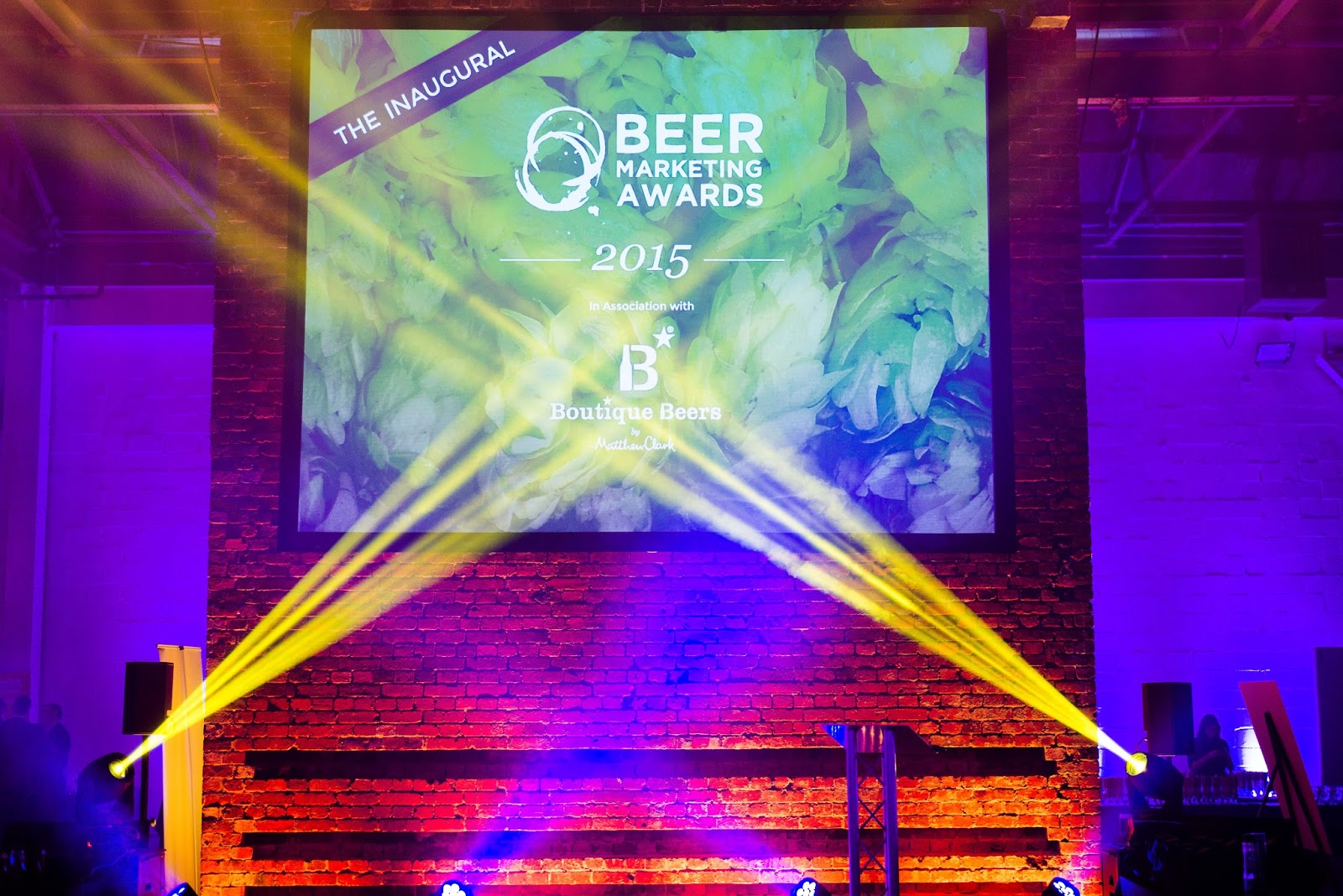
The second annual Beer Marketing Awards have been moved from 14th April, and will now take place in 8th September at the Boiler House, the Old Truman Brewery, Brick Lane, London E1.

The postponement follows some uncertainty about availability of the venue. Everyone who attended the first event in 2015 thought it was a perfect venue for such an event, but for that reason it’s a very popular space, so we decided to do it later and do it as well as we possibly can.

This means that the deadline for entries – which was originally this week – has now been extended until 31st March. Entries have been coming in thick and fast, but if you were running out of time for yours, now you have time to give it an extra polish.

The idea behind the awards is to celebrate the promotion of beer across all channels. In today’s communications landscape, effective marketing is no longer about who has the biggest budget – the strength of an idea can compete across various channels. Last year we had global, regional and microbrewers going head-to-head in some categories, and it was by no means assured that those with the biggest budget and external agencies won out.

After feedback last year, we have also introduced staggered entry fees based on the size of the brewery (or if you’re an agency, the size of the brewery you work for), to make it mort affordable for small brewers to enter.

More details and entry forms are available at http://beermarketingawards.co.uk/.

| Uncategorised

If you think you're a pub and… (with apologies to Rudyard Kipling)

If you think you’re a pub and you try to ‘up-sell’ someone by forcing your staff to ask
‘Would you like some crisps or nuts with that?’ every time someone orders a
pint,
If you think you are solving the problem of bar staff
motivation and retention by ‘empowering’ your zero hours, minimum wage, untrained staff simply by referring to them as ‘colleagues,’
If you advertise free WiFi but ‘free’ turns out to mean
‘free for 20 minutes and then you pay,’
If you pour a pint for a customer that foams over the sides
of the glass so vigorously that you have to wash your hands after pouring it,
but you expect your customer to pick up the soaking glass from its puddle,
knowing their hands will get wet and sticky, but not giving a shit about that,
If you advertise ‘craft beers’ and offer Peroni or Amstel to
those who ask for them,
If you refer to yourself as a ‘Beer House’[1],
‘bar and kitchen’, ‘cellar and eatery’, ‘Ale dispensary and hob’ or any other
similar term because you think you’re better than a mere pub,
If you charge more than £5 for a pint of beer without being able to tell the customer why
it costs that much,
If you think the brand
is more important than the guv’nor,
If you have keypads on the doors to the toilets because
you’re so paranoid about walk-ins using the loos without buying a drink that
you’re prepared to humiliate your customers by making them come to the bar to
ask for the code,
And if, the code secured, your customer opens the door to
the bogs and reels back physically from the ammonia stench of stale urine
burning their nostrils from urinals that haven’t been cleaned for days,
Then you don’t have the first clue about what matters to the earth nor anything in it , and – which is more – you ain’t no pub, my son!

[1] For example, in a train station such
as London Waterloo or Paddington.

| Uncategorised

The British Beer and Pub Industry in 2016

Just before Christmas, The Publican’s Morning Advertiser asked me for my predictions about the events that will shape the UK pub industry in 2016. They said I could be irreverent. This is a bit parochial if you’re not close to the UK pub industry, but if you are, just call me Nostradamus…

After a slow start to the year,
notable only for a combined team of scientists from CERN, MIT and NASA
discovering the true definition of craft beer, things hot up when the
AB-Inbev/SABMiller deal finally goes through. The new combined entity decides
to cut to the chase and announces its purchase of the entire continent of Europe,
with Carlos Brito declaring himself President. All beer apart from Stella
Artois and Becks is immediately banned.
In a desperate move, BrewDog
launches Equity for Punks X and raises $100 trillion for a hostile takeover. As
President Brito is making his President’s Question Time debut in the House of
Commons, James Watt and Martin Dickie drive a tank into the chamber and
announce that the National Anthem will be replaced by the Sex Pistols’ God Save the Queen. The Daily Mail gets confused as to whether
to launch a vicious smear campaign against BrewDog for being disrespectful and
challenging authority, or Jeremy Corbyn for refusing to sing the punk anthem,
and self-combusts.
Brito doesn’t go down without a
fight and launches weapons of mass destruction inside parliament, but because
they’ve been made with the cheapest ingredients possible, they don’t work
properly. Chemical weapons hit the toilets, and from the green haze emerges the
dishevelled figure of Greg Mulholland, wearing his underpants over his suit.
Realising the chemical soup has at last given him the superpowers he craves,
Mulholland dispatches Brito before laying waste to the nation’s PubCos,
reducing them to rubble with his laser eyes and thunderous voice. Anti-PubCo
campaigners continue to blame Punch and Enterprise for pub closures anyway.
Against the backdrop of a declining
beer market overall, cask ale volume rises by 0.3%.

| Uncategorised

Beer Marketing Awards return for second year – call for entries

Last year I was part of a team that launched the first ever Beer Marketing Awards in the UK. The competition, and the event, was a great success, and the awards are now open for a second year.

There are two main ideas and ambitions behind the awards:

  • Rightly, there are a great many awards for beer quality. That’s as it should be. But there’s no point making great beer if no one knows about it. With 1700 breweries now in the UK, it’s never been more important to make your beer stand out and let people know about it. At a time when some beer promotion is dodgy to say the least, we want to celebrate the best, and hopefully inspire the rest to do better.
  • Marketing is seen by some as the preserve of big brewers, but everyone does it in some way. What you call your beer, what you put in the label or pump clip, how you tell pubs about it, what you say about it on social media, all of it counts. These awards are not just about big budgets: our ambition last year was to have the world’s biggest brewers competing with the UK’s smallest on a level playing field. In categories such as social media and packaging, they did, and the gongs went to the best ideas rather than the biggest budgets. There’s a category that suits any brewer of any size. We want this to be an event that could bring the whole industry together.
We’ve slightly rejigged and expanded the categories this year. Here’s a full list:
  • BEST ADVERTISING CAMPAIGN – PRINT
  • BEST ADVERTISING CAMPAIGN – BROADCAST 
  • BEST ONLINE COMMUNICATIONS
  • BEST PUBLIC RELATIONS CAMPAIGN 
  • BEST BRANDING/DESIGN 
  • BEST USE OF COMPETITIONS 
  • BEST INTEGRATED CAMPAIGN 
  • BEST STUNT/GUERRILLA MARKETING 
  • BEST BUSINESS TO BUSINESS CAMPAIGN 
  • BEST INNOVATION 
  • BEST NEW LAUNCH 
  • BEST USE OF SPONSORSHIP 
  • BEST USE OF MERCHANDISE 
  • BEST EVENT 

And two special awards at the discretion of the judges:

  • OUTSTANDING INDIVIDUAL ACHIEVEMENT 
  • OVERALL WINNER: BEER MARKETER OF THE YEAR
You can see a bit more description of the categories here, and download an entry for for any of these categories here. If you’d like to see the spread of winners from last year, who represent all corners of the British brewing industry, check them out, and learn why they won, here.
One criticism we received about the awards last year is that we charge for entry. We appreciate that small brewers don’t have much money to spend, but we’re a small start-up too with no external financial backing, and we need to make the event cover its costs. We have to charge something, but this year we’ve introduced a staggered entry costs along the same lines that our friends at Craft Beer Rising use to charge exhibitors:
  • £60 (£50 + £10 VAT) for brewers under 5000 hectolitres
  • £144 (120 + £24 VAT) for brewers between 5000 hectolitres and 60,000 hectolitres
  • £180 (£150 + £30 VAT) for brewers over 60,000 hectolitres
We’re delighted to welcome Boutique Beers by Matthew Clark back as our headline sponsor. If you’re a brewer, client or supplier to the brewing industry who would be interested in sponsoring a category, drop me a line.

Entries are now open. The deadline for submitting them is 22nd February 2016. The Awards ceremony takes place in Brick Lane on 14th April 2016.

Good luck!