Author: PeteBrown

| Uncategorised

Answering the neo prohibitionists, 1 of 10: “Alcohol Consumption in the UK is increasing”

“Over the last 60 years English drinking habits have been transformed. In 1947 the nation consumed approximately three and a half litres of pure alcohol per head; the current figure is nine and a half litres.”The Parliamentary Health Select Committee Report on Alcohol

Why choose 1947? Oh, that’s why!

The Select Committee acknowledges that “The history of the consumption of alcohol over the last 500 years has been one of fluctuations, of peaks and troughs.” So why choose 1947 as your point of comparison? Isn’t it odd to say “How have drinking patterns changed over the last 63 years?” The reason for choosing this seemingly random date is that it represents a really low consumption point – any comparison is only going to look better if you deliberately choose the lowest point.[1] By choosing 1947, the Committee is deliberately ‘spinning’ the figures – manipulating data to suit their case. That in itself is statistically weaselly, but would be just about valid were it not for one key fact: alcohol consumption in the late 1940s was atypical of British drinking patterns over time, thanks to extraordinary and never repeated factors, and therefore does not represent a valid point of comparison. In World War Two:

  • Thanks to material shortages, the average strength of beer decreased markedly. Even though people were drinking more beer, they were consuming less alcohol through beer.
  • Spirits consumption virtually disappeared because (a) there were acute grain shortages. Production of Britain’s indigenous spirit – whisky – collapsed, and any existing volume was exported for valuable income; and (b) imports of spirits virtually ceased thanks to dangers to shipping – essentials had to be prioritized.
  • Many pubs were bombed out

The post-war years (including 1947) were even leaner than the war, as a broke country started to rebuild itself. It took years before the British economy got back to normal. When it did, alcohol consumption began to rise again. 1947 is therefore a ridiculous point with which to make comparison.

Changing British Drinking Patterns: The Truth

Alcohol consumption rose through the second half of the twentieth century because society became more prosperous, people had more income, and the economic foundation of Britain changed from being a manufacturing economy to a leisure/service economy. Nevertheless, if we were to choose 1870, or 1900, or 1914 as our year of comparison, the story would be one of declining consumption. Too far in the past to be relevant? OK, how about 2004? Not long enough? OK, how about 2000?

Over the last ten years, alcohol consumption has declined. It rose between 2000 and 2004, but has since declined – per capita alcohol consumption in the UK in 2009 was the same as it was in 1999, and 0.9% lower than in 2000. In other words – over a statistically relevant time scale, UK alcohol consumption is NOT increasing. The Select Committee Report is forced to acknowledge this inconvenient truth. Deep in the text, it admits that “since 2004 when consumption peaked, there has been a slight decrease in alcohol consumption in terms of litres of pure alcohol,” but says it is “unclear” whether this is just “a blip”. But by the time they get to their conclusions and Executive Summary, this inconvenient ‘blip’ has been forgotten. There is no mention of a recent fall in consumption, only that “the rising levels of alcohol consumption and their consequences have been an increasing source of concern in recent years”. The Select Committee also argues that the decline is not a “clear and consistent pattern of falling consumption since 2003”. But look at this chart:

I guess their point is that the increase in 2007 means the decline is not ‘consistent’. But any statistician or data analyst I’ve ever met (and I’ve met more than I would have liked) would say that this graph represents a very ‘clear’ downward trend. At the very least then, the Select Committee is being wilfully misleading about one of the central tenets of its report.

Finally – a note about international comparisons

The Committee reports that the UK has “One of highest consumption rates in Europe”. The truth is we’re actually 9th – behind Luxembourg, Ireland, Hungary, Moldova, the Czech Republic, Croatia, Germany and Spain. At the time of writing, Fulham are 9th in the Premier League. Would even Fulham fans attempt to argue that their team is ‘one of the highest’ in the Premiership?

[1] The only time in the twentieth century when alcohol consumption was lower was the final years of the First World War – probably too tenuous a date even for the Committee.

| Uncategorised

Polls and priorities

Bless you, you’re a liberal minded lot.

My poll on kids and dogs in pubs closed yesterday and the results are as follows. Based on 181 votes, would you:
Allow both kids and dogs in pubs? 38%
Allow kids bit not dogs? 6%
Allow dogs but not kids? 41%
Ban both dogs and kids? 14%
So 44% of you think kids should be allowed in pubs; and 79% of you think dogs should be allowed in pubs. The canines have it – Captain and The Beer Widow will be pleased.
I’ve actually changed my own position after some of the thoughtful arguments people have made and would now say that both should be allowed – it depends on the owner/handler, and tighter regulation should be enforced when either behave badly.
Now on to the next poll – one you may think is a bit sarcastic – I hope you think it’s rhetorical. After a week of unprecedented hostility from parliament, the health profession and the neo-prohibitionists, there has so far been very little reaction from the beer industry to the Parliamentary Select Committee Report on alcohol. Professor Poontang asked on my last blog post where CAMRA are in all this – as Curmudgeon replied, they’re seemingly too busy taking legal action over the issue of the beer tie. They’re quite possibly also busy writing their own manifesto for pubs, even though the BBPA have just written one.
And I’ve not had a single press release with reaction from any brewer, or seen any other industry comment. The BBPA sent me an excellent press release rebutting some key points, and that’s all the reaction I’ve seen.
I believe that 2010 is the year the industry must stop fighting and work together to counter the social demonisation of alcohol. But do you agree? Let me know in the new poll, right here—->

| Uncategorised

The Health Select Committee Report on Alcohol

I know I go on quite a bit about the politics of drinking. Here’s a very good illustration of why I do.

The Parliamentary Health Select Committee today issued its report on the ‘shocking’ levels of binge drinking in the UK, soaring hospital admissions and death rates attributable to alcohol, cost of drinking to the UK, and so on.
As usual with reports like this, the findings of the committee have been reported across the media as fact. Any dissenting voice is confined to a comment near the bottom of the piece from an alcohol industry spokesperson.
The report recommends, among other things, the following measures:
Pricing and taxation

  • Introduce minimum pricing
  • Increase in spirits duty
  • Increase “industrial white cider duty”
  • Duty increases should predominantly be on stronger drinks

Marketing

  • Statutory regulation of advertising from outside of alcohol and advertising industry
  • No billboards within 100 metres of schools
  • 9 o’ clock watershed for TV advertising
  • Cinema advertising only for films with an 18 certificate
  • If over 10% of audience/readership is under 18 then medium should not be used to advertise
  • Alcohol advertising banned on social networking sites

Licensing

  • Impose mandatory code urgently (which bans cut price drinks promotions, demands CCTV in pubs, and more)
  • Police to enforce ‘serving to drunks’ legislation
  • Government should assess why pubs associated with heavy drinking do not have their licences revoked
  • Government should give more powers to local authorities to allow them to restrict and revoke licences
  • Copy the restrictions on promotions in the off-trade introduced in Scotland, such as limited areas for alcohol consumption

Other

  • Mandatory labelling scheme on all drinks packaging
  • Improve alcohol treatment services

Now there are some sensible measures in there – I for one have no problem with steep increases in duty on tramp juice and a fairer allocation of duty on spirits relative to beer. And I’m still undecided on minimum pricing – I disagree with the level being recommended but can see some arguments for it as well as against it. But there are some deeply worrying recommendations too, and it’s the sheer volume of recommendations that’s really scary.

But why should we care?
Well, because Liam Donaldson told the committee (with his usual utter disregard of any factual substantiation whatsoever) that there are “no safe limits of drinking,” and that “alcohol is virtually akin to smoking as one of the biggest public health issues we have to face in this country.”
Bollocks of course. But officially published, sanctioned, and undisputed bollocks.
And that comparison with smoking is quite deliberate. Not all the measures listed above will come to pass, but arguably the most important line in the report is this one: “Education, information campaigns and labelling will not directly change behaviour, but they can change attitudes and make more potent policies more acceptable.”Smoking hasn’t been banned form British society. But consistent campaigning against smoking eventually changed social attitudes towards it. The smoking ban came in because the majority of people were in favour of it. Nobody but the ad industry minded when advertising and sponsorship were banned. Making smoking socially unacceptable was far more effective than trying to ban it outright. The anti-drink lobby have learned from this, and this report is a naked attempt to make drinking socially unacceptable.But drinking is NOT the same as smoking. The BMA itself acknowledges the beneficial effects of moderate drinking. Nevertheless, this report seeks to persuade people to treat it the same way, and is meeting with little resistance.I’ve spent most of the last day immersed in the report, following the links to its sources, trying to work out what they’re really saying, drawing graphs so data is more easily understandable. And I’ve found that the report is highly selective in the data it uses, misrepresents what other data is saying, and in many places contains blatant untruths. It needs to be challenged.I’ve got kind of obsessed with doing so, and I’ve got lots of charts, quotes etc which do not seek to manipulate or twist the data, like the anti-alcohol lobby unfailingly does, but just present the raw numbers – collated by independent and reliable government sources and even the NHS itself – which prove that many of the report’s conclusions are deeply – I’d argue even wilfully – flawed.Over the next few days, I’ll be putting up several posts which debunk each of the following, oft-repeated myths:

  • “Alcohol consumption in the UK is increasing”
  • “Binge drinking is increasing”
  • “Alcohol is becoming more affordable”
  • “Binge drinking has been made much worse by the introduction of 24 hour licensing”
  • “Alcohol related hospital admission are soaring”
  • “Alcohol advertising and promotion must be tightly regulated, primarily because it is encouraging children to drink more alcohol.”
  • “Alcohol abuse costs the country £55bn a year”

Sorry to go on. But please stay tuned. And if you ever hear someone spouting any of the above bollocks, please rip off the charts and use them to argue back.

| Uncategorised

WIN MY TRIP TO THE BUDVAR BREWERY!

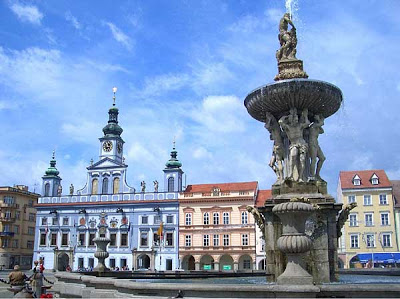
I love Ceske Budejovice, in southern Bohemia.

The main reason I love it is because it’s where Budvar is brewed.I first visited on 2003, when I was starting Three Sheets to the Wind. In fact, if I’m honest, and stripping away the white lies around order and timing you have to weave in order to create a coherent narrative, it’s the trip that inspired Three Sheets – my first foreign beer trip. We had such a rollicking time on that trip I simply wrote down what happened, submitted it to my editor and he bought the book on the spot, saying, “If it’s all as funny as that, we’ve got a winner”.
It wasn’t all as funny as that. The trip remains a highlight of my beery career.
Three Sheets nevertheless won the Guild of Beer Writers Budweiser Budvar Travel Bursary in 2006. The prize? Another trip to the brewery in Ceske Budejovice, which I duly took in 2008.
Once again, it was amazing. Drinking unpasteurised, unfiltered Budvar from the tanks in the cellar remains a standout beer drinking moment in my life. When it was time to move on I almost had to be dragged from that cellar, wedging my arms in the doorway, clinging to the door jamb with my fingernails until they broke. If you think you don’t like lager, you only have to taste this nectar to become aware of your folly.
If you’ve read Hops & Glory, you’ll know that winning the Bursary led directly to me writing that book. And last month, once again, it won the newly renamed Budweiser Budvar John White Travel Bursary at the Guild awards. Prize? Another trip to the brewery.
This is all a long-winded prelude to saying that, while I love this place dearly, and while I certainly intend to drink the unpasteurised Budvar in the cellar again sometime soon, I feel that to go on a third press trip in seven years would not give me as much value as it could give someone else. It’s amazing, it really is, but I’ve done it – twice.
So I’ve decided to give the trip away.
Working in conjunction with Budvar UK and The Publican, we’re launching a mini-competition to encourage new beer writing talent.
This is open to anyone who is passionate about beer, wants to write about it, but has not yet had anything published in print media. We can’t and don’t want to exclude bloggers because most people who are keen to write about beer have started doing so electronically, but we want to offer someone the chance to break into being published offline for the first time.

It’s simple. You need to write a thousand-word piece on the subject of ‘Why Beer Matters’, interpreted in whatever way you see fit. You need to send this to me at petebrown@stormlantern.co.uk by 29th January, remembering to include your real name, postal address and contact telephone number.
Judges will include me, and Publican editor Caroline Nodder. The winning entry will be published in The Publican, and the successful writer will be invited on a press trip to Ceske Budejovice, which also takes in a day trip to the stunning medieval town of Ceske Krumlov (below) some time in early spring.
Get writing. And good luck!
This is open to any writer, anywhere (though you’d have to get yourself to either London or Prague under your own steam if you live outside the UK.)
This is my idea, and sets no precedent in terms of what happens to future winners of the Budweiser Budvar John White Travel Bursary. And it’s only the trip – you can’t have the cheque that constitutes the other part of the prize, or the traditional Budvar tankard. I need those. And if you submit an entry, and we then discover you’ve been previously published in a book or magazine, you’ll not only be disqualified; we’ll also send the boys round.

| Uncategorised

Let’s be nice month is over

Danger! This much beer is ‘hazardous’!

Ah, New Year, a time for reflection, refocus, resolution. A time for getting fit, a time for… the neo-prohibitionists to go completely fucking apeshit, pouncing on the moment when many moderate drinkers prove they don’t have a drink problem by taking a few weeks off the sauce, and use it to ram fear and alarm down the nations throats as never before.

Binge drinking on New Year’s Eve alone could cost the NHS £23 million. New Years Eve itself saw our cities burn to the ground in a drink-fuelled orgy of violence and people falling over on the snowy pavements. The rising cost of treating drinkers could cripple the NHS. And most worryingly of all, one in four Brits are now consuming alcohol at ‘hazardous levels’. That last one must be true: it says so in the Observer, and is sourced from a NHS report.
Let’s just take that last one, as it’s the most worrying. Check out the NHS report for their justification of this claim, and it refers you to a separate appendix. Here, the source of this claim is given as the National Audit Office Report, Reducing Alcohol Harm. This is actually a well-written and researched report for the most part, but it tells us that the definition of ‘hazardous’ is from the World Health Organisation, who define ‘hazardous’ as ‘exceeding government recommended limits’ in the country in question, whatever those limits might be, even though they vary from country to country.
To get to the figure of 25%, the NAO report has used the recommended safe daily guidelines – expressed as units – to get to their definition of what constitutes ‘government recommended limits’.
Let’s not even get started on the fact that these units are completely arbitrary. It’s the old trick: the government unit recommendations are guidelines for drinking safely. They have been interpreted as limits, over which drinking is hazardous. According to the OED, a guideline is a ‘general rule or principle’. A limit, in this context, is ‘a restriction on the size or amount of something permissible or possible’. They mean entirely different things – but they are wilfully conflated whenever people talk about alcohol. If you think they mean the same thing, consider this example.
I got my calculator out again. You calculate a ‘unit’ of alcohol by multiplying the volume of liquid (in ml) by its ABV, and dividing by 1000. The ‘guideline’ alcohol consumption for men is no more than four units per day.
Take Kronenbourg. 1 pint = 568ml x 5%/1000 = 2.84 units
1.5 pints = 852ml x 5%/1000 = 4.26 units
The guideline for women is 3 units per day. 1 x 175 ml glass of 12% wine is 2.1 units. 1 x 150ml glass is – quite conveniently – 3 units.
If you drink a pint and a half of Kronenbourg in one day – even if that’s half a pint with lunch and one pint in the evening – you are a ‘hazardous’ drinker. If you drink one large glass of wine that is stronger than 12%, you are a ‘hazardous’ drinker. According to the latest NHS report, you’re no different from an alky downing a bottle of cheap vodka every day.
Furthermore, the way this data is collected, the actual question is along the lines of ‘did you drink this much on one day during the last week’. If you say yes, you’re included in the figure. So you could have drunk alcohol on only one out of seven days and you still count as a hazardous drinker.
A large glass of 13% abv wine, a pint and a half of lager – or two pints of real ale – in one day, with six days abstinence? Congratulations, you’re still a hazardous drinker.
This is what the whole of the UK national media have accepted without question.
Be scared.

| Uncategorised

Pubs and who they let in – a quick poll

Happy New Year!

Had a very pleasant New Year’s Day in The Spaniards, Hampstead – the pub I discovered in September at the Flying Dog event, and subsequently named in The Guardian as my perfect Boxing Day pub (which it subsequently was – we had a fantastic meal, great Christmas beers, and Richard and Judy were in there, with Judy wearing a huge pair of sunglasses, and even putting on reading glasses over the top of them to read the menu).

So we went back, and got there early to get a table, and enjoyed a very fine afternoon.
The sheer demand for tables meant there was a deal of tension in the air, with people repeatedly asking us how long we were going to be and attempting to nick a chair every time someone went to the loo.
But what made it really irritating was the constant screaming of bored kids, and the fact that a woman behind me repeatedly rammed my chair with a pushchair containing a fractious baby.
Now, I don’t have children – but I do have a dog. And one of the Spaniard’s many, many qualities in my eyes is that it’s the most dog-friendly pub I’ve ever been to. So I have a big personal bias: I regard a pub as being a bit stuck-up if they don’t allow dogs in – especially those who claim it’s against health and safety regulations or even against the law, which it just isn’t – it’s your decision who and what you let in your own pub and I respect that, but don’t lie to me – just have the balls to say you don’t want dogs in.
But I get irritated by kids in pubs. Or more accurately, by the parents of kids in pubs: parents who think it’s OK to wheel in a double-width push chair and leave it in the aisle. Parents who ignore their children and let them run around screaming, and smile at you when the kid runs past your table and spills your drink as if to say “Aren’t they adorable?” No, they’re really irritating. And parents who keep kids in the pub long after their bedtime, so they get grizzly and fractious – not fair on the kids, nor the rest of us. Living in a borough with a very high concentration of young kids, the joy of the pub is in part for me that it is an adult environment. That it should feel like a kindergarten is just wrong.
So my perfect pub would allow dogs, and ban kids.
But Orwell argued that kids should be allowed in pubs because pubs should be wholesome, universal centres of the community, and banning kids helps turn them into male-only drinking dens – his experience of such places was that if the bloke is in the pub, the woman has to stay at home looking after the kids. I see his point, and would agree with his view were it not for personal experience.
And anyone who saw Captain pissing territorially on the 17th century pillar in the front bar of the Spaniard’s yesterday would be well within their rights to argue that dogs are unhygienic and should be barred from any eating and drinking space. (He doesn’t normally do it, but there were lots of other dogs around, and some were cuter than him, which he hates. It makes him feel insecure.)
So am I just swayed by my personal circumstances?
Should the ideal pub bar children, dogs, or both? Or should it be as inclusive as possible and allow both?
I’ve set up a little poll over there—-> and would love to hear your views. If you leave a comment about this, please say if you have kids and/or dogs of your own, so we can see if our own situation dictates our views.

| Uncategorised

Stone to brew in Europe?

One of the US’s finest craft breweries has announced in the last few minutes that they are looking to launch a brewery in Europe.

Stone – whose beers include Arrogant Bastard and Ruination IPA – are constantly receiving requests to get more of their beers sold in Europe, and have decided the best way to do this – to ensure delivery of fresh, quality beer – is to open a brewery on this side of the pond.
Where, with whom and how is not yet clear. In a video announcement, the brewery’s Greg Koch explains that they’re floating it as an idea to see what response it has. If a brewer approaches them and says “here’s a brewery we no longer want – you can have it” that would make things very easy. But they haven’t yet decided what country to brew in, let alone what kind of site.
The whole thing is a tease – this announcement is a toe in the water to see what the response is. Clearly, they can’t just come here and build a brewery from scratch on their own.
I hope and believe that there will be a deluge of interested potential investors, partners, landlords – and I’ll certainly be at the front of the queue of loyal customers.
So if you fancy being part of what could be some of the best brewing news of the next couple of years – Greg wants to hear from you

| Uncategorised

Elk in the Woods in the passage

London was positively Dickensian yesterday. The Beer Widow and I a couple of friends spent the afternoon in the Elk in the Woods, a Swedish restaurant in Camden Passage, Islington. We were sitting near the window by the Christmas tree watching the snow come down and it was just perfect.

Lunch itself was very fine. Just one problem though – the menu at Elk lists wines, cocktails, soft and hot drinks, but there’s no mention at all of beer. When you ask, they’ll admit to stocking Kronenbourg, a Swedish lager whose name I didn’t catch, and a perfectly serviceable keg Theakstons Old Peculier, plus a range of bottles that don’t exactly push the frontiers of beer appreciation but do create a more interesting range of drinks than you’d find in an average boozer.
Why?
It always irks me when cafes and bars don’t put beer on the menu – they’re saying it’s “just beer” – not even worth listing, less interesting than whether they stock Coke or Pepsi. Usually in places like this when you do ask you’re given a choice of Bud, Becks or Stella. But still, why? And why stock some more interesting beers and then not tell your customers about them?
Anyone know?

| Uncategorised

2009: What the blazes was all THAT about? (Part Two)

OK, after getting most of the political and industry stuff out of the way yesterday, let’s get on with celebrating the best of beer and pubs. Remember, this is totally subjective and based on my experiences, and isn’t trying to be any kind of definitive guide.(Note: because this is a review of the whole of 2009, Let’s Be Nice on Pete Brown’s Beer Blog Month is suspended for this post.)
BREWER OF THE YEAR Winner: John Keeling at Fuller’s Because in an industry that’s riven with divisions, he sets an example that every brewer, large or small, should aspire to. To large breweries, he shows that being part of a PLC whose fortunes rely on TV-advertised brands doesn’t have to stifle experimentation and innovation. He’s leading the way with learning about how ageing affects beer. He refuses to call this innovation – he prefers ‘rediscovery’. Also, he’s the model head brewer as brand ambassador, touring the country with informative and entertaining tastings and jokes so old they were first told over a pint of Egyptian bouza. And to micro/craft brewers, he’s an example of professionalism and rigour, who wholeheartedly supports a micro scene that keeps him on his toes. Fuller’s has a perfect core range of beers – a malty premium ale in Pride, an often-overlooked hoppier session ale in Chiswick, a glorious finisher in ESB, a summer ale, and a stable of seasonals, plus the legendary vintage ale, and much more. All this, and he’s a Fall fan. (We’ll let him off being a Man United supporter.) If your name is Stuart Ross, please look away now…
BREWER OF THE YEAR Runner-up: Stuart Ross, Crown Brewery, Sheffield Stuart works alone with a three-barrel plant in a cellar beneath a pub. He does everything single-handed, from cask washing, to bottling, to designing labels and pump clips. And the beers he turns out in his understated fashion are too good to be overlooked any longer. He saw a load of chillies being sold off cheap in Morrisons so he bought them on impulse and created Ring of Fire, a 10% chilli beer that has a subtle taste of chilli pepper before the heat gradually builds. He does a nice range of session beers, and a variety of fully-hopped IPAs. His Smoked Oktoberfest is the best beer I’ve ever tasted with Indian food. And the Damson Porter he created with Zak Avery is divine. I could go on. Stuart just brews what he feels like brewing, constantly experimenting. I don’t think he knows how good a brewer he is. I’m scared how big his head will grow when he does realise, so I just hope I don’t help create a monster by giving him the recognition he deserves. So no one tell him what I just said. OK Stuart, you can come back now.
BEER OF THE YEAR Winner: Wye Valley HPA (Hereford Pale Ale)

Because a recent post by ImpyMalting made me realise that, along with many beer bloggers, when it comes to beer appreciation I’m getting seduced down a cul-de-sac of the extreme, eclectic and experimental, whereas in reality most of my drinking consists of session pints. Because HPA is a very good session pint, quenching and citrusy and refreshing and satisfying. Because it’s very smartly branded and presented and makes ale look cool. Because when my father-in-law was dying in February, Liz and I shuttled between the hospital and the Angel Hotel in Abergavenny and the perfectly served HPA kept us going, a quiet moment of relaxation and contemplation in the middle of the stress and grief, an escape, a tonic. Because after the funeral, we and our friends held a wake for Eddie in the Angel, and we drank HPA until we could drink no more. Because when you ask someone what was the best beer they ever had, they tell you all about the context of it, not the flavour or the ingredients, and this beer reminded me of that in 2009. Great beer isn’t about what’s in the glass; it’s about so much more.
BEER OF THE YEARRunner-up: Crown Brewery HPA (Hillsborough Pale Ale) special 13% version You couldn’t get two more different beers, and the fact they’re both called HPA is a rather weird coincidence. Hillsborough Pale Ale is a 3.8% session beer. One day, CrownBrewerStu decided to see what would happen if he brewed a 13% version of it, which he did in a home brew bucket. When I first tasted it, my jaw hit the floor. This is a stunning barley wine, rich in caramel sweetness, rounded and not too harsh, a hint of sherry. I’ve no idea how he got the balance and depth and smoothness of it at this strength. If Brew Dog released this beer it would – rightly – be celebrated around the world. I made Stu give me the last of it for our Christmas party last week. Hopefully this post will force him to make some more and sell it at a premium price in 750ml cork and wire finished bottles. And hopefully he’ll get someone in to do a really gorgeous label.
PUB OF THE YEAR Winner: The Sheffield Tap, Sheffield Train Station I’ve only been once. It’s only been open a couple of weeks. But it’s not very often a pub takes your breath away. If only more big pub operators had Thornbridge’s vision, thoughtfulness and bravery. If only more small operators had their scope and access to investment capital.

The Sheffield tap: before…

… and after. (“Barnsley Skins” graffiti not pictured)
PUB OF THE YEAR Runner-up: The White Hart, London N16 It’s my local, and this is my review so I’m allowed to choose whomever I like. But this perfect boozer in Stoke Newington is a microcosm of what’s happening in beer. It’s always had great atmosphere, decent, reasonably priced food (though being the chef there seems to be like being the drummer in Spinal Tap), a fantastic beer garden, and is easily the best pub I know to watch a match on the big screen. You can tell it’s a great place to work because many bar staff have been there for years. But until recently there was one lonely Spitfire handpump in the corner that almost seemed to have cobwebs on it. Andy thought cask ale was only drunk by old men, and was of no interest to his hip, young clientele. Now, he has an slowly rotating range of three cask ales, sells bucketloads of them to N16’s hipsters, and is a born-again drinker of St Austell Trubute. He told me last night he’s applied for Cask Marque accreditation. And he’s planning on replacing Stella with Peroni. Kind of sums up the best of 2009!
PUB OF THE YEAR Honourable Mention: The Hillsborough Hotel, Sheffield For the beers, for the welcome, for the bacon sandwiches, for the quiz, for Pie Night, and for offering the best value accommodation in Sheffield. Eventually, I’ll get used to the trams and won’t be woken up by them before dawn.
BEER BLOGGER OF THE YEAR Winner: By a country mile – and he’s really going to hate this – Cooking Lager! No one knows who he is. Someone thought he might be me, which I was flattered by. But is he a beer geek playing a role, venting frustration? Or could he be for real? Every now and again he slips up and reveals that he knows more about beer than he lets on, but mostly, he ruthlessly skewers the pretentions of beer geeks and reminds us that, at the end of the day, it’s just beer. I depend on his tirades against pongy ales, odes to Lout and tales of his eternal struggle to stay on the right side of the Ladysqueeze to keep me grounded. And his review of my books, where he compared the relative merits of Man Walks into a Pub and Three Sheets to the Wind not on the merits of language, or insight, or research, but on their ability to prop up his wobbly sofa, is something I’ll always treasure. If it’s an invention, it’s a genius one. If he’s for real… I don’t know whether to admire him or fear him.
BEER BLOGGER OF THE YEAR Runner-up: Boak and Bailey I picked this not on who is the most prolific, or who uses the medium of blogging to its best advantage (that would be Young Dredge). As this is subjective, I’ve chosen it purely on what blogs I find myself clicking on most often from my blog roll, who I enjoy reading most. Boak and Bailey clearly know their stuff but write with a beautiful simplicity and understatedness, and a constant sense of exploration and discovery, across a refreshingly broad range of beers and topics. If you haven’t read them before, start with this brilliant discussion on pubs and class.
BEER BLOGGER OF THE YEAR Honourable mentions: Runner-up spot was a tough call: the other blogs I habitually click through to whenever I see there’s a new post include Pencil & Spoon of course, Woolpack Dave, Tandleman, and the thoughtful, beautifully written, lyrical ImpyMalting. Pump Clip Parade for a laugh, and ATJ is doing some lovely stuff too. We’ve got such diversity and richness now! Oh yes – and the Beer Widow of course. God help me if I don’t give ‘er indoors a richly deserved mention for sticking a long-suffering toe into the blogging waters.
SLOPBUCKET OF THE YEAR Winner: Easy – the Daily Mail. Look, why don’t you just fuck off?
SLOPBUCKET OF THE YEAR Runner-up: The BBC We expect it of the Mail. They’re the pantomime villain in the war against neo-Prohibitionism. But the Beeb website is just as guilty of demonizing alcohol, and beer in particular, as anyone else. This post from yesterday is typical – if you read to the end, expert testimony from Ian Gilmore – hardly a friend to the alcohol industry – explicitly contradicts the assertion in the headline. But as Jay Brooks points out, most people only read the headline and first para, meaning the truth gets buried. Mostly I’m with Stephen Fry – I love the BBC. It’s one of the reasons I love Britain, one of the best things about our culture. But we expect and deserve much, much better than this continued, willful distortion of the truth about our national drink from an organisation that’s largely trusted for its balance and impartiality. Shame on you.
SLOPBUCKET OF THE YEAR Honourable mentions The rest of the British news media. As I said in a recent Publican piece, when you’ve got everyone from the Mail to the Guardian saying the same thing about you, you know you’ve replaced tobacco, hoodies, staffordshire bull terriers and Swine Flu as the moral panic of the day.

So that’s my take on the year. I’d love to hear yours. Thank you for reading me in 2009. Thank you for your kind comments when I get it right, and thank you also for picking me up when I get something wrong. 2010 is going to be a great year for beer. I’m going to make an effort to remember why I started writing about it in the first place. I’m going to continue to learn more about beer, from brewers and drinkers and other writers. I’m going to do everything I can to evangelise beer outside our cloistered, beer geeky world, to carry on the war against media shite and neo-prohibitionism, to call out foolish behaviour in the industry and to celebrate beer as it continues to emerge and prosper as the most exciting drink around. Merry Christmas!